The United States is strengthening its military posture in the Middle East by deploying roughly 2,500 Marines aboard several amphibious warships sailing from the Indo-Pacific. The move comes as tensions with Iran intensify following nearly two weeks of joint U.S. and Israeli strike operations, raising fears that the confrontation could expand beyond air campaigns into a wider maritime conflict around the strategically vital Strait of Hormuz.
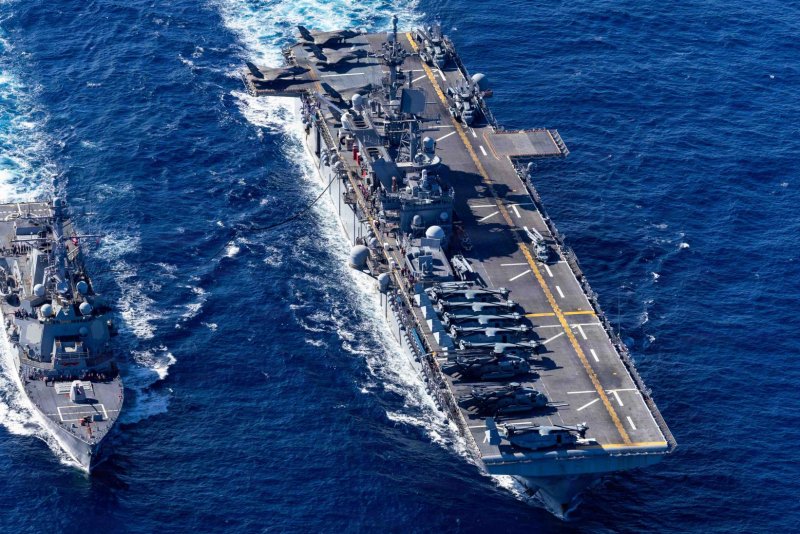
The latest deployment reflects Washington’s growing concern over the direction of the conflict and the possibility of further escalation. According to U.S. officials, the Marine force is traveling aboard up to three amphibious warships that will provide a flexible expeditionary capability once they arrive in the region. These ships allow troops, aircraft, and equipment to operate directly from the sea, giving military planners the option to respond quickly to emerging crises without relying on land bases.
The Marine contingent is expected to integrate with a large U.S. military presence that already exceeds 50,000 American troops stationed across the Middle East. This network of forces includes airbases, naval assets, and forward operating locations designed to maintain security across the Persian Gulf and surrounding regions.
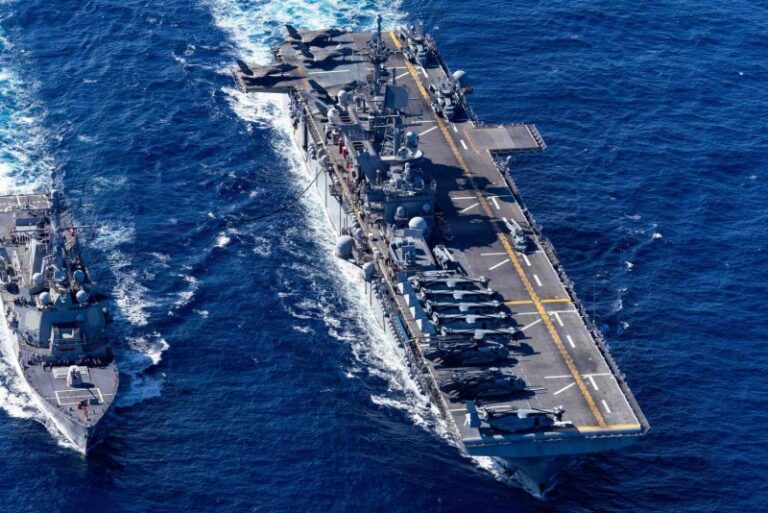
A key component of the deployment is believed to be the amphibious assault ship USS Tripoli (LHA‑7). This vessel is one of the newest ships in the U.S. Navy’s amphibious fleet and serves as the aviation centerpiece of a Marine expeditionary group. Displacing roughly 45,000 tons, the ship is built around a large flight deck capable of supporting advanced aircraft operations.
Unlike older amphibious ships that prioritize landing craft for beach assaults, the America-class design focuses heavily on aviation. This allows the vessel to operate similarly to a small aircraft carrier, supporting modern fighter jets, helicopters, and tiltrotor aircraft.
Among the aircraft deployed aboard these ships are the short takeoff and vertical landing variant of the stealth fighter, F‑35B Lightning II. The aircraft combines stealth technology with advanced sensors, enabling it to carry out surveillance, targeting, and precision strike missions while remaining difficult for enemy radar systems to detect.
Operating from amphibious ships, the F-35B provides commanders with a highly mobile airpower capability. The aircraft can launch from short flight decks and land vertically, allowing it to operate from ships positioned far from hostile coastlines while still delivering strikes deep inside contested territory.
Supporting the fighter jets are tiltrotor transport aircraft such as the Bell Boeing MV‑22B Osprey. The Osprey combines the vertical takeoff ability of helicopters with the speed and range of turboprop airplanes. This unique design allows Marines to rapidly deploy troops and equipment from ships positioned hundreds of miles offshore.
The aircraft can carry roughly two dozen Marines or several tons of cargo while traveling at speeds far higher than traditional helicopters. This capability gives expeditionary forces the ability to insert troops deep inland during operations ranging from rapid response missions to humanitarian evacuations.
The Marine force involved in the deployment likely comes from the forward-deployed 31st Marine Expeditionary Unit, which is normally stationed in Okinawa and operates across the Indo-Pacific region. Marine Expeditionary Units are designed to function as highly adaptable combat formations that combine infantry, aviation, and logistics units into a single operational package.
These units are specifically structured for crisis response. They can conduct amphibious landings, secure strategic infrastructure, reinforce military bases, or evacuate civilians from conflict zones. Because they operate from ships, they can remain outside hostile territory until commanders decide when and where to deploy them.
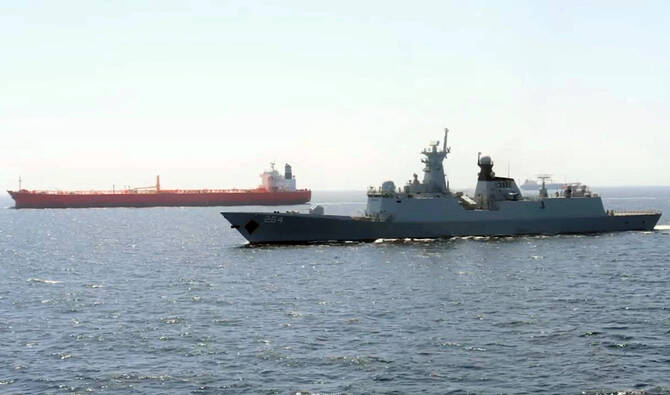
The deployment also comes as tensions rise around the Strait of Hormuz, one of the most important shipping routes in the world. Nearly one-fifth of global oil supplies pass through this narrow corridor connecting the Persian Gulf with the Arabian Sea.
Recent reports suggest Iranian forces have increased military activity near the strait, raising concerns about the safety of commercial shipping. Some tanker operators have already slowed or altered their routes due to security fears, contributing to volatility in global energy markets.
U.S. officials have also warned that Iranian naval units may be deploying sea mines in parts of the Persian Gulf shipping lanes. Such a move could significantly disrupt maritime traffic and complicate efforts to maintain the steady flow of oil and gas shipments through the region.
In response to these risks, American leaders are reportedly considering escort operations for commercial vessels passing through the strait. Similar missions were carried out by U.S. naval forces during the closing stages of the Iran-Iraq War in the 1980s when tanker traffic came under attack in what became known as the “Tanker War.”
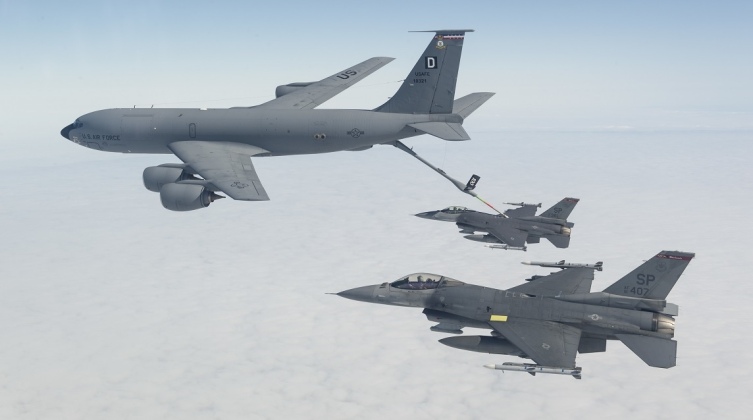
The current conflict has already produced several incidents across the broader region. A U.S. aerial refueling aircraft, the Boeing KC‑135 Stratotanker, crashed in western Iraq while supporting air operations related to the ongoing campaign. Meanwhile, regional tensions have expanded beyond the immediate battlefield.
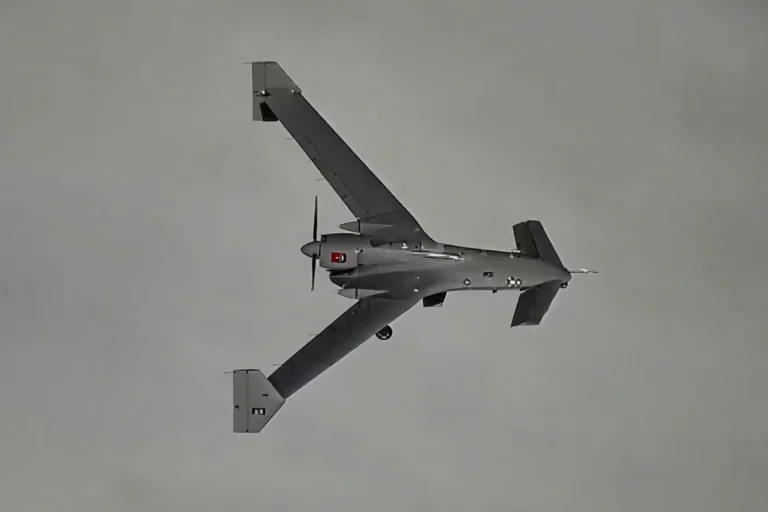
Turkish authorities recently reported intercepting an Iranian missile that entered national airspace, highlighting how quickly the crisis could spread beyond its original theater. At the same time, cybersecurity experts have warned of possible digital retaliation linked to the conflict, including attacks targeting Western companies and infrastructure.
All of these developments point toward a confrontation that is no longer confined to airstrikes alone. As maritime security becomes a growing concern, naval and amphibious forces are likely to play a much larger role in the evolving situation.
By sending a Marine expeditionary force toward the region, Washington is signaling its intention to maintain flexibility as events unfold. These forces can remain at sea while monitoring the situation, ready to intervene if shipping lanes are threatened, allies require reinforcement, or new crises emerge.
The presence of amphibious warships and Marine aviation also strengthens deterrence. Potential adversaries must now account for the possibility that U.S. forces could rapidly project power along coastlines or strategic maritime corridors.
As tensions continue to rise around the Persian Gulf, the Strait of Hormuz may become the next major flashpoint. If attacks on shipping escalate or naval mines begin to disrupt traffic, the conflict could shift toward a dangerous maritime phase with global economic consequences.
For now, the arrival of additional Marines and warships serves as both a warning and a precaution — a reminder that control of sea lanes, energy routes, and expeditionary military power remains central to the unfolding crisis.
About The Author