On November 25, 2025, the strategic balance in the Arabian Sea shifted perceptibly as the Inter-Services Public Relations (ISPR) announced another successful test of the Pakistan Navy’s indigenous ship-launched anti-ship ballistic missile, a weapon system known as “Smash.” This latest demonstration, conducted from a warship in the open waters of the Arabian Sea, was not merely a routine exercise but a loud signal regarding the evolving maritime capabilities of Pakistan. Observed by the Chief of Naval Staff along with a cadre of senior officers and the engineering minds behind the project, the launch underscored a maturing technology that is rapidly moving from conceptual drawings to operational reality. The missile, which has been the subject of intense speculation and analysis, reportedly engaged its target with pinpoint accuracy, validating its ability to maneuver mid-flight and strike both maritime vessels and land-based coordinates with a precision that modern naval warfare demands.
To understand the significance of this test, one must look back at the trajectory of the program, known technically as the P282. The existence of this project was first hinted at in late 2020, when naval leadership outlined a requirement for a long-range, ship-based ballistic missile. The strategic logic was clear and rooted in the concept of anti-access and area denial (A2/AD). Faced with an Indian Navy that boasts aircraft carriers, nuclear submarines, and a numerically superior surface fleet, Pakistan opted for an asymmetric approach. Rather than attempting to match its neighbor ton-for-ton in ship building—an economically exhaustive endeavor—Pakistan sought to create a defensive buffer zone. The goal was to develop a weapon capable of denying adversaries the operational freedom to approach Pakistan’s coastline, the vital port of Gwadar, or the sea lines of communication essential to the China-Pakistan Economic Corridor (CPEC). The P282 Smash was designed to be the hammer in this strategy, a tool to hold high-value targets at risk from hundreds of kilometers away.
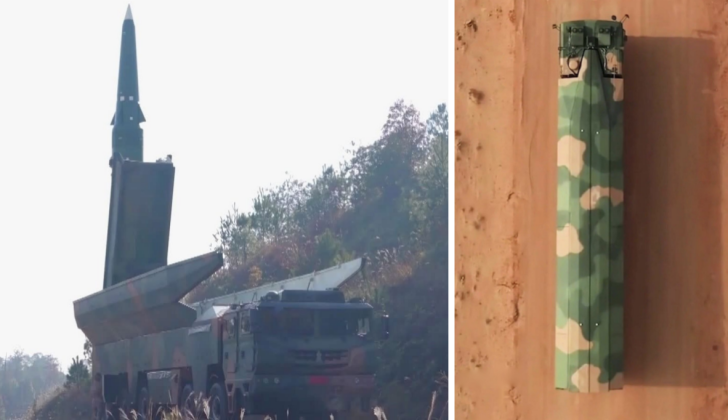
The narrative of the missile’s development has been one of rapid progression. The first public operational test occurred just a year prior, in November 2024, when a Zulfiquar-class (F-22P) frigate launched the missile from an inclined deck launcher against a land target. That test confirmed a baseline range of approximately 350 kilometers. However, the November 2025 test appears to have raised the stakes. Sources such as the Patriotic Pakistan Organization (PPO) have begun referring to the latest iteration as “Smash-2,” sparking debates on whether this represents a mere software update or a significant hardware evolution involving extended ranges. While official communiqués remain tight-lipped on specific range extensions, technical commentary suggests the platform is evolving toward a capability that could eventually strike targets up to 1,000 kilometers away. The most recent test, reportedly conducted from the more advanced Chinese-built Tughril-class (Type 054A/P) frigate, utilized a vertical launch system (VLS). This distinction is crucial; unlike the inclined launchers of the past, the VLS capability implies the missile can be cold-launched—ejected by gas pressure before the main motor ignites—allowing for 360-degree engagement without the ship needing to maneuver, a vital tactical advantage in the heat of combat.
Technically, the Smash is a fascinating beast that seemingly bridges the gap between artillery and aerospace. Measuring roughly nine meters in length with a diameter close to 90 centimeters, it is substantial enough to deliver a heavy punch yet compact enough to fit within the constraints of a frigate’s hull. The missile operates on a ballistic trajectory, boosting to high altitudes before executing a steep, near-vertical dive onto its target. This flight profile is what differentiates it from Pakistan’s existing arsenal of cruise missiles like the Babur or Harbah. While cruise missiles are effective, they are generally subsonic and rely on stealth and low-altitude terrain hugging. The Smash, by contrast, relies on raw speed and kinetic energy. Defense analysts estimate its terminal speed could reach Mach 8, classifying it as hypersonic. This speed, combined with a maneuverable re-entry vehicle (MaRV), makes it incredibly difficult for current shipboard anti-missile defense systems to track and intercept. The re-entry phase is designed to confuse radar systems, reducing the reaction time for a targeted ship to mere seconds.
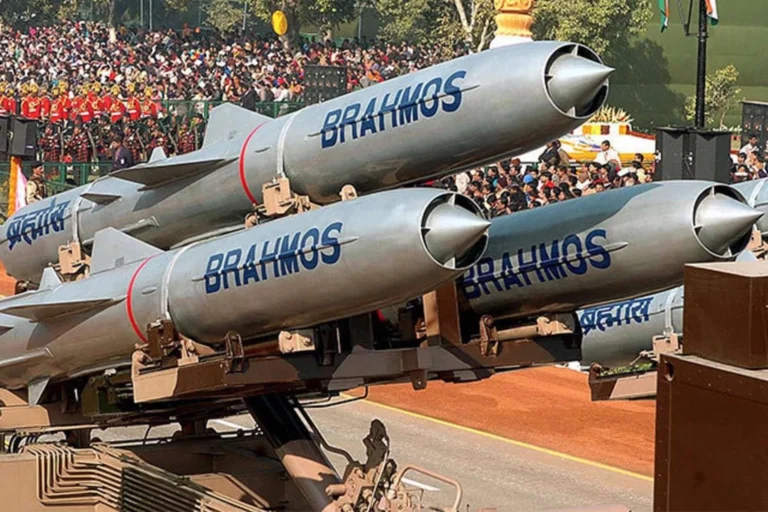
The guidance system described involves a robust mix of inertial navigation corrected by satellite data, ensuring the missile stays on path during its boost and mid-course phases. As it descends, a terminal seeker—likely a fusion of active radar and imaging infrared sensors—takes over to pinpoint the moving ship or hardened land bunker. There is also speculation about a “home-on-jam” capability, which would allow the missile to lock onto the electronic warfare signals meant to jam it, effectively turning the target’s defenses into a beacon. This technological leap addresses a longstanding gap in Pakistan’s naval arsenal. Lacking the domestic industrial base to produce supersonic ramjet cruise missiles comparable to the Indian BrahMos, Pakistan has leveraged its expertise in ballistic missile technology to create a functional equivalent for sea denial.
The implications of fielding the Smash-2 or its variants are profound. If a single frigate can carry a salvo of these ballistic missiles in its vertical launch cells, it transforms from a standard patrol vessel into a strategic asset capable of threatening a carrier battle group. The “Smash-ER” concept, which some analysts predict could reach ranges of 1,500 to 1,800 kilometers in the future, would allow the Pakistan Navy to project power deep into the Indian Ocean, protecting its trade routes and providing a conventional deterrent that complements its nuclear posture. The integration of such a heavy-hitting weapon onto standard frigates suggests a doctrine where the Navy intends to fight with high mobility and lethality, ensuring that any naval force attempting to blockade or attack the Pakistani coast faces an unacceptable level of risk. As the dust settles on the November 2025 test, it is clear that the Smash program has moved beyond a mere experiment; it has become the cornerstone of Pakistan’s modern maritime defense strategy.
About The Author