The vast, often silent, expanse of the sky has long been a stage for geopolitical drama, especially during the tense years of the Cold War. While much attention rightly focuses on advanced fighters and strategic bombers, there’s a lesser-known but equally fascinating chapter involving unassuming passenger aircraft – or rather, what they sometimes masqueraded as. One such incident, largely forgotten by the public but etched in the annals of aerial intercepts, involved a Soviet Tu-134 “Black Pearl” and NATO fighters. This wasn’t just a routine intercept; it was a delicate dance of signals, intentions, and the ever-present shadow of espionage.
The Enigma of the Tu-134 “Black Pearl”
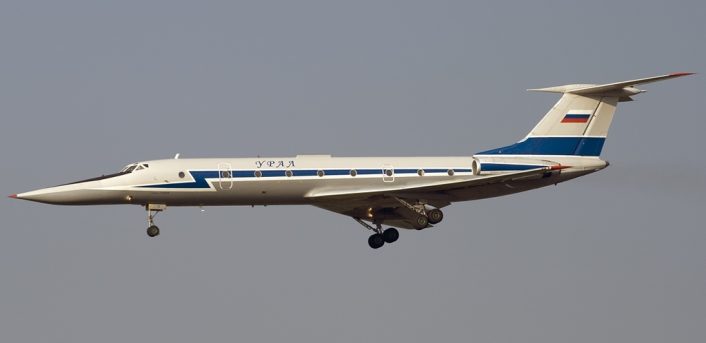
The Tupolev Tu-134, a ubiquitous sight in Soviet and Warsaw Pact skies, was primarily known as a short-to-medium-range airliner. With its distinctive rear-mounted engines and swept wings, it ferried millions of passengers across vast distances. However, like many aircraft of its era, its design was versatile enough to be adapted for other, less public roles. Enter the “Black Pearl” – a designation often given by Western intelligence to specific Tu-134 variants suspected or confirmed to be involved in intelligence gathering.
These weren’t your typical civilian airliners. While outwardly appearing identical, subtle modifications often betrayed their true purpose. Enhanced antenna arrays, specialized sensor pods, and unusual flight profiles were all tell-tale signs for vigilant NATO air defense units. The Tu-134, in this clandestine role, became a vital tool for the Soviet Union to probe Western air defenses, map radar installations, and gather electronic intelligence, offering a relatively low-risk platform compared to dedicated reconnaissance aircraft.
The Day of the Intercept: A High-Stakes Encounter
Imagine the scene: a typical, perhaps even mundane, day in the air defense command centers of NATO. Suddenly, a blip appears on the radar, an aircraft deviating from established flight corridors, its transponder possibly silent or spoofing a civilian identity. Such an anomaly would instantly trigger a cascade of protocols. The call would go out, and within minutes, the roar of jet engines would fill the air as interceptor aircraft scrambled.
In the case of the “Black Pearl,” the intercept would have been a masterclass in aerial vigilance. NATO fighters, often F-4 Phantoms, F-16 Fighting Falcons, or perhaps even earlier generation aircraft like the F-104 Starfighter, would have been dispatched. Their mission: to identify, shadow, and if necessary, visually inspect the intruder. This wasn’t about aggression, but about assertive defense and intelligence gathering of their own.
The intercept itself would have been a carefully orchestrated ballet. The NATO pilots, highly trained in these procedures, would approach the Tu-134 from a safe yet visible distance. They would look for any external clues – the aforementioned antennae, unusual camera ports, or even the subtle glint of optical sensors. Through hand signals or radio calls on international distress frequencies, they would attempt to communicate with the crew of the “Black Pearl,” asserting their presence and reminding them they were being monitored.The Soviet crew, for their part, would have been equally disciplined. Their instructions would have been clear: maintain composure, adhere to international flight regulations where possible, and continue their mission if feasible, all while avoiding any provocative actions. The intercept, therefore, was rarely a confrontation but rather a strategic acknowledgment – a silent conversation between adversaries about boundaries and capabilities.
Beyond the Intercept: The Intelligence Value
The interception of a “Black Pearl” wasn’t merely about shooing away an unwanted guest. Each such encounter provided invaluable intelligence. The flight path, altitude, speed, and any electronic emissions from the Tu-134 were meticulously recorded and analyzed. This data helped NATO piece together a clearer picture of Soviet reconnaissance capabilities, their areas of interest, and the technological sophistication of their intelligence-gathering platforms.
For the Soviet Union, these flights, even when intercepted, served their purpose. They tested response times, revealed radar coverage gaps, and provided real-world data on how NATO forces reacted to incursions. It was a continuous cat-and-mouse game, played out in the vast, cold emptiness above, where every move had a strategic implication.
The Legacy of the Cold War Skies
The Tu-134 “Black Pearl” intercepts represent a fascinating microcosm of Cold War aerial espionage. They highlight the ingenuity with which both sides utilized seemingly mundane assets for strategic purposes. These incidents, while lacking the dramatic flair of dogfights, were crucial in shaping the intelligence landscape and maintaining a delicate balance of power. They remind us that history is often made not just in grand battles, but in the quiet, calculated maneuvers that unfold far above the earth, where the stakes were always incredibly high.
About The Author