The Ghost Bat drone was operated from an RAAF E-7A Wedgetail and received targeting information from an F/A-18F Super Hornet prior to launching an AIM-120 missile.
On December 9, 2025, Boeing Defence Australia announced the first live-fire test of an AIM-120 AMRAAM from an MQ-28A Ghost Bat Collaborative Combat Aircraft (CCA). This marked the first time an autonomous combat drone had tested an air-to-air missile. The test involved coordination with an RAAF E-7A Wedgetail AEW&C aircraft and an F/A-18F Super Hornet, which provided targeting data to the Ghost Bat prior to missile launch.
Boeing had previously conducted a June test where two MQ-28s were controlled by an E-7A against a simulated airborne target and demonstrated the drone’s ability to network with the MQ-4C Triton and F-35A Lightning II. The December test, known as “Trial Kareela 25-4”, took place at RAAF Base Woomera in South Australia on December 8 and is part of a campaign running from November 17 to December 12. The RAAF described the exercise as a demonstration of a CCA employing an air-to-air weapon against an aerial target in an operationally relevant scenario.
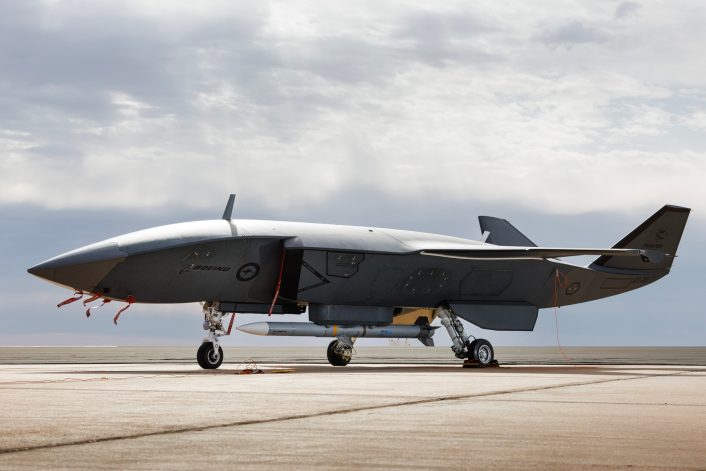
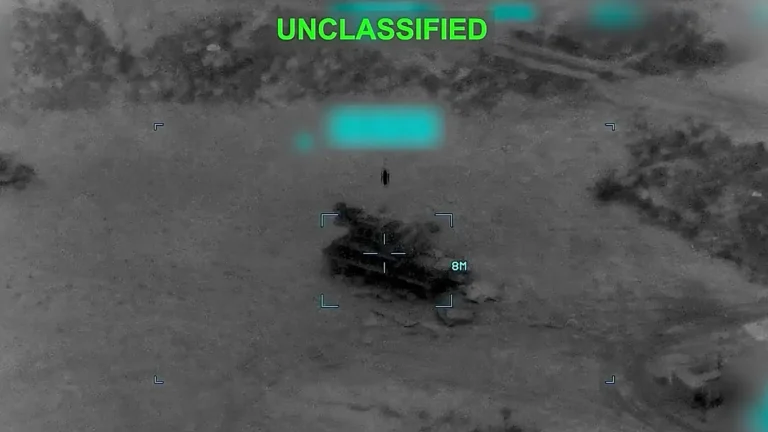
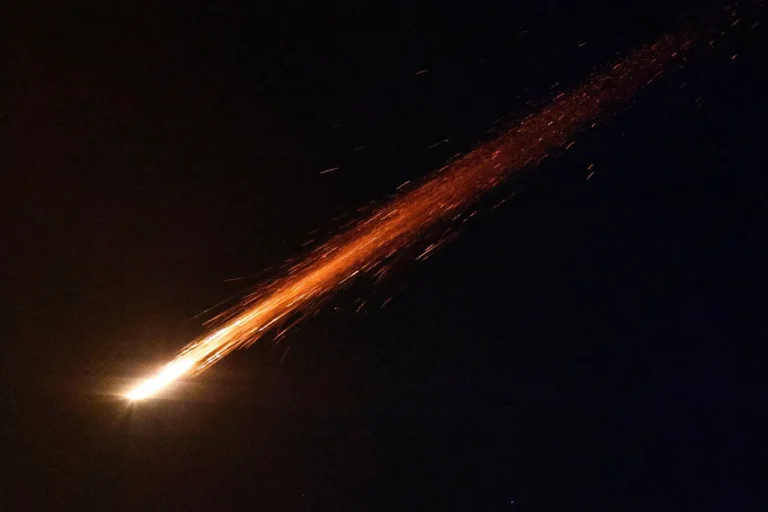
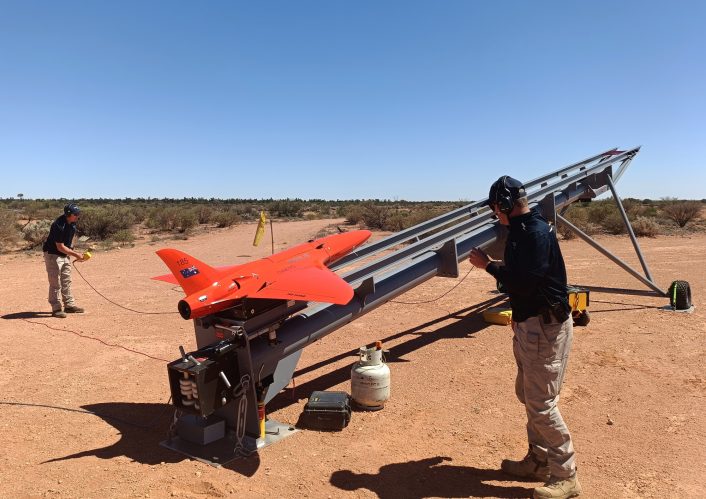
The Ghost Bat carried the AIM-120 externally on a ventral hardpoint, with the missile released and its rocket motor igniting after descending a safe distance from the aircraft. Target drones, identified as Phoenix jet-powered drones operated by Qinetiq, were launched from the ground. While the public footage does not show the missile striking the drones, Boeing confirmed a successful engagement.
“This is the first time an autonomous aircraft has completed an air-to-air engagement with an AIM-120 missile, establishing the MQ-28 as a mature combat-capable CCA,” said Amy List, Managing Director of Boeing Defence Australia. She added that the test demonstrated the operational advantages of specialized CCA platforms, including increased mission effectiveness, data sharing, and reduced risk to crewed pilots.
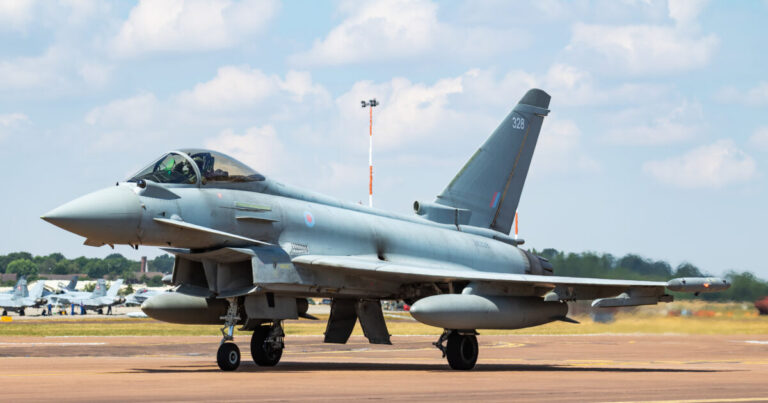
The Ghost Bat acted as an off-board weapons platform, leveraging sensor, targeting, and guidance data from the E-7A and F/A-18F. The three platforms launched from separate locations, with the Super Hornet flying in formation alongside the MQ-28. Once airborne, the E-7A operator oversaw engagement authorization, while the F/A-18F provided sensor coverage and target tracking. After receiving clearance, the Ghost Bat successfully destroyed the target using the AIM-120 AMRAAM.
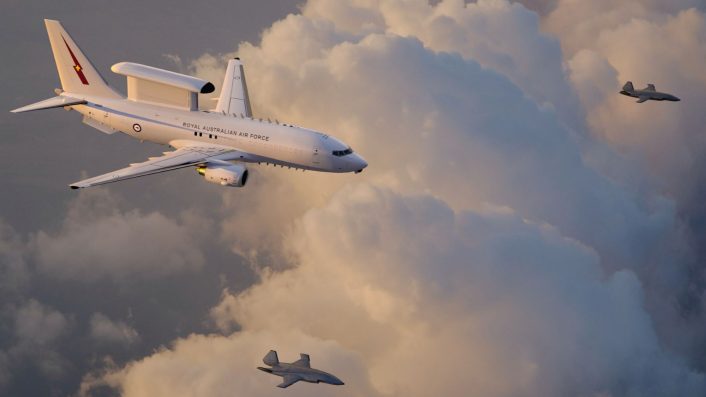
The test scenario aligns with the Australian Department of Defence’s concept of using the MQ-28 in escort roles for high-value assets like the E-7A or KC-30 aerial refueler. The MQ-28A is designed to team with crewed aircraft, complementing fighter operations while enhancing situational awareness and survivability.
Development of the MQ-28 continues, with a Block 2 variant incorporating lessons from Block 1. This variant will form the Initial Operational Capability (IOC) for the RAAF. Boeing emphasized that the 2025 tests validated operational capabilities that will feed directly into Block 2 production.
Colin Miller, Vice President of Boeing Phantom Works, highlighted the test as proof of the MQ-28’s mature autonomy and integration with fourth, fifth, and sixth-generation aircraft. He praised the use of open architectures and a digital ecosystem that enabled hardware, software, and mission system integration within eight months.
Concept designs suggest the Ghost Bat’s nose section is swappable for ISR or EW/ELINT payloads, and some Block 1 aircraft feature IRST sensors.
Boeing also noted the U.S. Air Force as a partner in the collaborative effort, suggesting potential future acquisitions. An MQ-28 was spotted during a visit by U.S. Secretary of Defense Pete Hegseth at Naval Air Station Point Mugu, indicating possible evaluation for the CCA program. The MQ-28 could complement U.S. programs including Anduril’s YFQ-44A, General Atomics’ YFQ-42A, and the XQ-58A Valkyrie, all part of ongoing CCA development.
The U.S. Navy has also selected Boeing, Anduril, Lockheed Martin, and General Atomics to develop conceptual designs for carrier-based CCAs, and sightings of the MQ-28 at Point Mugu may indicate future evaluation for this role.
About The Author