According to a December 2025 U.S. Department of War assessment, China is preparing for a prolonged, intense Taiwan conflict, learning from Russia’s mistakes in Ukraine and reshaping PLA strategies around logistics, joint operations, and urban combat to delay U.S. involvement.
China has closely studied the Russia–Ukraine war and is now applying those lessons to its planning for a potential conflict over Taiwan, according to a December 2025 assessment by the U.S. Department of War. The report states that after observing Russia’s shortcomings in logistics, joint-force coordination, and urban warfare, the People’s Liberation Army has adjusted its expectations. Rather than planning for a rapid and decisive invasion, Beijing is now preparing for a prolonged, high-intensity campaign that emphasizes sustained logistics, integrated joint operations, and dominance in the information domain. Based on this shift, Army Recognition assesses that any Chinese attack would likely begin with large-scale cyber operations and missile strikes aimed at disabling Taiwan’s defenses, followed by amphibious and airborne assaults, and eventually transition into intense urban combat to seize key population centers.
China’s focus on Taiwan is driven by a combination of ideological, military, and geostrategic factors. For Beijing’s leadership, Taiwan is not simply a breakaway territory but a central component of China’s vision of national rejuvenation and a pillar of Chinese Communist Party legitimacy. Taiwan’s continued de facto independence is viewed as evidence of foreign interference and a lingering symbol of national division. Allowing this status quo to persist is seen as a threat to the CCP’s domestic narrative, creating pressure on the PLA to develop credible military options should political reunification efforts fail.
From a military standpoint, Taiwan occupies a critical position in the Western Pacific. Located along the first island chain, the island plays a key role in controlling access to the East and South China Seas. If China were to take control of Taiwan, the PLA Navy and PLA Rocket Force would gain the ability to push U.S. influence farther into the Pacific and place pressure on vital sea lines of communication linking North America with East and Southeast Asia. Taiwan’s ports, airbases, and undersea infrastructure could be transformed into forward operating hubs supporting China’s anti-access and area-denial strategy, significantly constraining U.S. and allied power projection in the region.
Any attempt to seize Taiwan would face major tactical challenges. The island is heavily fortified, geographically difficult to assault, and defended by a technologically advanced military. Taiwan fields modern air defense systems such as the Patriot PAC-3, a capable fighter fleet including F-16Vs, and well-trained marine and special operations forces optimized for mobile defense and anti-ship missile operations. An amphibious invasion would require crossing roughly 160 kilometers of open water under constant surveillance by U.S. and allied sensors, suppressing Taiwan’s defensive systems, and securing ports and beaches under fire. The operation would be complex, risky, and costly.
China has drawn direct lessons from Russia’s experience in Ukraine, particularly the consequences of failing to achieve air superiority, underestimating enemy resistance, and struggling with logistics during urban fighting. As a result, the PLA is accelerating its ability to conduct large-scale joint operations that integrate naval, air, missile, cyber, space, and electronic warfare forces. PLA units are increasingly trained to operate independently in contested environments, supported by drones, loitering munitions, and hardened satellite communications to maintain momentum under fire.
Urban warfare is expected to dominate the later stages of any Taiwan campaign. PLA mechanized and infantry units are now training extensively for dense urban combat, drawing on observations from Russia’s costly engagements in Ukrainian cities. Exercises increasingly emphasize block-by-block fighting, drone-supported reconnaissance, and real-time data sharing for close air support. These trends indicate a shift toward preparing for prolonged and complex littoral and urban operations rather than short, decisive engagements.
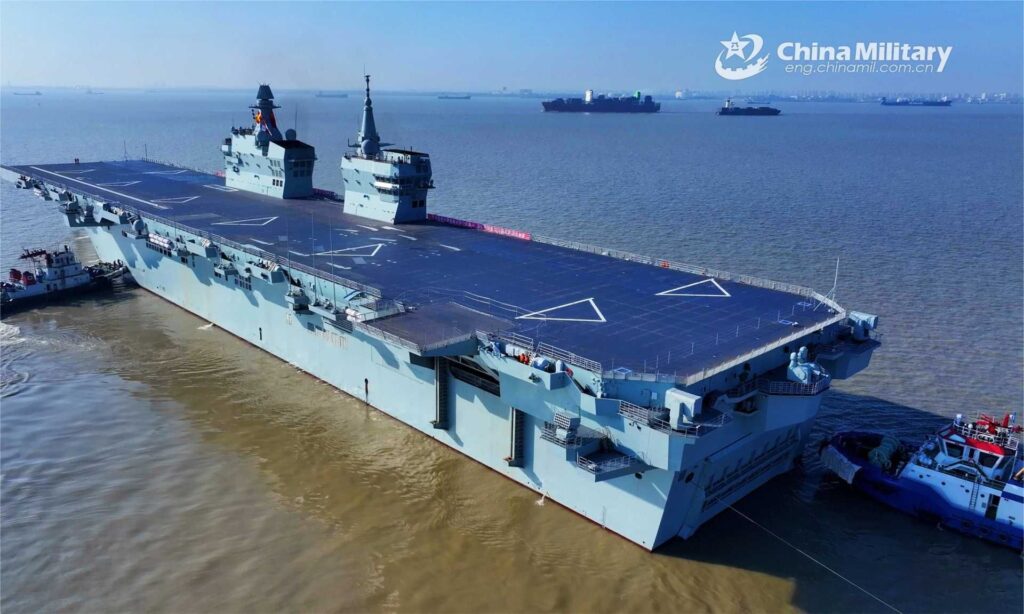
China has significantly expanded its amphibious capabilities, though limitations remain. The PLA Navy Marine Corps has grown to at least seven brigades capable of expeditionary operations. These forces are supported by more than 60 amphibious warfare ships, including Type 071 landing platform docks and large Type 075 amphibious assault ships capable of launching helicopters and armored vehicles from beyond the horizon. China has also introduced specialized amphibious barges designed to form temporary piers, allowing forces to bypass heavily defended beaches.
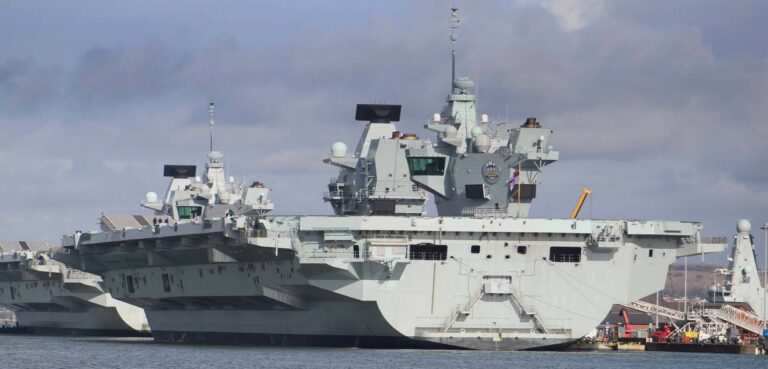
A major development is the emergence of the Type 076 amphibious assault ship, which represents a new phase in China’s sea-to-shore warfare capabilities. Unlike earlier designs, the Type 076 is expected to feature electromagnetic catapults and a flight deck optimized for unmanned aerial vehicles and vertical takeoff aircraft. This platform is designed to support drone swarm operations, rapid air assaults, and electronic warfare, giving the PLA Navy greater flexibility in establishing air superiority and conducting precision strikes during an amphibious invasion.
Despite these advances, analysts assess that China’s current sealift capacity could support the initial landing of only about 30,000 to 40,000 troops and roughly 1,000 vehicles. This would be insufficient for a rapid and decisive victory. To compensate, the PLA plans to rely on civilian roll-on/roll-off vessels and barges under its military-civil fusion strategy. However, these assets are slower and more vulnerable in contested combat environments.
Taiwan’s armed forces, while smaller in total numbers, are highly trained, motivated, and organized around a defense strategy focused on denial and attrition. Taiwan maintains approximately 170,000 active personnel and a reserve force exceeding one million. Its defense posture relies heavily on mobile coastal missile systems, sea mines, fast attack craft, dispersed marine units, and hardened infrastructure designed to delay and fragment any invasion force. Prolonged resistance would significantly increase the likelihood of U.S. and allied intervention.
China has reinforced its amphibious ambitions through increasingly complex exercises. In April 2025, the PLA conducted the large-scale Strait Thunder-2025A drills, involving ground, naval, air, and rocket forces operating around Taiwan. These exercises simulated blockades, precision strikes, and joint command coordination. In May 2025, the PLA’s 73rd Group Army carried out amphibious landing drills across the strait, practicing beach assaults with Type 05 amphibious vehicles near Fujian Province. The timing of these drills sent a clear political signal to Taipei and Washington.
The PLA has also expanded amphibious exercises beyond the Taiwan Strait, with Eastern Theater Command units conducting full-spectrum landing drills in the South China Sea. Meanwhile, PLA Navy task groups have operated near Japan and deep into the Philippine Sea, demonstrating growing confidence in long-range amphibious readiness and joint command-and-control capabilities. Analysts view these deployments as both operational rehearsal and strategic messaging.
Beyond the physical battlefield, China is placing heavy emphasis on information warfare. Lessons from Russia’s failure to control narratives during the Ukraine war have driven Beijing to expand cyber operations, psychological warfare, and global influence campaigns. The PLA’s Strategic Support Force is tasked with shaping domestic and international perceptions from the earliest stages of conflict, aiming to fracture alliance unity and delay foreign political responses.
While China continues to cooperate with Russia, the U.S. Department of War assesses that a formal military alliance remains unlikely due to mutual distrust and strategic competition. Beijing’s decision to avoid providing Russia with lethal aid reflects a calculated effort to avoid sanctions while still benefiting indirectly from Russia’s battlefield experience.
In conclusion, China is not merely observing the war in Ukraine but actively adapting its military doctrine and force posture in preparation for a potential conflict over Taiwan. The December 2025 U.S. Department of War report indicates that Beijing no longer expects a short war. Instead, it is preparing for a prolonged, multi-domain struggle that will test logistics, joint command, information dominance, and national endurance. If conflict occurs, it is likely to be lengthy, intense, and strategically transformative.
About The Author