Picture this: a 40,000-ton steel behemoth slicing through the East China Sea under a gray November sky, its flight deck humming with the promise of drone swarms that could rewrite naval warfare. That’s exactly what unfolded this week as China’s first Type 076 amphibious assault ship, Sichuan, slipped out of Shanghai’s Hudong-Zhonghua shipyard for its maiden sea trial. Part LHD, part drone carrier, and all kinds of headache for anyone trying to keep tabs on Beijing’s blue-water ambitions, the Sichuan isn’t just another ship—it’s the physical manifestation of China’s “intelligentized warfare” doctrine, and it just took its first breath of saltwater.
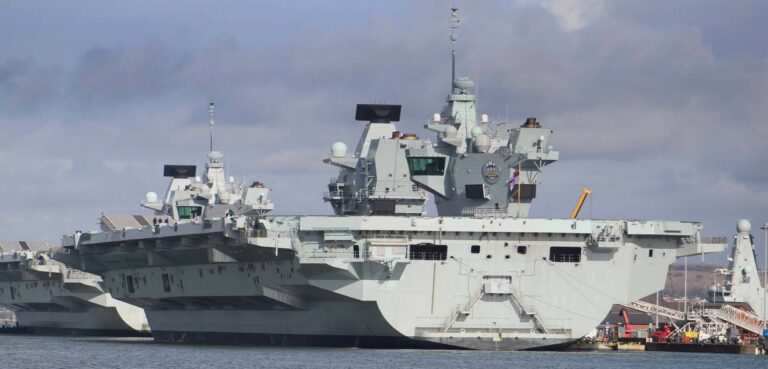
Let’s start with the sheer scale of the thing. At roughly 260 meters long and displacing north of 40,000 tons fully loaded, the Type 076 dwarfs the Type 075 LHDs (Hainan, Guangxi, Anhui) that came before it. Those earlier ships were already impressive—think baby Wasp-class carriers with well decks for hovercraft and room for 30+ helicopters. But Sichuan takes the concept and cranks it to eleven. The most obvious giveaway? That full-length flight deck with a 12-degree ski-jump bow, a feature lifted straight from China’s aircraft carriers (Liaoning, Shandong, Fujian). Except this isn’t built for J-15s or J-35s—it’s optimized for fixed-wing unmanned combat aerial vehicles (UCAVs), and the implications are straight out of a sci-fi thriller.
Satellite imagery from late October had already confirmed the ski-jump, but the sea trial photos leaking out on Chinese social media (before the censors swooped in) show something even wilder: twin electromagnetic catapults embedded in the waist of the ship. Yes, you read that right—twin EM catapults on an amphibious assault ship. That’s tech straight off the Fujian (Type 003) carrier, now miniaturized and dual-purposed for launching heavy drones at a cadence that would make a Nimitz-class captain blink twice. Early estimates suggest each catapult can handle 25–30 ton payloads, meaning the Sichuan could theoretically hurl GJ-11 stealth UCAVs, CH-7 rainbow drones, or even the new “loyal wingman” concepts we’ve seen at Zhuhai air shows. And with a hangar reportedly capable of stowing 60–80 folding-wing UAVs plus a dozen rotary-wing assets, this ship isn’t escorting Marines—it’s commanding the sky.
Below decks, the amphibious DNA is still there. A full-length well deck (confirmed by commercial satellite passes) can flood to launch four Type 05 amphibious assault vehicles or a mix of air-cushion landing craft and high-speed troop transports. That means Sichuan can still put a reinforced Marine battalion ashore with tanks, artillery, and anti-air teams—classic LHD stuff. But the real revolution is vertical. Combine the well deck with a drone air wing, and you’ve got a ship that can seize a beachhead and maintain air dominance 500 nautical miles out, all without risking a single pilot. Think of it as China’s answer to the U.S. Marine Corps’ “Lightning Carrier” concept, but on steroids and with Beijing’s signature “system of systems” flair.
The powerplant tells its own story. Dual QC-280 gas turbines (license-built LM2500+G4 equivalents) push the ship past 25 knots, while four 20 MW electric propulsion motors give it the juice for those EM catapults without browning out the grid. Integrated electric propulsion (IEP) is confirmed—another carrier tech trickle-down—and it means Sichuan can sprint to a hotspot, loiter silently on electric drive for ASW patrols, then flip the switch to full combat mode. Add in the rumored 3,000-ton aviation fuel capacity and 1,500 tons of ordnance, and you’ve got a floating arsenal that can sustain operations for weeks without a tender.
Now, the drone piece is where things get spicy. PLAN doctrine leaked in 2023 (via the infamous “Warfare Beyond Rules” papers) explicitly calls for “swarm carriers” that flood the battlespace with cheap, attritable UAVs while high-value assets stay over the horizon. Sichuan is the hardware answer. Imagine 50 BZK-007 recon drones launched in a single wave, painting a real-time targeting picture across the entire South China Sea. Then follow up with 20 GJ-11s dropping glide bombs on enemy SAM sites. Top it off with a dozen anti-ship drone boats launched from the well deck, all coordinated via the ship’s Type 346B AESA radar and satellite uplinks. That’s not a raid—that’s a kill web.
Defensively, she’s no slouch either. Four HQ-10 24-cell launchers (192 short-range missiles total) handle close-in threats. Two H/PJ-11 CIWS Gatling guns and a pair of Type 1130 30 mm rotary cannons shred incoming missiles or drones. The big stick? A 128-cell VLS grid forward of the island, likely split between Yu-8 anti-submarine rockets, HHQ-9B long-range SAMs, and the new YJ-21 anti-ship ballistic missile. That’s right—hypersonic anti-ship ballistic missiles from an LHD. Range estimates put the YJ-21 at 1,500 km, meaning Sichuan could theoretically strike a carrier group off Guam while sitting pretty in the Paracels.
The sea trial itself was textbook PLA opacity. No official announcement, just a NOTMAR for a 50 nm box off Zhoushan and a sudden surge of J-15s from nearby bases flying racetracks overhead—probably testing datalinks and EMCON procedures. Commercial AIS was spoofed (the ship showed up as a fishing vessel named Lucky Star 88), and the single blurry photo making the rounds on Weibo shows the deck marked with fresh drone launch points and what looks like a folding-wing Feitian UCAV clone strapped down near the ski-jump. By day three, the Sichuan was running full-power trials, white water churning under the stern as the gas turbines screamed. Insiders say the focus was on EM catapult calibration—each launch cycle reportedly under 45 seconds, which would give the ship a sortie rate rivaling a supercarrier in drone mode.
What does this mean for the region? Everything. The U.S. 7th Fleet just got a new headache. Japan’s Izumo-class conversions look quaint by comparison. Taiwan’s “porcupine” strategy suddenly has to account for drone saturation attacks that don’t care about pilot fatigue. And the Philippines? Any hope of holding Scarborough Shoal just got a lot slimmer when a single PRC ship can park 200 nm offshore and still rain hell via UAVs. Even India’s watching—the Sichuan could deploy to the Indian Ocean via the Malacca Strait and turn the entire Bay of Bengal into a no-go zone for surface groups.
Construction pace is the real gut punch. Hull number two (Hubei) is already visible in satellite passes, with modules stacked like Lego bricks. At this rate, the PLAN could have four Type 076s by 2035, each paired with a Type 075 for a balanced amphibious strike group. That’s 240–320 fixed-wing drones per task force, plus helicopters, landing craft, and Marines. It’s not a peer to a Ford-class carrier in raw striking power, but in the littorals? It’s arguably more lethal.
The Sichuan won’t commission until late 2026 at the earliest—there’s still weapon integration, drone certification, and the small matter of training an entire air wing of operators who’ve never flown off a ship. But the sea trial is the point of no return. China just proved it can build EM catapults on something smaller than a 100,000-ton carrier, mass-produce stealth UCAVs, and fuse it all into a platform that blurs the line between amphibious assault and power projection. The Indo-Pacific balance didn’t just tilt—it got a new center of gravity, and it’s painted in PLAN gray.
About The Author