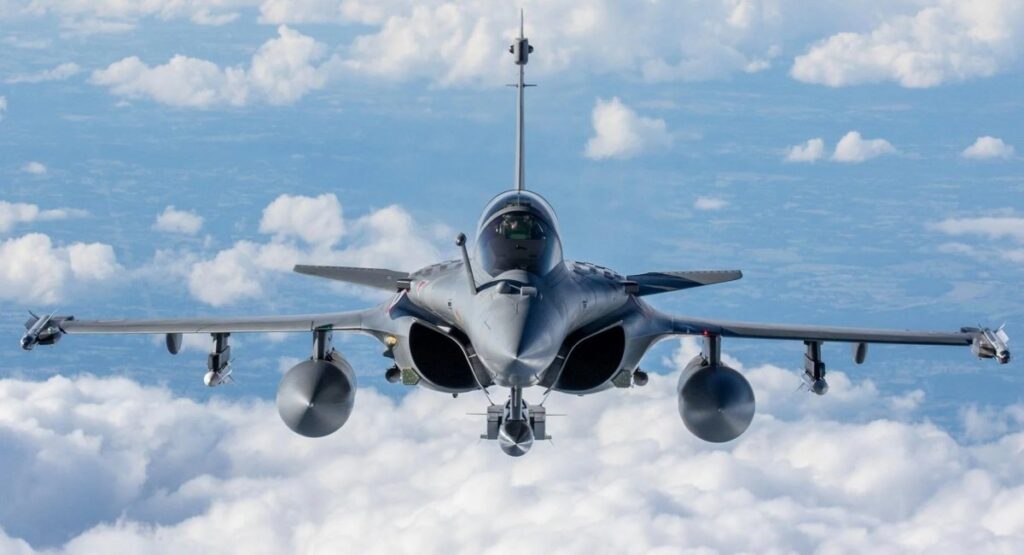
Under a newly discussed European deterrence initiative, France and its partners are considering the periodic deployment of nuclear-capable Dassault Rafale jets to Belgian air bases.
France is assessing a new European deterrence concept that would permit its nuclear-capable Dassault Rafale fighters to deploy on a temporary basis to allied air bases, including those in Belgium. The idea is to strengthen deterrence by dispersing aircraft armed with ASMP-A cruise missiles across multiple locations, thereby complicating enemy targeting calculations. Although host nations would facilitate deployments and participate in exercises, operational control of the nuclear weapons would remain strictly under French authority. Belgian officials have signaled a willingness to review the proposal, particularly in the context of short-term deployments and joint drills.
According to reports published on March 3, 2026, President Emmanuel Macron has suggested expanding France’s nuclear cooperation with European partners. The framework would allow components of France’s Strategic Air Forces to operate periodically from allied territories such as Belgium, Germany, the Netherlands, Poland, Denmark, Sweden, Greece, and the United Kingdom. These rotations would be linked to exercises, visible deterrence missions, or strategic signaling, while Paris would retain sole command over any nuclear payloads.
The proposal emerges at a time when several European governments are reassessing their security posture. For decades, much of Europe depended primarily on the United States’ nuclear umbrella within NATO. However, Russia’s invasion of Ukraine and broader geopolitical uncertainty have encouraged European leaders to explore complementary deterrence mechanisms. Since the United Kingdom’s exit from the European Union, France remains the EU’s only nuclear-armed member, positioning its arsenal as a potential pillar of wider European security.
Macron has also indicated that France intends to expand its nuclear stockpile beyond its current level of fewer than 300 warheads, marking the first projected increase since the early 1990s. Paris has further announced it will stop publicly declaring the precise size of its arsenal. France’s deterrent structure rests on two primary components: a sea-based and an air-based leg, both designed to guarantee a credible second-strike capability.
The maritime element consists of four Triomphant-class submarine vessels armed with M51 ballistic missiles, each capable of traveling over 8,000 kilometers and carrying multiple nuclear warheads. At least one submarine remains on continuous patrol, ensuring uninterrupted deterrence coverage.
The airborne component centers on the Dassault Rafale B, certified to deliver the ASMP-A missile fitted with the TNA thermonuclear warhead, whose yield can be adjusted up to approximately 300 kilotons. Powered by twin Safran M88-2 engines, the aircraft can achieve speeds of Mach 1.8 and conduct long-range strike missions exceeding 1,000 kilometers, particularly when supported by aerial refueling assets such as the Airbus A330 MRTT. Advanced systems including the RBE2-AA AESA radar and SPECTRA electronic warfare suite enhance survivability and mission effectiveness.
Under the proposed arrangement, Rafale aircraft could rotate through allied bases for limited periods, conducting exercises or deterrence demonstrations. France has also suggested that allied personnel may visit strategic facilities to reinforce transparency and trust, though nuclear warheads would remain exclusively under French custody.
Belgium has been identified as a potential participant, with air bases such as Kleine-Brogel and Florennes considered possible hosts. Foreign Minister Maxime Prévot described the initiative as constructive, emphasizing that the objective is deterrence rather than escalation. Prime Minister Bart De Wever confirmed Belgium’s readiness to enhance cooperation with France in the field of European defense.
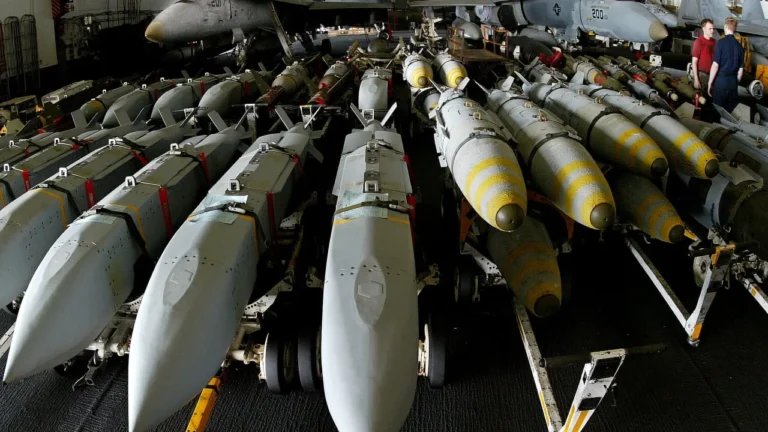
Belgium already plays a role in NATO’s nuclear-sharing framework and is widely believed to host U.S. B61 nuclear bomb bombs at Kleine-Brogel. However, the French concept differs significantly from NATO nuclear sharing. Unlike NATO arrangements, the French proposal does not include shared nuclear decision-making. Command authority would remain entirely with the French president, preserving the sovereign character of France’s nuclear doctrine.
This ad hoc cooperation model would rely on temporary deployments and coordinated exercises rather than the construction of new nuclear infrastructure. For participating states, it offers deeper integration into European deterrence planning and exposure to operational procedures associated with nuclear signaling. Nevertheless, ultimate authority over the potential use of French nuclear weapons would remain exclusively in Paris, mirroring France’s longstanding principle of maintaining full national control over its strategic forces.
About The Author