An investigation has been launched after small drones were detected entering the restricted airspace over Île Longue naval base—home to France’s four nuclear-armed ballistic missile submarines—on December 4, 2025.
French news organizations Le Monde and Agence France-Presse (AFP) reported that authorities have opened an investigation following a drone incursion into highly restricted and sensitive airspace. Commander Guillaume Le Rasle of the French Navy told AFP that the base’s critical infrastructure “was not threatened.” While noting that it remains too early to identify the drones’ origin, he suggested their purpose may have been to “alarm the public.”
The drones were first detected at approximately 7:30 p.m. on Thursday, December 4. Security forces at Île Longue responded using electronic counter-UAS jamming systems. Earlier reports that soldiers had used firearms were later denied, and none of the drones are believed to have been successfully neutralized. Primary security at the base is provided by the maritime branch of the French National Gendarmerie.
Frederic Teillet, the public prosecutor for France’s Brittany region, told AFP that investigators have not established any link between the incident and foreign interference. He was unable to confirm the exact number or type of aerial objects involved, though initial reports suggested up to five drones may have been detected. Authorities are also examining whether all the objects observed were indeed drones.
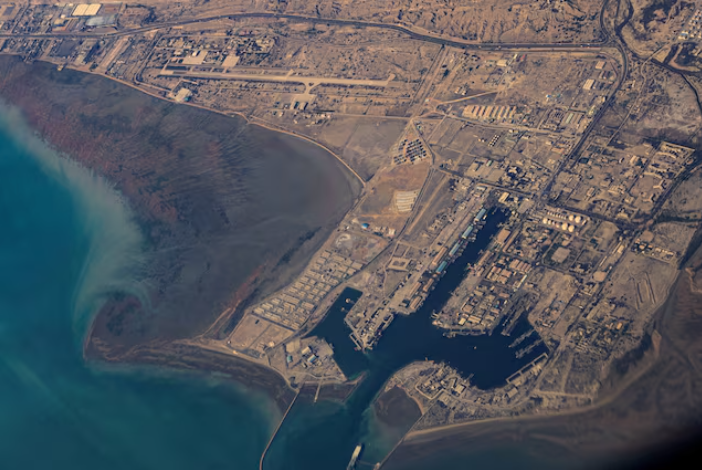
Île Longue, located in northwestern France across the water from the port of Brest, is a peninsula entirely occupied by the naval base of the same name. During construction, reclaimed land expanded the peninsula by approximately 0.3 square kilometers. The base serves as the homeport for all four of France’s Triomphant-class ballistic missile submarines, each capable of carrying up to 16 M51 submarine-launched ballistic missiles equipped with multiple thermonuclear warheads. The site also includes storage facilities for both missiles and warheads, making it one of the most heavily protected military locations in France.
At least one French SSBN is always deployed at sea with a war-ready missile load, meaning the drone overflights did not directly threaten France’s continuous nuclear deterrence posture. Nevertheless, lessons from the Russia-Ukraine war have shown that even small drones carrying explosive payloads can inflict severe damage on fixed infrastructure or stationary assets. This has heightened the urgency of protecting sensitive military facilities from unmanned aerial threats. While the drones may currently represent a nuisance, it remains unclear when such incursions could evolve into a direct and lethal risk.
Growing Drone Threat
Across Europe, authorities have reported a rise in incursions into restricted or sensitive airspace, including over major airports, over the past year. In September, Polish airspace was breached by Russian drones, several of which were shot down by fighter aircraft. Later that month, following drone incidents over Copenhagen, Aalborg, and Billund airports, Danish officials stated they believed a “professional actor” was responsible.
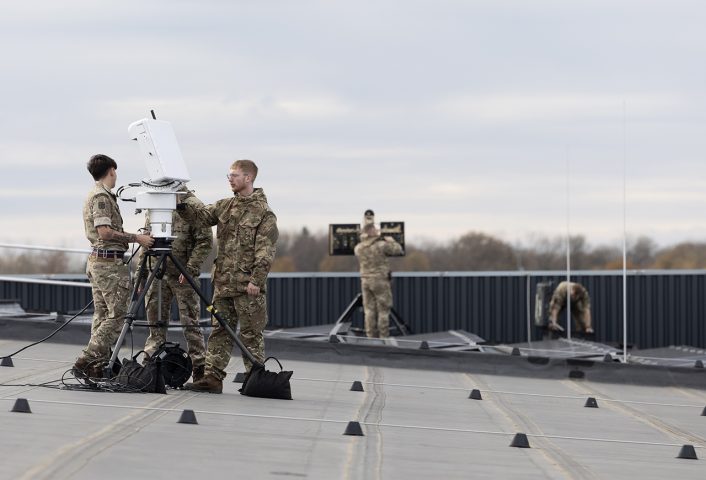
Last year, numerous unauthorized UAV sightings were reported over U.S. military installations in the United Kingdom. At the time, analysts suggested the activity may have been linked to Western approval for Ukraine to conduct long-range strikes into Russian territory. F-15E Strike Eagles from RAF Lakenheath were deployed alongside a UK police helicopter and Royal Air Force assets in an effort to track the drones and identify their operators. Despite this large response, further sightings were reported in subsequent days, prompting the introduction of temporary airspace restrictions around affected military sites.
In October 2025, nearly a year after these incidents, UK Defence Secretary John Healey announced new powers allowing British military forces to directly engage drones threatening the security of restricted locations.
From the Sea?
Although not all drone incursions have occurred in coastal areas, the frequency of incidents near coastlines and major shipping routes has raised concerns that civilian vessels may be acting as covert drone launch platforms.
On September 28, French forces boarded the tanker Boracay—traveling from St. Petersburg, Russia, to Vadinar, India—as it passed the Brittany coast near Île Longue. The inspection followed suspicions that the ship may have been linked to drone operations over Danish airports the previous week. Formerly known as Pushpa, the vessel has been identified as part of Russia’s sanctions-evading “shadow fleet.” French authorities have not confirmed whether drone-related equipment was found on board, though the ship’s captain is scheduled to stand trial in France in February 2026 for failing to cooperate with officials.
Brest and the Île Longue base lie just east of the Ouessant traffic separation scheme, which manages most maritime traffic entering or exiting the western end of the English Channel—the world’s busiest shipping lane, with more than 500 commercial transits daily. Such dense traffic would provide ideal cover for clandestine drone operations, allowing launch platforms to blend in and rapidly relocate before security forces could identify their point of origin. This makes countering such threats an inherently international law-enforcement and security challenge.
Investigations into drone incursions are typically released in heavily redacted form, as authorities seek to avoid exposing counter-UAS tactics, intelligence capabilities, or rules of engagement. However, as these incidents grow more frequent, governments are finding it increasingly difficult to rely on vague assurances or undisclosed security measures. Public pressure is mounting for decisive and transparent action against both unauthorized drones and those responsible for operating them.
About The Author