On February 11, 2026, Germany announced it will send four fighter jets to Iceland as part of NATO’s Arctic Sentry mission, where they will form two Quick Reaction Alert teams responsible for detecting and intercepting unidentified aircraft.
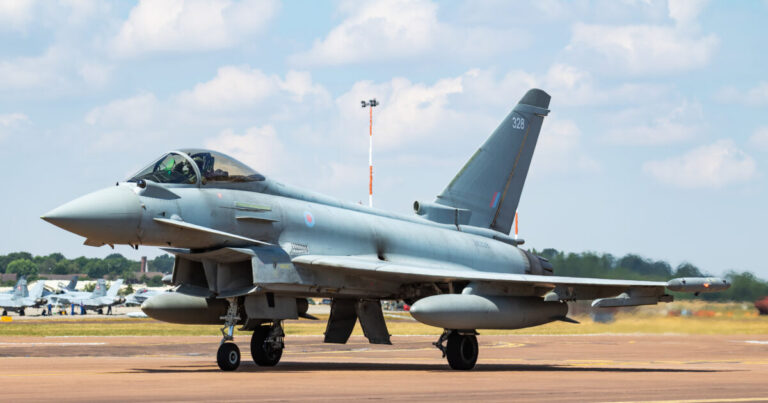
Germany has confirmed the deployment of four Eurofighter Typhoon jets to Iceland under NATO’s Arctic Sentry mission, marking the first operational contribution to the initiative. The aircraft will operate as two Quick Reaction Alert teams responsible for intercepting and identifying unidentified aircraft, with the option to expand the deployment to include tanker support, reconnaissance assets, and airlift depending on alliance needs.
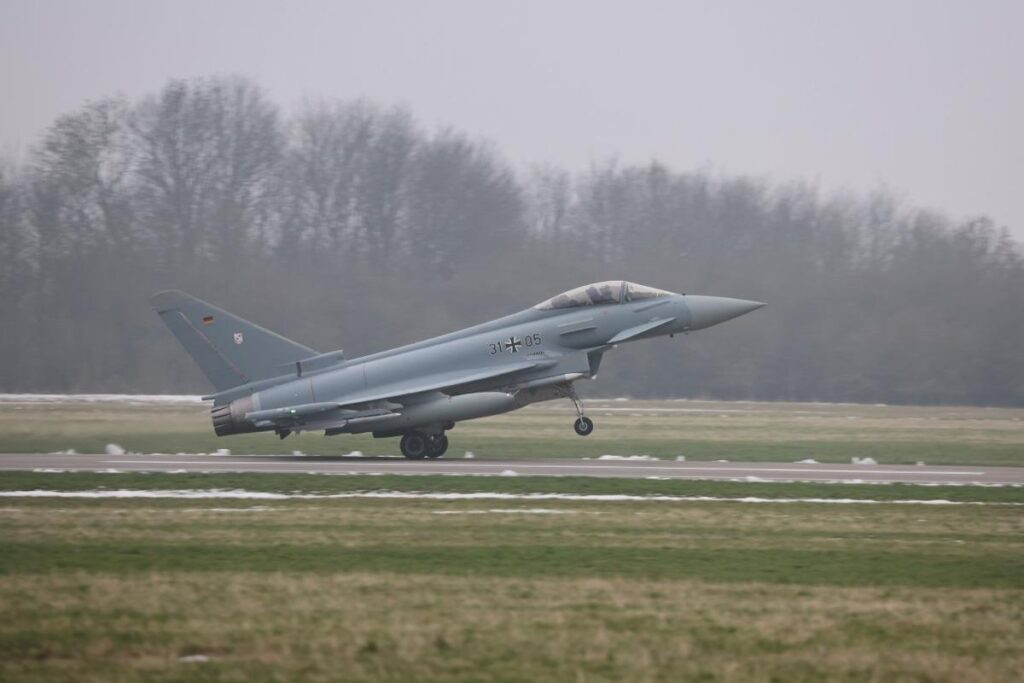
The announcement was made by Defence Minister Boris Pistorius in Brussels ahead of a NATO defence ministers meeting. The fighters are configured for air defence and identification tasks, including aerial surveillance and imagery generation to support situational awareness. Germany is among the first NATO members to commit assets, while further operational planning will be coordinated within the alliance.
Arctic Sentry, launched in February 2026, is a NATO multi-domain effort aimed at coordinating Allied military activity across the Arctic and High North. The mission is directed by Joint Force Command Norfolk with operational oversight from Allied Command Operations. The framework aligns air, maritime, and land capabilities into a unified structure to enhance visibility and coordination. The Arctic’s strategic importance stems from its role as a gateway between North America and Europe and its relevance for trade routes and communications.
The initiative follows political discussions involving U.S. President Donald Trump and NATO Secretary General Mark Rutte on strengthening collective defence in the region. Concerns include Russia’s expanding Arctic military footprint and China’s interest in resources and shipping corridors, alongside environmental changes opening new sea routes and altering operational conditions.
Operationally, Arctic Sentry integrates existing Allied activities such as Denmark’s Arctic Endurance exercises and Norway’s Cold Response drills under a unified command approach. NATO’s long-running air policing mission from Keflavik Air Base provides the infrastructure for fighter deployments. Germany’s Typhoons will operate from these facilities, supporting identification flights and regional monitoring.
Berlin indicated its contribution could grow beyond the initial four fighters. Potential additions include maritime patrol aircraft, aerial refuelling platforms, and Airbus A400M transports for logistics and personnel movement. These capabilities would sustain operations over long distances and in harsh Arctic conditions.
The Eurofighter Typhoon is a twin-engine, supersonic multirole fighter jointly developed by Airbus, BAE Systems, and Leonardo through the Eurofighter consortium, powered by the EJ200 turbofan. Originating from the Future European Fighter Aircraft program in the 1980s, the aircraft entered service in 2003 and has since evolved through multiple production tranches.
By early 2025, more than 600 aircraft had been produced, with procurement totals exceeding 680 units including export customers. In January 2026, the global Typhoon fleet surpassed one million flight hours. A new aerodynamic modification agreement signed in February 2026 will accelerate integration of additional weapons and external load certifications.
Powered by two EJ200 engines, the Typhoon can reach speeds up to Mach 2 and sustain supersonic flight in certain configurations. It carries a 27 mm internal cannon and up to 13 hardpoints for air-to-air and precision-guided weapons, supported by advanced radar, electronic warfare systems, and networked data links.
Germany is one of the core partner nations in the program, originally planning to acquire 180 aircraft. Deliveries began in 2004, with operational squadrons stationed at Laage, Neuburg, Nörvenich, and Wittmund supporting air defence and NATO alert duties. Berlin later approved additional Tranche 4 aircraft and electronic warfare variants to expand capability through the next decade.
About The Author