Germany has secured parliamentary approval to advance the Taurus Neo program, a next-generation evolution of the Taurus KEPD 350 air-launched cruise missile. Designed with extended range, faster responsiveness, and enhanced electronic warfare resilience, Taurus Neo aims to strengthen Germany’s deep-strike capability and reinforce NATO deterrence in a rapidly evolving European security environment.
According to Germany’s DER SPIEGEL, on December 17, 2025, the German Ministry of Defence received parliamentary approval to proceed with the Taurus Neo program, a next-generation development of the Taurus KEPD 350 air-launched cruise missile. Around €415 million has been allocated to prepare serial production by December 2029. This approval is part of a broader rearmament package passed by the Bundestag’s budget committee, which authorized more than €50 billion in defense contracts and included funding to modernize the existing Taurus missile inventory. The move reflects not a failure of the original Taurus design, but the rapid evolution of the operational environment beyond the missile’s mid-2000s electronics, as Germany rebuilds a credible long-range strike capability in response to growing deterrence requirements vis-à-vis Russia.
Taurus remains a conventional air-launched stand-off cruise missile, approximately five meters long and weighing about 1,400 kilograms. It flies at high subsonic speed and uses extremely low-altitude terrain-following flight to avoid radar detection. Its destructive power comes from the 481-kilogram dual-stage Mephisto warhead, paired with a programmable intelligent fuze capable of detecting structural layers and internal voids before detonating at a precisely selected point inside hardened targets. This allows the missile to destroy aircraft shelters, penetrate fortified command facilities, and sever bridges or runways through precision effects rather than sheer explosive force.
The missile’s survivability relies on a layered approach. Missions are planned in detail prior to launch, after which Taurus flies autonomously, exploiting terrain features such as valleys and masking routes to complicate air defense engagement. Its navigation system combines inertial guidance, satellite support, terrain reference navigation, and image-based sensors, enabling continued operation even in GPS-denied or heavily jammed environments. This is critical against modern integrated air defense systems, which now combine kinetic interceptors with electronic warfare, jamming, and deception. As a result, Taurus is optimized for high-value targets that underpin an adversary’s campaign, including logistics hubs, fuel and ammunition depots, airbases, and command-and-control nodes far behind the front lines.
The Taurus Neo upgrade focuses on three key operational shortcomings highlighted by recent conflicts. The first is responsiveness. Mission planning timelines are expected to shrink from days to hours, transforming Taurus from a largely preplanned strategic weapon into one capable of time-sensitive strikes. This enables rapid engagement of mobile air defenses, relocatable headquarters, or transient logistics targets within a single air tasking cycle, where speed of targeting is often decisive.
The second focus area is increased range and endurance. While Taurus is officially credited with a range exceeding 500 kilometers—often assessed at more than 600 kilometers—Taurus Neo is expected to extend this further through propulsion and efficiency improvements. Greater range enhances survivability by allowing more flexible routing options, enabling the missile to avoid dense air defense zones and approach targets from unexpected directions rather than simply flying at maximum distance.
The third pillar is enhanced electronic warfare resilience and terminal accuracy. Taurus Neo is being designed for a battlespace saturated with jamming, spoofing, and decoys. Upgraded seekers, higher-resolution infrared imaging, and modernized processing are intended to ensure reliable target recognition and precision impact even under intense electronic attack. These improvements reflect lessons learned from the war in Ukraine, where both sides continually adapt sensors and countermeasures in an evolving electronic contest.
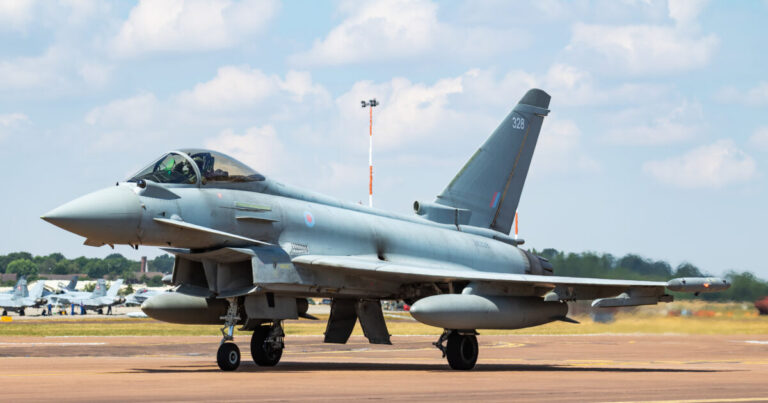
Germany’s decision to modernize Taurus also reflects platform and force-structure considerations. The Luftwaffe’s Tornado strike aircraft, the missile’s original carrier, is expected to retire around 2030. Integration work on the Eurofighter has already shown that Taurus can transition to newer aircraft, preserving Germany’s deep-strike capability beyond the Tornado era. At the same time, existing Taurus stocks are being upgraded to remain operational into the 2040s, preventing a capability gap as Taurus Neo is developed.
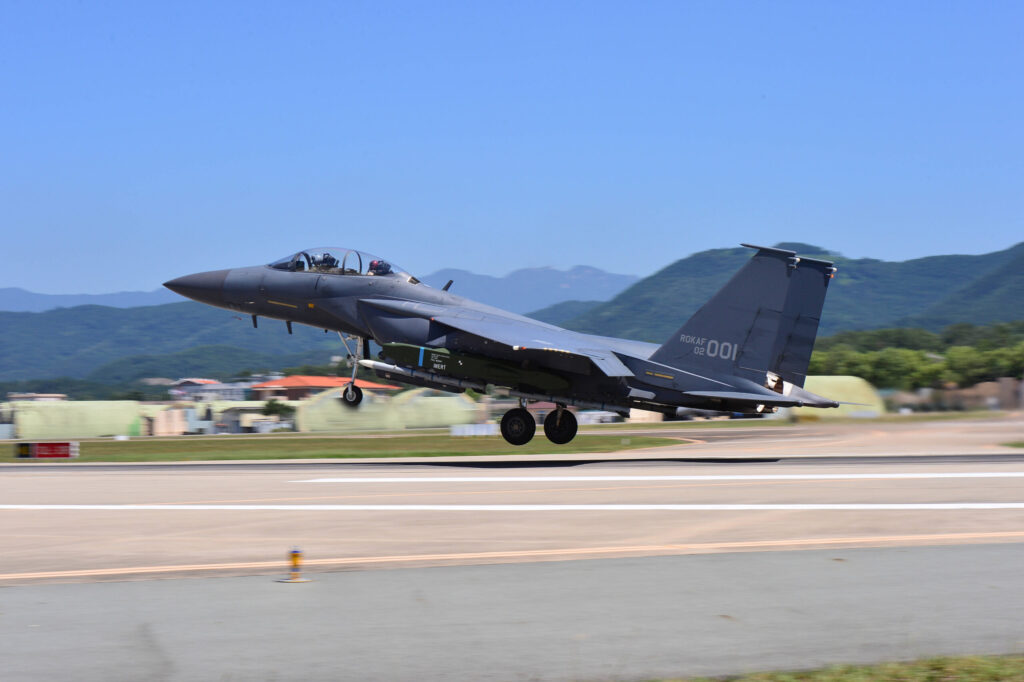
Operationally, Taurus has functioned primarily as a deterrent rather than a combat-proven weapon. Operators include Germany, Spain, and South Korea. Although there is no confirmed use in active combat, South Korea has conducted long-range live-fire tests from F‑15K fighters, demonstrating the missile’s ability to strike targets at distances of several hundred kilometers. Its lack of combat footage does not reduce its relevance, as Taurus is designed for the opening phases of a high-intensity conflict, targeting hardened assets that sustain an adversary’s war effort.
Strategically, Taurus Neo aligns with Germany’s broader acceleration of defense investment following Russia’s full-scale invasion of Ukraine. Berlin has increased military spending, met NATO’s two percent benchmark, and committed to preparing the Bundeswehr for high-intensity warfare. Within this context, long-range strike—once politically sensitive in Germany—is now openly acknowledged as a necessary component of collective defense.
In this sense, Taurus Neo serves both as a bridge and a signal. It bridges the gap between legacy strike concepts and a future European long-range precision strike ecosystem, while signaling Germany’s willingness to hold hardened targets at risk, complicate Russian operational planning, and contribute meaningfully to NATO deterrence. Taurus Neo is not merely an incremental missile upgrade, but a clear indicator of Germany’s shift from restraint toward readiness in an increasingly contested European security environment.
About The Author