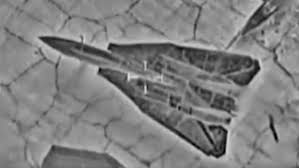
It’s a chilly November afternoon in 2025, and while most of Europe is still debating how to build its own “space independence,” a small Finnish company named ICEYE just dropped a not-so-subtle reminder: they’re already there. Speaking at the European Defence and Security Summit in Brussels, ICEYE’s CEO Rafal Modrzewski laid it out plain and simple: his company’s constellation of over 40 synthetic aperture radar (SAR) satellites is now the sharpest, fastest, and most reliable intelligence tool NATO and EU countries have when the clouds roll in and optical satellites go blind. In an age where Russia, China, and even non-state actors are moving assets under the cover of darkness or bad weather, ICEYE has turned “seeing through clouds” from a nice-to-have into a strategic must-have.
Think about the headaches European militaries have faced in recent years. Ukraine 2022–2025 showed the world that if you can’t see what the other side is doing 24/7, you lose initiative. Traditional big intelligence satellites—think the old-school optical birds run by France, Germany, or the U.S. NRO—are amazing on a sunny day, but useless when a Baltic storm front moves in or when someone parks a tank column under a hangar roof at night. Enter SAR: radar that bounces microwaves off the ground and builds photo-quality images no matter the weather, day or night. ICEYE didn’t invent SAR, but they did something crazy: they miniaturized it, put it on cheap, refrigerator-sized satellites, and started launching them by the dozen on SpaceX rockets. The result? A constellation that can revisit any spot on Earth every few hours—sometimes multiple times a day—and deliver images within minutes to a commander’s tablet.
Modrzewski didn’t mince words in Brussels. “Europe has world-class armies, navies, and air forces, but it has been strategically dependent on non-European space assets for too long,” he said. Translation: when the U.S. National Reconnaissance Office is busy watching the Indo-Pacific or the Middle East, Europe often ends up in the queue. ICEYE is now offering something no one else in Europe can: sovereign, on-demand, all-weather intelligence that isn’t beholden to anyone across the Atlantic. And governments are listening. Finland, Poland, Estonia, and Ukraine are already heavy users. The UK has quietly become one of the biggest customers. Even France—historically allergic to buying anything not painted bleu-blanc-rouge—has started ordering ICEYE imagery through back channels.
What makes this story even wilder is how fast it happened. ICEYE was founded in 2014 by two guys who were frustrated that radar satellites still weighed tons and cost half a billion dollars. Ten years later, they’ve launched more radar satellites than the rest of the world combined. Each bird costs a fraction of the old monsters, yet the latest generation delivers resolution down to 25 centimeters—sharp enough to read the license plate on a Russian Iskander launcher hiding in a forest outside Belgorod. And because the satellites are small, ICEYE can (and does) launch new, improved versions every few months. By 2027 the company plans to have over 100 satellites up, cutting global revisit times to under an hour for critical hotspots.
The defense applications are almost too many to list. Maritime domain awareness? ICEYE tracks “dark” ships that turn off their AIS transponders—something that became a national obsession in the Baltic after the Nord Stream sabotage and ongoing Russian shadow fleet shenanigans. Border monitoring? Polish and Finnish forces use near-real-time imagery to spot troop build-ups or illegal crossings within minutes. Disaster response? When floods hit Germany or wildfires tore through Greece, ICEYE delivered flood maps and damage assessments faster than any government agency could. And yes, Ukraine has been using ICEYE since the first weeks of the full-scale invasion—spotting Russian pontoon bridges across the Siverskyi Donets before they were even finished, or catching columns moving at night that optical satellites completely missed.
But this isn’t just a Ukraine story anymore. With China flexing in the Indo-Pacific and Russia still next door, European nations are waking up to the fact that space-based intelligence isn’t a luxury—it’s table stakes. The EU’s vaunted IRIS² constellation (the one that’s supposed to give Europe secure comms and some Earth observation) is still years away and won’t have anywhere near ICEYE’s revisit rate or resolution at launch. In the meantime, ICEYE is filling the gap—and making money doing it. The company now has contracts with over 15 European governments and NATO itself. Revenue has reportedly 10x’d since 2022. Investors are piling in; the latest round valued ICEYE north of $2 billion.
Of course, success brings scrutiny. Some in Paris and Berlin grumble that a Finnish company—however capable—shouldn’t become Europe’s de facto defense space provider. There’s talk of accelerating national or EU-owned SAR programs. Others worry about over-reliance on a single private company, especially one that still has American venture money in its cap table. Modrzewski’s answer is blunt: “We are European-built, European-operated, and our data stays in Europe unless the customer says otherwise. We’re ready to partner with any government that wants to co-develop an even more sovereign capability.” Behind the scenes, ICEYE is already in talks with France’s CNES and Germany’s DLR about technology transfer and joint missions.
The bigger picture is hard to overstate. While politicians argue about “strategic autonomy,” a scrappy Nordic startup has quietly built the closest thing Europe has to its own NRO-lite. And unlike traditional defense giants, ICEYE moves at startup speed: new features, new resolutions, new analytics tools rolled out in weeks, not decades. They’re even experimenting with on-board AI that can detect and flag military movements automatically—imagine a satellite that texts you “Hey, 12 tanks just left the Kantemirovskaya Division barracks” without a human ever looking at the raw image.
As 2025 draws to a close, one thing is crystal clear: the era when Europe begged for satellite photos is over. Thanks to a bunch of Finnish engineers who refused to accept that radar satellites had to be big and expensive, the continent finally has an all-seeing eye that works in the rain, at night, and on demand. And if the rest of Europe’s space ambitions take another decade to materialize, ICEYE will probably have 200 satellites up there keeping watch anyway.
About The Author