India and France are in advanced talks for up to 114 Rafale fighter jets, including 90 F4 aircraft and an option for 24 next-generation F5 fighters for the Indian Air Force.
According to The Economic Times on January 10, 2026, India and France are close to completing negotiations for the purchase of up to 114 Dassault Rafale fighter jets for the Indian Air Force. The proposed deal includes 90 aircraft in the Rafale F4 standard, along with an option for 24 jets in the future F5 configuration. Talks are taking place ahead of French President Emmanuel Macron’s planned visit to India in February 2026 and include not only aircraft numbers but also local manufacturing, engine production, and long-term maintenance infrastructure to help strengthen India’s shrinking fighter fleet.
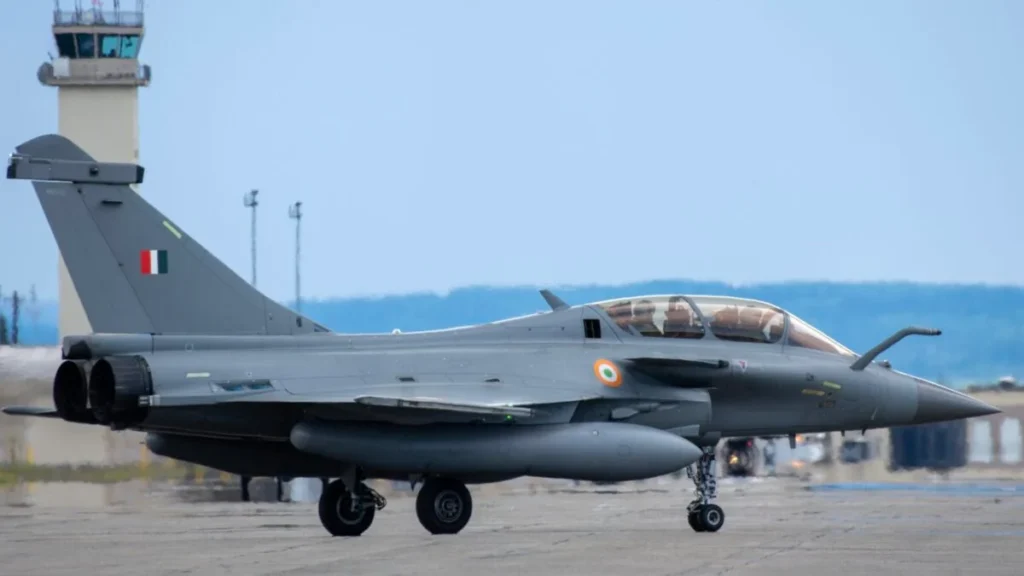
The planned acquisition is directly linked to India’s Multi-Role Fighter Aircraft (MRFA) program, which aims to induct 114 new 4.5-generation fighters to replace aging MiG-21, MiG-27, Jaguar, and Mirage 2000 aircraft. Rather than reopening a full international competition, the Indian Air Force has chosen a direct government-to-government approach with France. The deal will still require approval from the Defence Acquisition Council, followed by price negotiations and final clearance by the Cabinet Committee on Security. A pricing reference already exists from India’s April 2025 purchase of 26 Rafale-M carrier-based fighters for $7.4 billion, suggesting the much larger air force order could be worth several tens of billions of euros.
A major feature of the proposal is large-scale manufacturing in India. Tata Advanced Systems Limited has signed agreements with Dassault Aviation to build Rafale fuselage sections at a new facility in Hyderabad. The factory will produce four major fuselage sections for Indian aircraft and also for Rafales ordered by other countries, making India part of Dassault’s global supply chain. Deliveries are expected to begin by fiscal year 2028, with a planned capacity of up to 24 fuselages per year.
The industrial package goes beyond airframes to include engines and long-term support. Plans include an engine production plant in Hyderabad and a maintenance, repair, and overhaul hub near Jewar in Uttar Pradesh to support both Indian Air Force and Navy Rafales. Together with fuselage production, these projects could bring up to 60 percent of the Rafale’s manufacturing value into India, covering production, upgrades, and sustainment over the aircraft’s service life. The agreement is also politically significant, as it is expected to be highlighted during President Macron’s February 2026 visit to New Delhi, making India the only country besides France to operate both land-based and carrier-borne Rafales.
India’s push for more Rafales is driven by a serious shortage of fighter squadrons. The Indian Air Force currently has about 29 squadrons, far below its approved strength of 42. India already operates 36 Rafales from its 2016 contract, based at Ambala and Hasimara, where infrastructure exists to support additional units. Pressure on the fleet increased after Rafales were used during Operation Sindoor in May 2025. India stated that all its aircraft returned safely, while Pakistan claimed two to three Indian jets, including at least one Rafale, were shot down—a claim India denied. Although Rafale and Su-30MKI fighters are highly capable, the limited number of squadrons restricts India’s ability to sustain operations on multiple fronts.
The Rafale was developed by France in the late 1980s to replace several older fighters, including the Mirage F1, Jaguar, and Super Étendard. Unlike many modern aircraft developed through multinational programs, Rafale was built entirely under French control, allowing France to retain full authority over software, weapons integration, and upgrades. Its true multirole design allows it to switch between air-to-air and air-to-ground missions within a single sortie, giving it operational flexibility valued by export customers.
The future Rafale F5 standard, expected to enter service in the 2030s, will be the next major evolution of the aircraft. It is designed to keep Rafale effective beyond 2040 by adding AI-assisted decision support, stronger links with unmanned systems like the nEUROn, and improved data processing for operations in heavily jammed and sensor-dense environments. The F5 will also support new generations of weapons and improved electronic warfare and signature management, allowing Rafale to operate alongside unmanned aircraft in mixed formations.
In its most advanced form, the Rafale is powered by two Safran M88 engines and equipped with the RBE2 AESA radar and the SPECTRA electronic warfare system. It has a maximum takeoff weight of about 24.5 tonnes and can carry up to 9.5 tonnes of weapons on 14 hardpoints. With a combat radius exceeding 1,800 kilometers, it can operate from both land bases and aircraft carriers. Its sensor-fusion system combines radar, infrared, electronic surveillance, and data links, allowing pilots to fight effectively even in environments filled with heavy air defenses and electronic warfare.
About The Author