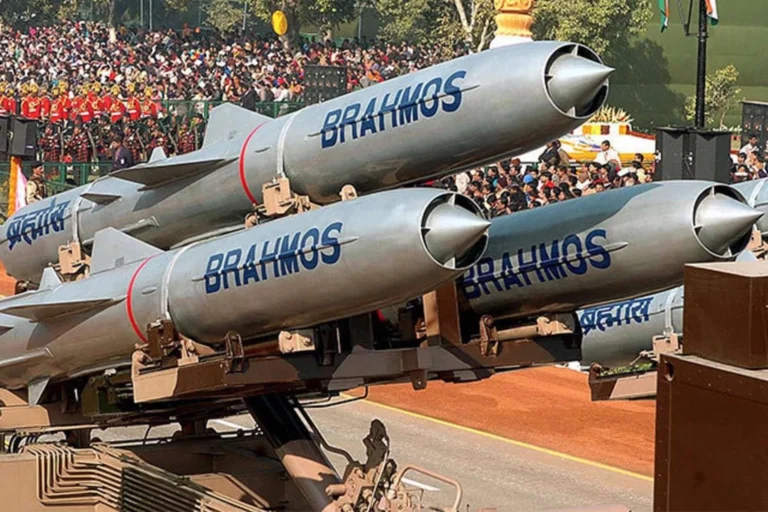
Indonesia has taken a major step toward strengthening its maritime defenses by agreeing to acquire the BrahMos supersonic cruise missile from India. The decision signals Jakarta’s determination to improve coastal deterrence and protect its vast sea territory while also marking another important export success for India’s growing defense industry.
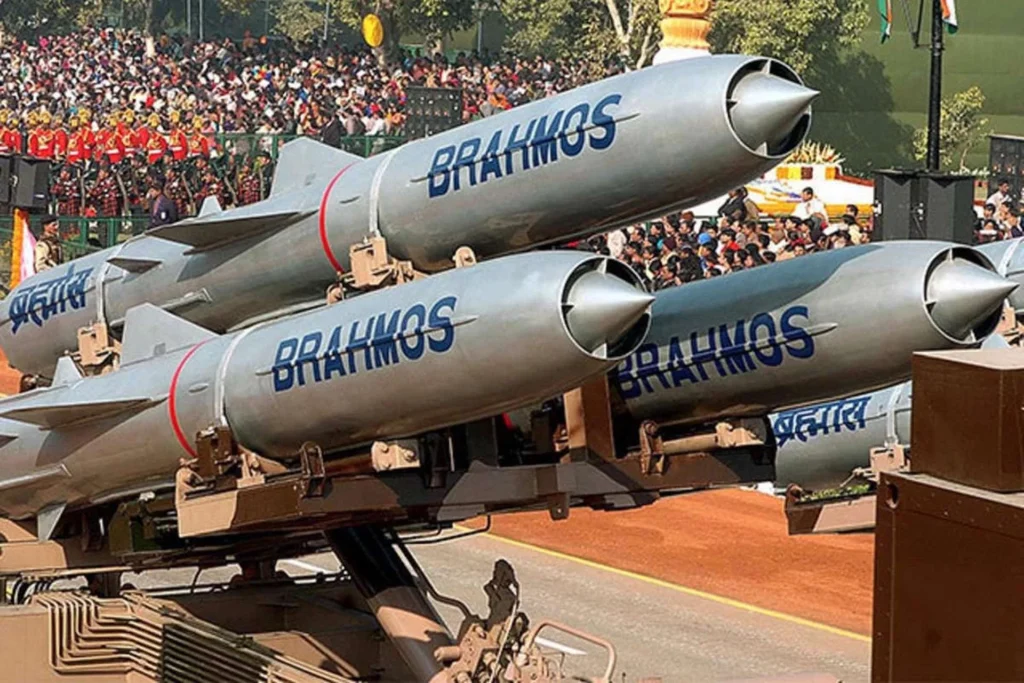
Indonesia has confirmed that it will move forward with plans to acquire the BrahMos supersonic cruise missile system from India, a decision that reflects the country’s growing focus on strengthening its maritime defense capabilities. The agreement, announced in early March 2026, represents the culmination of several years of negotiations between Jakarta and New Delhi over the high-speed missile system.
Officials from Indonesia’s defense ministry described the program as part of a broader effort to modernize the country’s military equipment, particularly assets used to defend the nation’s extensive maritime territory. As the world’s largest archipelagic state, Indonesia faces the complex task of monitoring and protecting thousands of islands, long coastlines, and busy sea routes that pass through its waters.
Although the total value of the agreement has not been publicly disclosed, earlier discussions suggested that the package could fall within a range of a few hundred million dollars. Previous reports had indicated that Jakarta was evaluating both coastal missile batteries and naval launch systems as possible options for deploying the weapon.
The BrahMos missile itself is widely regarded as one of the fastest operational cruise missiles in the world. Developed through a joint venture between India and Russia, the missile uses a two-stage propulsion system that combines a solid rocket booster with a ramjet engine. This design allows the missile to reach speeds close to three times the speed of sound.
At such high velocities, the missile significantly reduces the reaction time available to enemy defenses. Its speed and low-altitude flight profile make interception far more difficult compared with traditional subsonic cruise missiles.
The missile is designed primarily for precision strikes against ships but can also engage selected land targets. Export versions of the system are typically limited to a range of around 290 kilometers, while carrying a conventional warhead weighing roughly 200 kilograms.
Another important feature of the system is its “fire-and-forget” capability. Once launched, the missile can autonomously navigate toward its target using pre-programmed flight paths and onboard guidance systems. It can also fly at extremely low altitudes during the final stage of the attack, reducing the chances of detection by radar systems.
For Indonesia, acquiring such a capability could significantly strengthen its coastal defense strategy. Shore-based missile batteries would allow the country to monitor and protect key maritime approaches, while ship-launched variants could extend the striking power of Indonesian naval vessels operating across the region.
The strategic importance of such systems becomes clear when considering Indonesia’s geographic position. The country sits near several of the world’s busiest shipping routes, including waterways that connect the Pacific and Indian Oceans. Ensuring security in these areas has long been a priority for Jakarta.
Recent maritime tensions in parts of the South China Sea have also reinforced the need for stronger deterrence capabilities. Although Indonesia is not a central claimant in the territorial disputes there, incidents involving foreign vessels operating near its exclusive economic zone have highlighted the challenges of maintaining control over such vast maritime spaces.
Introducing a supersonic anti-ship missile system like BrahMos would provide Indonesian forces with a rapid-response strike option capable of deterring potential threats at sea. Such capabilities are increasingly seen as essential by many coastal states seeking to protect strategic waterways.
The agreement is also significant for India’s defense industry. Over the past decade, New Delhi has sought to expand its military exports and establish itself as a supplier of advanced defense technologies to friendly nations.
The BrahMos program has become one of the most visible symbols of that effort. In recent years, the missile has moved beyond its role as a domestic weapon system used by Indian armed forces and has begun to attract international customers.
The Philippines became the first foreign country to purchase the system under a coastal defense deal signed earlier in the decade. Deliveries of the first missile batteries to Manila marked an important milestone for India’s ambitions in the global defense market.
Indonesia’s decision to move forward with a BrahMos acquisition would further strengthen that momentum and extend the missile’s presence across Southeast Asia.
Beyond the commercial aspect, the agreement also reflects growing defense cooperation between India and Indonesia. Both countries share an interest in maintaining stability and secure maritime routes across the Indo-Pacific region.
By adding a powerful supersonic strike capability to its arsenal, Indonesia is sending a signal about the type of defense posture it intends to maintain in the coming years. The focus is not only on surveillance and patrol operations but also on building credible deterrence against potential maritime threats.
As Indonesia continues to modernize its armed forces, the BrahMos missile system could become a key component of its evolving maritime defense strategy.
For India, the deal represents another step in transforming its domestic defense technology into a global export product — one that could reshape military partnerships and security dynamics across the Indo-Pacific region.
About The Author