Iran has intensified its missile campaign against Israel as the war between Tehran and the US-Israeli alliance enters its twelfth day. A new wave of Iranian ballistic missiles struck energy infrastructure in Haifa, highlighting the growing scale and destructive power of the confrontation and pushing Israeli civilian life closer to a standstill.
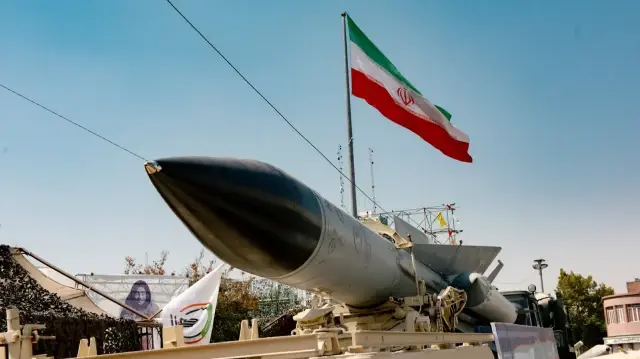
The conflict between Iran and the US-Israeli coalition has entered a dangerous new phase after Iranian ballistic missiles struck energy infrastructure in the northern Israeli port city of Haifa. The attack marks one of the most significant strikes since the war began, demonstrating Tehran’s ability to reach and threaten key economic and industrial sites inside Israel.
Iranian military officials confirmed the launch of the missiles, describing the strike as part of a broader retaliation campaign against Israeli and American military actions. In official statements, Tehran signaled that the confrontation is far from over and warned that its operations will continue until what it called “final victory.”
Haifa, one of Israel’s most important industrial hubs and a critical center for energy and shipping, became the latest focal point of the escalating conflict. The reported damage to energy-related infrastructure has raised concerns about potential disruptions to power supplies and industrial operations in the region.
While the full extent of the damage is still being assessed, the attack illustrates how the war is expanding beyond purely military targets to include strategic infrastructure.
Israeli authorities say the ongoing missile exchanges have already inflicted a growing toll on the country’s population. According to figures released by Israel’s Health Ministry, Iranian missile and drone attacks have killed 13 people and injured more than 2,300 since the conflict erupted on February 28.
The latest missile strikes also targeted several urban areas around the Tel Aviv metropolitan region, including Yehud, Holon and Bat Yam. Officials confirmed at least one fatality in Yehud following the latest wave of attacks.
For millions of Israeli civilians, the conflict has transformed daily life. Frequent air-raid sirens now echo across cities at all hours, forcing residents to repeatedly seek shelter in underground bunkers and reinforced safe rooms. In some cases, families have spent hours at a time inside shelters as multiple missile waves are detected approaching Israeli airspace.
The relentless pace of Iranian missile launches is also placing increasing strain on Israel’s sophisticated air-defense systems. Interceptor missiles are being fired almost continuously to counter incoming threats, and defense planners are facing the challenge of maintaining coverage against sustained barrages.
Beyond the immediate threat to lives, the attacks are creating significant disruptions to infrastructure and public services. Power grids in several areas around Tel Aviv have experienced outages after nearby strikes, while emergency responders have been working around the clock to deal with damage from missile impacts and falling debris.
The broader conflict began after joint military operations by the United States and Israel targeted Iranian facilities on February 28. Those strikes reportedly killed more than 1,200 people in Iran, including the country’s Supreme Leader, Ayatollah Ali Khamenei — an event that dramatically escalated tensions and triggered Tehran’s large-scale retaliation campaign.
Since the start of the war, Iran has launched thousands of missiles and unmanned aerial vehicles toward Israeli territory as well as toward US-linked facilities across the region. Data compiled by regional monitoring groups indicates that approximately 3,095 missiles and drones have been fired so far, making it one of the largest missile campaigns seen in the Middle East.
The growing intensity of the strikes suggests that the conflict is entering a prolonged and potentially more destructive stage. Both sides appear determined to continue military operations despite mounting casualties and increasing pressure on civilian populations.
With strategic infrastructure now being targeted and missile attacks continuing almost daily, analysts warn that the war could expand further if additional regional actors become involved.
For now, residents across Israel remain on constant alert, while the region watches closely to see whether the confrontation will escalate even further or move toward some form of de-escalation in the coming days.
About The Author