Israel’s F-16 Fighters Spotted Carrying Unusual 2,000-Pound JDAM Bombs Amid Deep-Strike Missions Over Iran
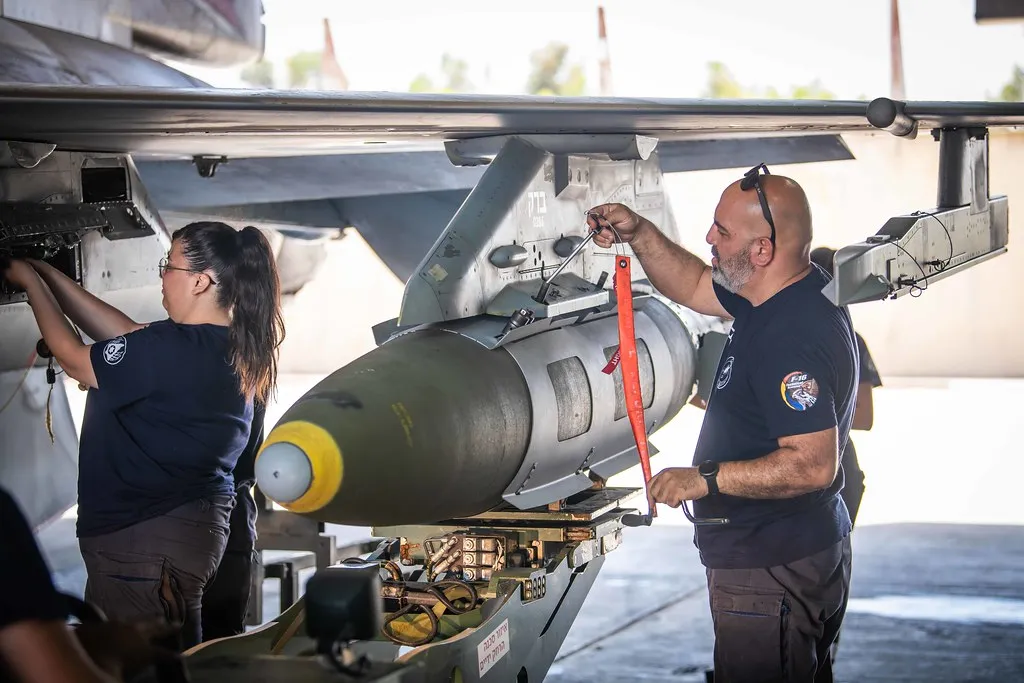
Fresh images briefly released by the Israeli Air Force on social media have sparked intense discussion among military observers after they appeared to show an Israeli fighter jet carrying unusually marked heavy precision bombs.
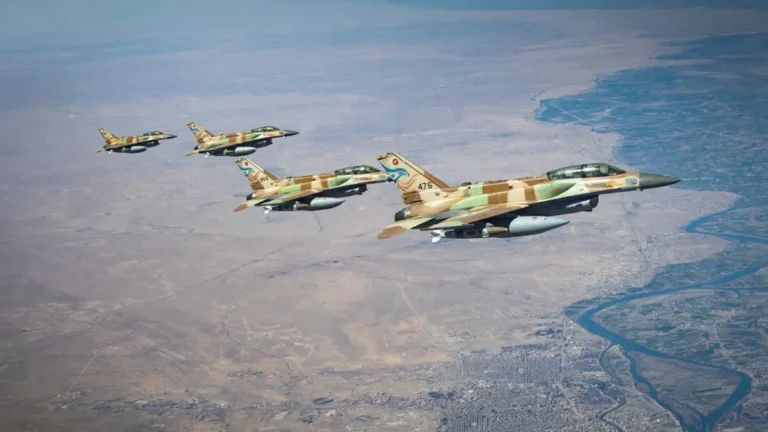
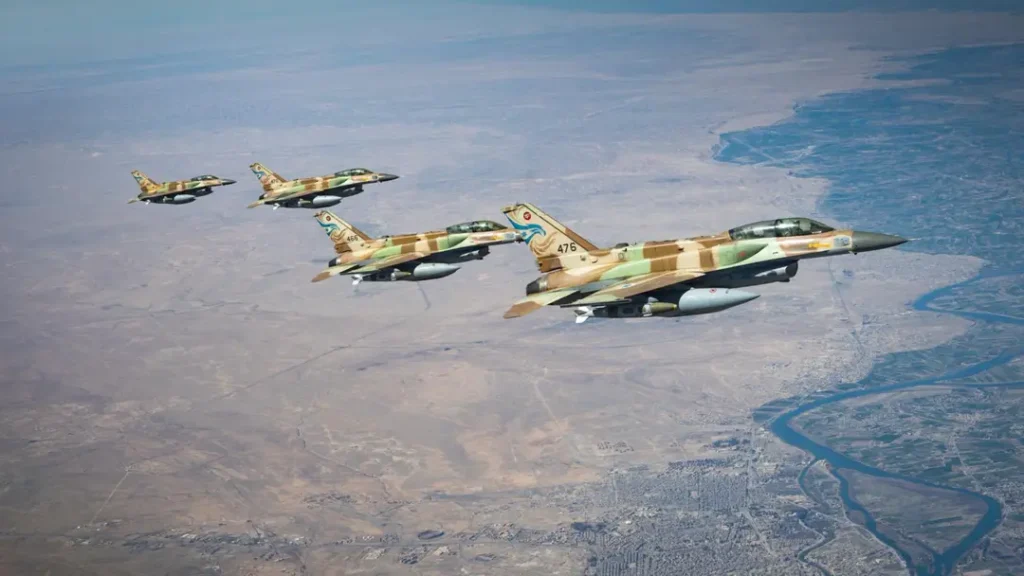
The photos reportedly captured a F-16C/D Barak armed with two massive 2,000-pound GBU-31 JDAM precision-guided munitions mounted under its wing. While such weapons are not uncommon in modern air forces, the markings visible on these bombs have raised questions among analysts about the specific mission profile and targets they may have been prepared for.
The images surfaced alongside a statement from the commander of Ramat David Airbase, who spoke about recent long-range missions conducted deep inside Iranian territory. According to the statement, Israeli fighter aircraft have been flying complex strike operations that reportedly extended as far as the skies above Tehran.
Although the photos were only visible online for a short time before being removed, they quickly circulated among defense watchers and aviation analysts. The brief glimpse was enough to trigger widespread speculation about the type of targets Israeli forces may have been preparing to strike.
Heavy Precision Bombs for Strategic Targets
The GBU-31 belongs to the Joint Direct Attack Munition family, commonly known as JDAM. These bombs are essentially guidance kits attached to conventional bombs, turning them into highly accurate GPS-guided weapons capable of striking targets with remarkable precision.
A 2,000-pound JDAM is typically used against hardened or high-value targets such as underground facilities, reinforced bunkers, command centers, or strategic infrastructure. When deployed from a fighter aircraft like the F-16 Barak, the weapon can glide toward its target while relying on satellite navigation to maintain accuracy.
Military experts note that the presence of these bombs on Israeli fighters may indicate preparation for strikes against fortified sites rather than soft or mobile targets. Such weapons are commonly associated with missions where precision and destructive power are both required.

The Role of the F-16 Barak
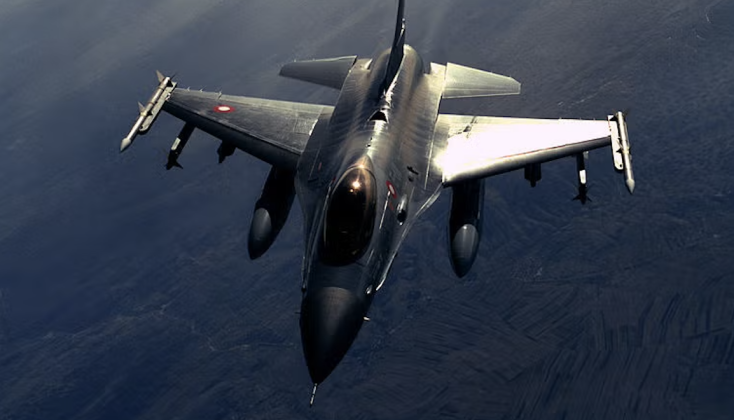
Israel’s F-16C/D Barak fighters remain a critical part of the country’s strike capability. Although newer aircraft such as the F-35I Adir have taken on many high-profile missions, the F-16 fleet continues to perform a wide range of operations including precision bombing, long-range strike missions, and close air support.
The Barak variant used by Israel has undergone extensive upgrades over the years. These modifications include advanced avionics, Israeli-developed electronic warfare systems, and compatibility with a wide range of modern guided weapons.
Because of these improvements, the aircraft remains capable of carrying out deep-strike missions far beyond Israel’s borders when supported by aerial refueling and advanced mission planning.
Missions Deep Inside Iranian Airspace
The statement released by the commander of Ramat David Airbase hinted at the growing complexity of Israel’s recent air operations. According to the remarks, Israeli pilots have been flying missions that reach deep into Iranian territory, including flights over Tehran itself.
If accurate, such operations would represent a major demonstration of long-range strike capability. Flying fighter aircraft thousands of kilometers into hostile territory requires detailed intelligence planning, aerial refueling coordination, and suppression of enemy air defenses.
The appearance of heavy JDAM bombs on Israeli aircraft could therefore reflect preparations for strikes against heavily protected facilities.
Why the Bomb Markings Matter
One of the most intriguing aspects of the images was the unusual markings painted on the bombs. While military forces often add mission markings or identification codes to munitions, the exact meaning of these specific symbols remains unclear.
Some observers speculate that the markings could represent particular operations, targets, or even symbolic messages related to recent events in the region. However, without official confirmation, the true meaning behind them remains unknown.
Still, the markings have added another layer of mystery to images that were already drawing attention because of the weapons themselves.
A Signal in the Information War
Military analysts also believe the brief release of the images may not have been accidental. In modern conflicts, information and perception are powerful tools, and even a single photograph can send a strategic message.
By showing heavily armed fighter jets prepared for deep-strike missions, the images could serve as a reminder of Israel’s ability to reach distant targets if necessary. At the same time, the limited and temporary nature of the release suggests a carefully controlled communication strategy.
Whether intended as a signal of capability, deterrence, or simply a glimpse into ongoing operations, the photos have already succeeded in capturing global attention.
Rising Tensions and Strategic Messaging
The appearance of these bombs on Israeli aircraft comes at a time when tensions across the Middle East remain extremely high. Military activity, missile exchanges, and drone attacks have created an atmosphere of uncertainty throughout the region.
In this environment, even small pieces of information — such as the type of bombs carried by a fighter jet — can offer clues about possible future developments.
For now, the brief images of Israeli F-16 fighters carrying heavy JDAM bombs remain just a snapshot. Yet they provide a rare look at the weapons and preparations behind some of the most sensitive military operations taking place in the region today.
About The Author