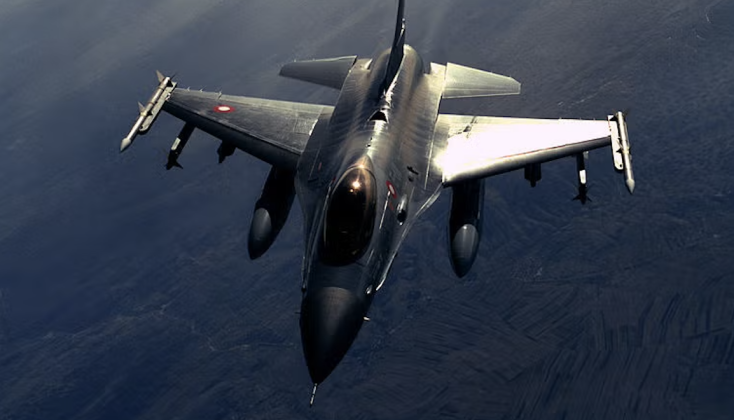
The skies are changing. For decades, the F-16 Fighting Falcon has reigned supreme as a symbol of air power, a testament to American aeronautical engineering. Yet, a recent development out of Turkey is sending ripples through the global defense community, signaling a potential paradigm shift in aerial warfare. The successful unmanned air combat test between Turkey’s indigenous Kizilelma drone and an F-16 fighter jet marks a pivotal moment, suggesting that the era of manned fighter dominance may be rapidly approaching its end.
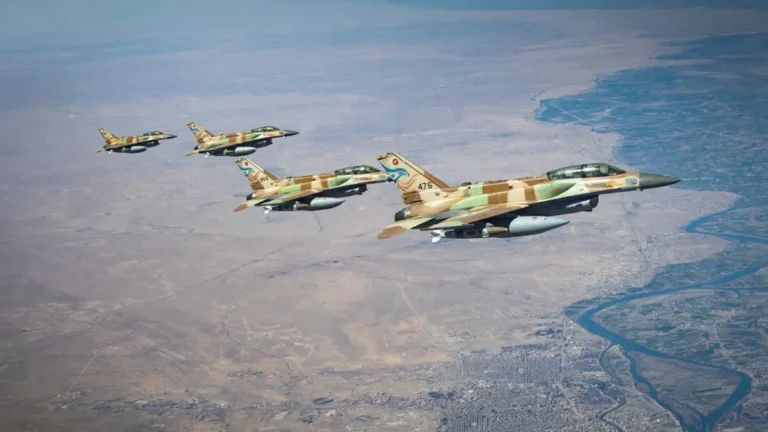
This groundbreaking test wasn’t just another flight; it was a carefully orchestrated demonstration of advanced autonomous capabilities pitted against the established might of a fourth-generation fighter. Imagine the scene: an F-16, with its iconic silhouette and formidable history, engaging in a simulated dogfight not against another piloted aircraft, but against an unmanned aerial vehicle (UAV) designed for the future. The very notion would have been dismissed as science fiction just a few years ago.
The Kizilelma, which translates to “Red Apple,” is more than just a drone; it represents Turkey’s ambitious push into developing its own advanced military hardware, reducing reliance on foreign suppliers, and carving out a significant niche in the burgeoning field of autonomous combat systems. This particular drone is no mere surveillance platform. It is designed for air-to-air combat, equipped with sophisticated sensors, advanced AI for decision-making, and the agility to maneuver in ways that might push the physical limits of a human pilot.
The F-16, while a remarkably capable aircraft, is a product of a different age. Its design principles, while refined over decades, are fundamentally tied to human operation. The pilot’s reaction time, g-force tolerance, and cognitive load are all factors that influence the aircraft’s performance. In contrast, an autonomous drone like the Kizilelma is unburdened by these biological constraints. It can execute maneuvers with extreme precision and sustained intensity, potentially outperforming manned aircraft in specific combat scenarios.
The implications of this test are vast and multifaceted. Firstly, it highlights the accelerating pace of AI and robotics integration into military applications. The ability of a drone to successfully engage and even outmatch a manned fighter in an air combat simulation speaks volumes about the maturity of autonomous systems. This isn’t just about remote control; it’s about onboard intelligence making real-time tactical decisions.
Secondly, it raises critical questions about the future of pilot training and the role of human beings in the cockpit. While it’s unlikely that fighter pilots will become obsolete overnight, their roles may evolve dramatically. Perhaps they will transition to overseeing swarms of drones, or focus on strategic command and control rather than direct engagement. The romantic image of the lone fighter pilot engaging in a dogfight might soon become a relic of the past.
Thirdly, this development underscores the growing shift in global power dynamics and technological prowess. Turkey’s investment in indigenous defense technology, particularly in advanced drones, positions it as a significant player in the future of warfare. This could encourage other nations to accelerate their own drone development programs, leading to an even more competitive and technologically advanced defense landscape.
However, it’s also crucial to approach these developments with a balanced perspective. A single successful test, while impressive, doesn’t immediately spell the end of manned aviation. There are still complex ethical, legal, and operational challenges associated with fully autonomous weapon systems. The ability to make nuanced judgments, adapt to unforeseen circumstances, and adhere to rules of engagement are areas where human intelligence still holds an undeniable advantage. Furthermore, the F-16 used in the test might not have been equipped with the latest upgrades, and the precise parameters of the engagement remain undisclosed.
Nevertheless, the Kizilelma’s performance against the F-16 serves as a powerful harbinger. It compels us to reconsider our assumptions about air superiority, the nature of combat, and the very definition of a “fighter.” The skies of tomorrow will undoubtedly be shared, and perhaps even dominated, by intelligent machines capable of executing combat missions with speed, precision, and an endurance unmatched by human counterparts. The “Red Apple” has tasted victory, and its flavor is unmistakably that of the future.
About The Author