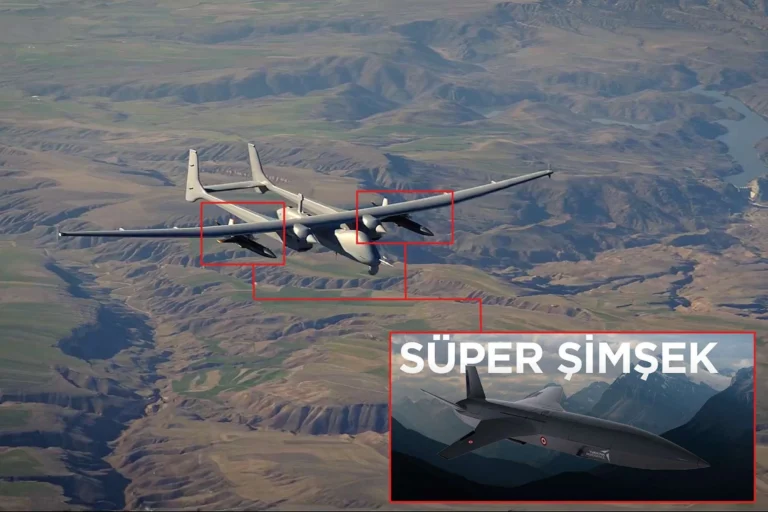
The landscape of modern aerial combat is on the cusp of a revolutionary transformation, and at the forefront of this evolution is Türkiye’s ambitious integration of the Kizilelma Unmanned Combat Aerial Vehicle (UCAV) with the indigenous Gokdogan Beyond Visual Range Air-to-Air Missile (BVRAAM). This strategic pairing is not merely an incremental upgrade; it represents a paradigm shift in how nations conceive of air superiority, projection of power, and the very nature of manned-unmanned teaming in the skies.
For decades, the fighter pilot has been the undisputed king of the battlefield, a symbol of national prowess and a critical component of defensive and offensive strategies. However, the advent of sophisticated UCAVs like the Kizilelma, developed by Baykar, challenges this long-held convention. The Kizilelma is not just a drone; it’s designed to be a peer competitor to manned fighter jets in many respects, boasting impressive speed, maneuverability, and stealth characteristics. Its ability to operate in contested airspace, perform high-risk missions, and endure longer flight times without the physiological limitations of a human pilot opens up a vast array of tactical possibilities. Imagine a scenario where a squadron of Kizilelmas, operating as loyal wingmen, can engage enemy aircraft, suppress air defenses, or conduct reconnaissance in environments deemed too dangerous for human crews. This distributed and networked approach to air warfare promises to significantly enhance survivability and mission effectiveness.
The true potency of the Kizilelma, however, is unleashed when it is armed with equally advanced weaponry. Enter the Gokdogan, an indigenously developed BVRAAM that is set to become the sharp end of the Kizilelma’s spear. The development of the Gokdogan is a testament to Türkiye’s growing self-sufficiency in defense technology. Historically, nations have relied on a select few global suppliers for such critical munitions. By developing its own BVRAAM, Türkiye not only enhances its strategic autonomy but also ensures that its UCAV platforms are equipped with tailor-made armaments that seamlessly integrate with their advanced avionics and mission systems. The Gokdogan’s “beyond visual range” capability means it can engage targets from significant distances, offering a crucial advantage in modern air combat where the first shot often determines the victor.
The marriage of the Kizilelma and Gokdogan creates a formidable force multiplier. Consider the strategic implications: a UCAV capable of carrying multiple Gokdogan missiles, operating autonomously or under the control of a manned aircraft, can extend the reach and lethality of an air force far beyond current limitations. This combination allows for a more flexible and adaptable response to emerging threats, whether it’s defending national airspace, participating in expeditionary operations, or deterring potential adversaries. The ability to deploy advanced air-to-air missiles from an unmanned platform also has significant economic benefits, reducing the risk to highly trained pilots and expensive manned aircraft in high-threat environments.
Furthermore, the integration of these systems paves the way for advanced manned-unmanned teaming (MUM-T) concepts. Picture a manned fighter jet leading a formation of Kizilelmas, with the UCAVs acting as forward scouts, missile trucks, or even decoys, all controlled seamlessly by the human pilot. This symbiotic relationship amplifies the strengths of both manned and unmanned platforms, creating a synergistic effect that is greater than the sum of its parts. The human element provides critical decision-making and strategic oversight, while the UCAVs offer expendability, persistence, and the ability to operate in areas too risky for humans.
The development and deployment of the Kizilelma and Gokdogan are not just technological achievements; they represent a bold statement of intent. Türkiye is positioning itself as a leader in the next generation of aerial warfare, demonstrating its commitment to innovation, strategic independence, and the modernization of its armed forces. This formidable duo will undoubtedly play a pivotal role in shaping future conflicts and securing national interests in an increasingly complex global security landscape. The world watches as Türkiye ushers in this new era, where the skies are no longer solely the domain of human pilots, but a shared space for intelligent machines and their human counterparts, working in concert to achieve air superiority.
About The Author