Official imagery and recent sightings by UK aviation enthusiasts have revealed new details about the assets involved in the seizure of the Bella 1/Marinera.
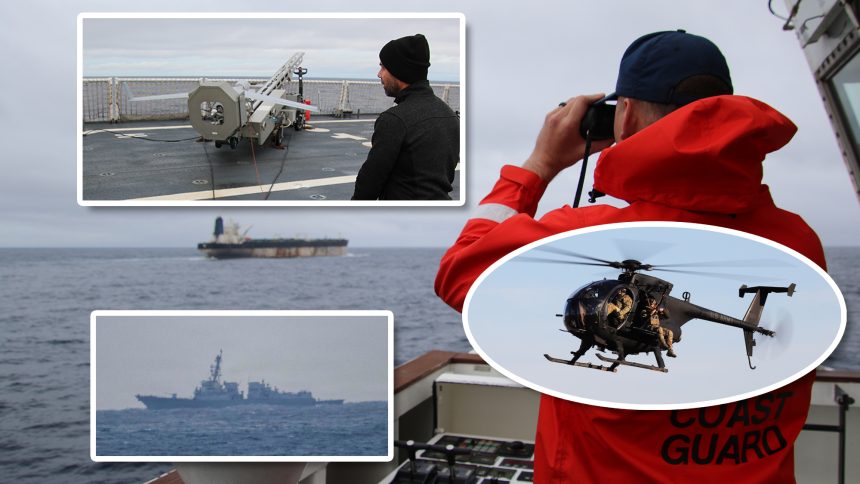
U.S. forces quickly identified the MH-6M Little Bird as the primary helicopter used in the operation to seize the Marinera (Bella 1) oil tanker. At least one Little Bird was photographed by the tanker’s crew and the images were later released by Russian state media. While the exact number of helicopters involved was initially unclear, it is now confirmed that at least four MH-6M Little Birds from the 160th Special Operations Aviation Regiment (SOAR) were secretly deployed to the North Atlantic.
These four helicopters landed at Glasgow Prestwick Airport, Scotland, on January 10, 2026, before being loaded onto a U.S. Air Force C-17A Globemaster III for further deployment. Spotters identified the aircraft as 81-23648, 81-23650, 90-25359, and 90-25363. It remains unknown whether all four aircraft participated in the boarding operation or if some were kept as backups.
Two of these helicopters — 23648 and 25359 — are historically significant. Both flew during the 1993 Battle of Mogadishu, famously depicted in the movie Black Hawk Down. Helicopter 23648, operating as STAR 41, was the first to reach the crash site of SUPER 61 and successfully rescued two Delta Force snipers, one of whom later died from his injuries.
Unlike the MH-60M Black Hawks and MH-47G Chinooks stationed at RAF Fairford, the MH-6M Little Birds cannot refuel in mid-air and have a much shorter operational range. This strongly suggests they launched from a ship at sea rather than from land. However, the exact ship or ships used remain unidentified.
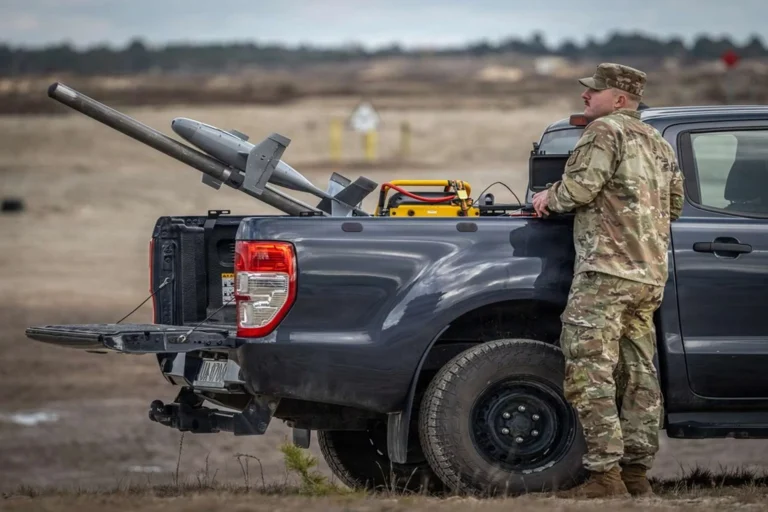
One likely platform was the U.S. Coast Guard Cutter Munro, which had been shadowing the tanker as it attempted to sail toward Murmansk, Russia. New images from the Munro show its crew operating small boats and preparing to launch a Boeing Insitu MQ-27 ScanEagle drone, indicating that unmanned aerial surveillance was also used during the operation.
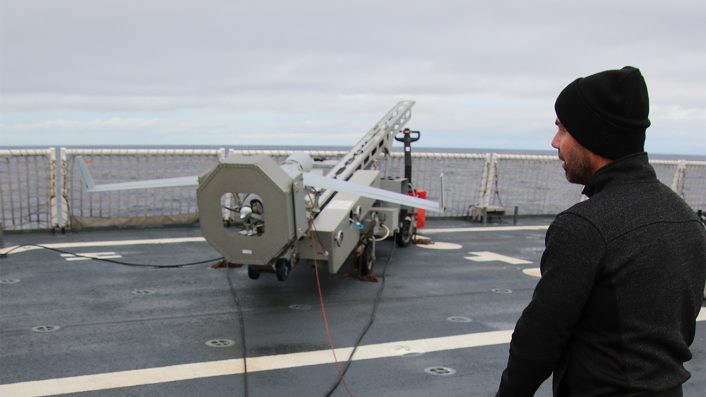
The ScanEagle UAV, originally developed for commercial fishing surveillance, has become a key maritime intelligence platform. It is launched by catapult and recovered by a hook system, and it typically carries high-resolution and infrared cameras, making it ideal for tracking ships and monitoring activity at sea.
Photographs also confirmed the presence of a U.S. Navy Arleigh Burke-class destroyer, the USS Bulkeley (DDG-84), operating near the Munro during the seizure. While it is unclear whether the Bulkeley launched helicopters, it clearly provided naval support. Another destroyer, USS Paul Ignatius (DDG-117), arrived in Scotland on the same day, suggesting it may have been monitoring Russian naval movements in the area.
Reports indicate that Russian naval vessels, and possibly even a submarine, were present in the region, which would explain the heavy U.S. naval presence and extended security perimeter.
There has also been speculation that the British support ship RFA Tideforce may have acted as a helicopter base. Its large flight deck and hangar facilities are fully capable of supporting MH-6 Little Birds, although no direct evidence has confirmed its use for this purpose. It is more likely that Tideforce provided fuel and logistics support to U.S. forces.
Later video footage from the seizure revealed a hastily painted “Marinera” name on the tanker’s stern, likely added while the ship was trying to avoid capture after failing to dock in Venezuela. Some early videos shared online were mistakenly believed to show the Bella 1, but they actually depicted the seizure of another ship, the M Sophia, which has different structural features.
Despite their deployment to RAF Fairford, the MH-60M Black Hawks and MH-47G Chinooks of the 160th SOAR did not take part in the boarding. Aviation observers and international media saw no flight activity from those aircraft on the day of the operation, although one Black Hawk conducted a short test flight the night before. Their presence may have been for deception, contingency planning, or a mission that was ultimately changed.
About The Author