Pakistan and Saudi Arabia are in confidential talks to turn approximately $2 billion in Saudi financial loans into a defense acquisition focused on the JF-17 Thunder fighter jet, with the deal potentially expanding to $4 billion, strengthening long-term military cooperation between Islamabad and Riyadh.
Pakistan and Saudi Arabia have entered advanced discussions to convert Saudi financial assistance into a major defense acquisition focused on the JF-17 Thunder multi-role fighter aircraft, Reuters reported on January 7, 2026. According to multiple Pakistani military sources, the plan would transform roughly $2 billion in loans into aircraft orders, weapons, training, and sustainment, with the potential value rising to $4 billion if finalized.
These talks follow the signing of a landmark Saudi-Pakistani mutual defense agreement in September 2025, under which both countries pledged to treat aggression against either state as a shared threat. Signed in Riyadh by Saudi Crown Prince Mohammed bin Salman and Pakistani Prime Minister Shehbaz Sharif, the pact formalized decades of close military cooperation. The proposed JF-17 deal is now seen as the first concrete step to translate that political commitment into deployable military capability.
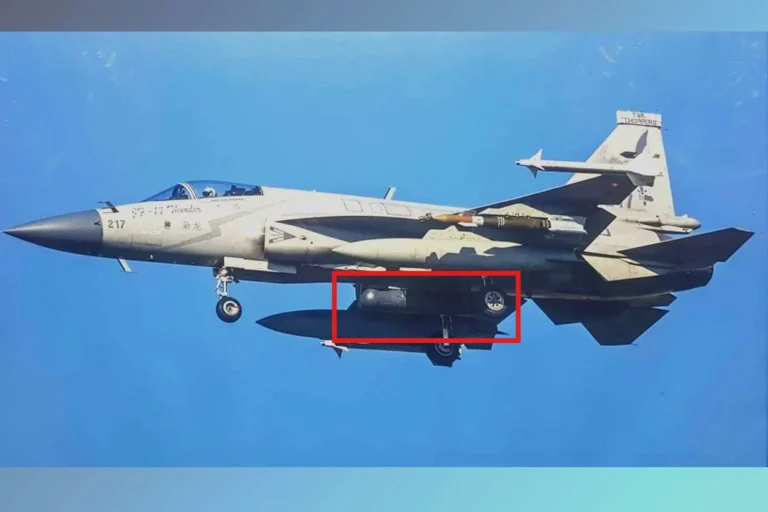
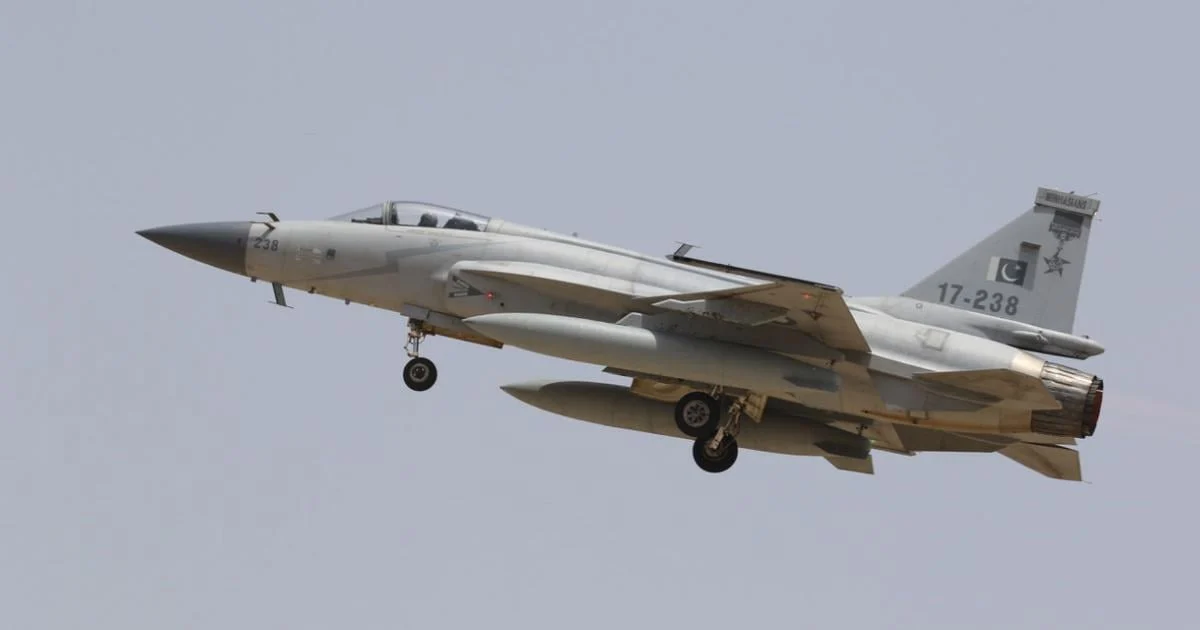
At the center of the discussions is the JF-17 Thunder, also known as FC-1 Xiaolong or Fierce Dragon in China. The lightweight, single-engine, multi-role fighter is jointly developed by the Pakistan Air Force, Pakistan Aeronautical Complex, and China’s Chengdu Aircraft Industries Corporation. Pakistan Aeronautical Complex handles 58 percent of airframe co-production, with final assembly and flight testing at Kamra, giving Islamabad significant control over production and export customization. Saudi Arabia is reportedly interested in the latest Block III variant, which features the KLJ-7A AESA radar, an upgraded electronic warfare suite, improved sensor fusion, and a helmet-mounted sight and display system.
Technically, the JF-17 offers operational flexibility at a relatively low cost. Powered by a single Klimov RD-93 turbofan engine, it can reach Mach 1.6 and conduct missions with a combat radius over 1,300 kilometers, extendable via in-flight refueling. Its glass cockpit includes three multifunction displays, a wide-angle head-up display, and an open-architecture avionics system that allows rapid integration of new weapons and sensors. The aircraft has seven external hardpoints supporting over 3,600 kilograms of ordnance, including air-to-air missiles, precision-guided munitions, anti-ship and anti-radiation weapons, along with an internal 23 mm cannon for close-range engagements.
For Saudi Arabia, the potential JF-17 acquisition is intended to complement its existing air fleet, which includes F-15C and F-15SA Eagles, Eurofighter Typhoons, and Tornado strike aircraft, supported by AEW, refueling, and intelligence platforms. These high-end aircraft provide long-range strike, air superiority, and deterrence, but also carry high acquisition and operational costs. The JF-17 would be deployed for missions such as air policing, routine patrols, pilot training, and regional contingencies, allowing the more expensive F-15SA and Typhoon aircraft to focus on strategic operations. Its lower maintenance requirements, cost per flight hour, and broad weapons compatibility make it an attractive option for sustained operations.
The recent visit of Pakistan Air Force Chief Air Chief Marshal Zaheer Ahmed Baber Sidhu to Saudi Arabia highlights the seriousness of the talks. Saudi media reported his meetings focused on military cooperation, including airpower collaboration, force integration concepts, pilot training, and sustainment planning. While no formal jets-for-loans agreement has been announced, officials describe the discussions as operationally detailed and substantive rather than exploratory.
Strategically, the deal carries broader implications. Saudi Arabia is diversifying its defense partnerships amid uncertainty over long-term reliance on traditional Western suppliers. Acquiring a Pakistani-origin fighter would enhance military interoperability with Islamabad, a longstanding partner providing training, advisory support, and security assistance. For Pakistan, securing Saudi Arabia as a JF-17 customer would validate its defense industry and boost its arms export ambitions.
If finalized, the deal would transform sovereign debt into frontline combat capability and strengthen Saudi-Pakistani strategic alignment amid shifting regional security dynamics. It could also have significant consequences for the balance of airpower in the Gulf and highlight the growing role of non-Western defense partnerships.
About The Author