The UK Strategic Defence Review 2025 sets a continuous 18-month production cycle for nuclear-powered attack submarines, ensuring up to 12 SSN-AUKUS boats for the Royal Navy and Australia. The plan strengthens Britain’s industrial role in AUKUS while enhancing undersea capabilities to counter emerging threats in the Indo-Pacific.
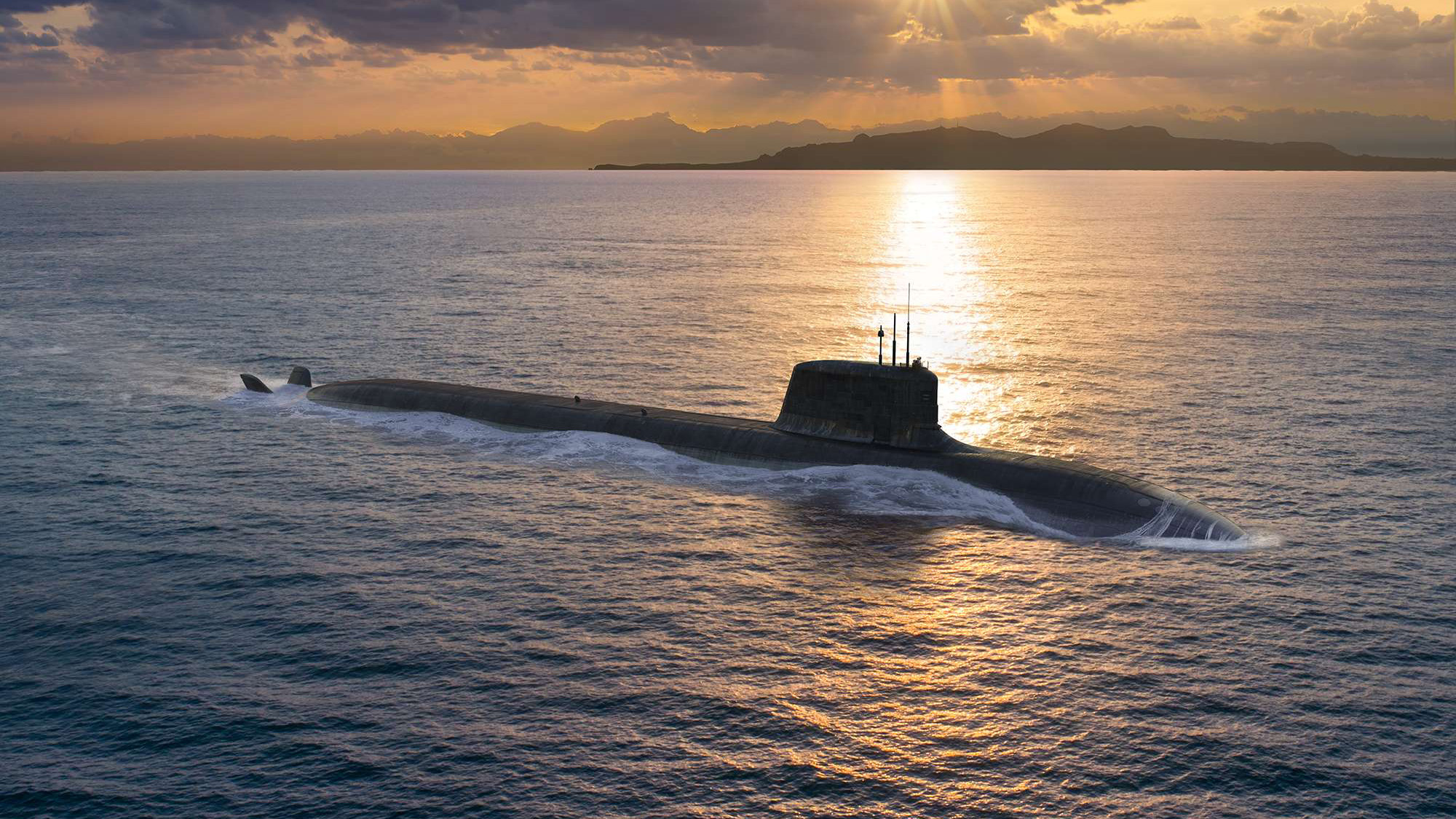
The UK Strategic Defence Review 2025, published on November 24, 2025, outlines a long-term production framework for British nuclear-powered attack submarines. The plan envisions sustaining a build rate of one submarine every 18 months at BAE Systems’ Barrow-in-Furness shipyard and Rolls-Royce’s Raynesway nuclear facility, supporting delivery of up to 12 submarines under the AUKUS SSN program. The AUKUS partnership, signed in September 2021, involves Australia, the United Kingdom, and the United States. Pillar I of the agreement focuses on delivering nuclear-powered submarines to Australia with design, technology, and training support from the UK and U.S., while Pillar II covers cooperation on advanced military technologies, including quantum computing, AI, cyber warfare, undersea systems, and hypersonics. The SSN-AUKUS program is the most visible and strategically significant initiative, aiming to field a joint fleet of advanced submarines across allied navies in the Indo-Pacific.
The Royal Navy currently operates six Astute-class attack submarines and four Vanguard-class ballistic missile submarines, which form the sea-based leg of the UK’s nuclear deterrent. The Astute class, introduced from 2010, will begin reaching the end of its operational life by the late 2030s. The new SSN-AUKUS submarines will replace the Astute class one-for-one, incorporating U.S. Virginia-class technology, including combat systems and vertical launch cells, combined with British design and propulsion expertise. They will offer enhanced stealth, extended range, higher payload capacity, and full interoperability with allied navies, representing a generational leap in undersea warfare capability.
The review emphasizes the UK’s industrial commitment. Sustained investment at BAE Systems and Rolls-Royce will ensure continuous submarine construction, making the UK the industrial and design hub of the SSN-AUKUS program. The 18-month production cycle is planned to remain standard until at least the late 2040s, supporting up to 12 SSNs for the UK and Australia. This production rate mirrors Cold War-era submarine output not seen in the UK since the 1980s.
Preparations are already underway. BAE Systems is expanding Barrow-in-Furness to transition from Astute-class to SSN-AUKUS production by the early 2030s, with steel-cutting for the first boat expected in 2027. Rolls-Royce is scaling reactor core production at Raynesway with a multi-billion-pound investment in a new nuclear manufacturing campus to serve both UK and AUKUS requirements. The strategy aims to reduce lead times, preserve industrial capacity, ensure submarine availability, and maintain a credible deterrent in an era of great-power competition.
The implications extend beyond the UK. Australia will rely on UK and U.S. expertise to establish its nuclear submarine capability, with continuous UK production ensuring program schedule integrity. U.S. officials support the UK lead in design and early construction, allowing American shipyards to focus on Columbia-class ballistic missile submarines and Virginia-class production.
Strategically, this industrial acceleration counters Chinese naval expansion, as the PLAN could field up to 70 submarines by 2035, including new Type 093 and 095 SSNs. The AUKUS submarine fleet, with superior stealth and lethality, will serve as a key response.
Challenges remain, including workforce capacity, supply chain issues, and financial sustainability. The review addresses these risks through technical education programs, long-term supplier contracts, and workforce agreements with Australia and the U.S.
Through this plan, the UK solidifies its central role in AUKUS, committing to a new SSN every 18 months. The initiative ensures the Royal Navy remains a leading undersea force while contributing to a technologically and strategically integrated AUKUS submarine fleet. This represents one of the largest investments in British submarine capability in decades, reinforcing the UK’s position as a major maritime power.
About The Author