Russian state media has revealed the Kaplya FPV drone munition, a standardized payload equipped with an explosively formed penetrator warhead designed to defeat cage-armored vehicles.
The footage points to a shift toward factory-produced FPV drone munitions as Russia expands drone use for anti-armor strikes.
Russia has unveiled a factory-produced FPV drone munition known as Kaplya, designed to target armored vehicles fitted with cope cages and roof-mounted anti-drone canopies. The payload was presented in video and images shared by Russian military correspondent Dmitry Kulko, showing a standardized, serially manufactured system supplied to drone units rather than improvised field-built devices.
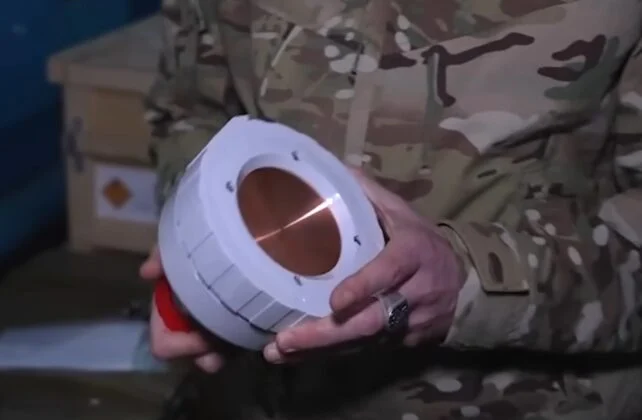
According to Russian sources, Kaplya uses an explosively formed penetrator (EFP) warhead that forms a dense metal projectile upon detonation, intended to pierce cage armor and strike the vehicle’s main armored structure. The design reflects battlefield adaptations to widespread use of protective grilles and overhead anti-drone shields on armored platforms.
Russian descriptions also note that the munition generates fragmentation effects to neutralize nearby personnel in addition to its anti-armor role. The system is configured for FPV attack drones conducting short-range precision strikes. Ukrainian defense analyst Andriy Tarasenko assessed that a factory-built EFP warhead of roughly 150 mm diameter could penetrate more than 100 mm of armor and produce significant behind-armor damage, while typically bypassing explosive reactive armor.
The footage also showed other standardized drone payloads reportedly supplied to Russian forces, including fragmentation warheads weighing about 1.7 kg and thermobaric warheads around 4 kg. These munitions can be used on FPV strike drones or deployed from quadcopter platforms.
Russian media portrayed the new payloads as part of a centralized supply system, indicating a shift toward standardized FPV drone armament across multiple units and integration into formal military logistics. The munitions were displayed alongside completed drone assemblies, suggesting organized production and distribution rather than decentralized workshop assembly.
FPV drones have become a key element of combat operations for both Russia and Ukraine, with rapid battlefield adaptation driven by countermeasures such as cage armor and overhead protection. This dynamic has accelerated development of specialized drone munitions optimized for top-attack profiles and armored target defeat.
About The Author