Japan’s defense officials observed a Russian Steregushchiy III-class corvette passing through the Tsugaru Strait into the Pacific, while Moscow simultaneously carried out anti-submarine exercises near the Kuril Islands—underscoring persistent Russian naval activity around key northern chokepoints and its ongoing focus on undersea warfare.
On 1 February 2026, Japan’s Ministry of Defense reported the movement of a Russian Steregushchiy III-class warship, hull number 337, as it transited eastward through the strategically important Tsugaru Strait toward the Pacific Ocean. In the days that followed, Russia’s Pacific Fleet released details of anti-submarine warfare (ASW) exercises conducted by the corvettes Gromkiy and Gremyashchiy near the Kuril Islands. Taken together, these developments paint a broader picture of sustained Russian naval activity in maritime zones close to northern Japan and highlight Moscow’s continued focus on undersea warfare in narrow, strategically sensitive waters.
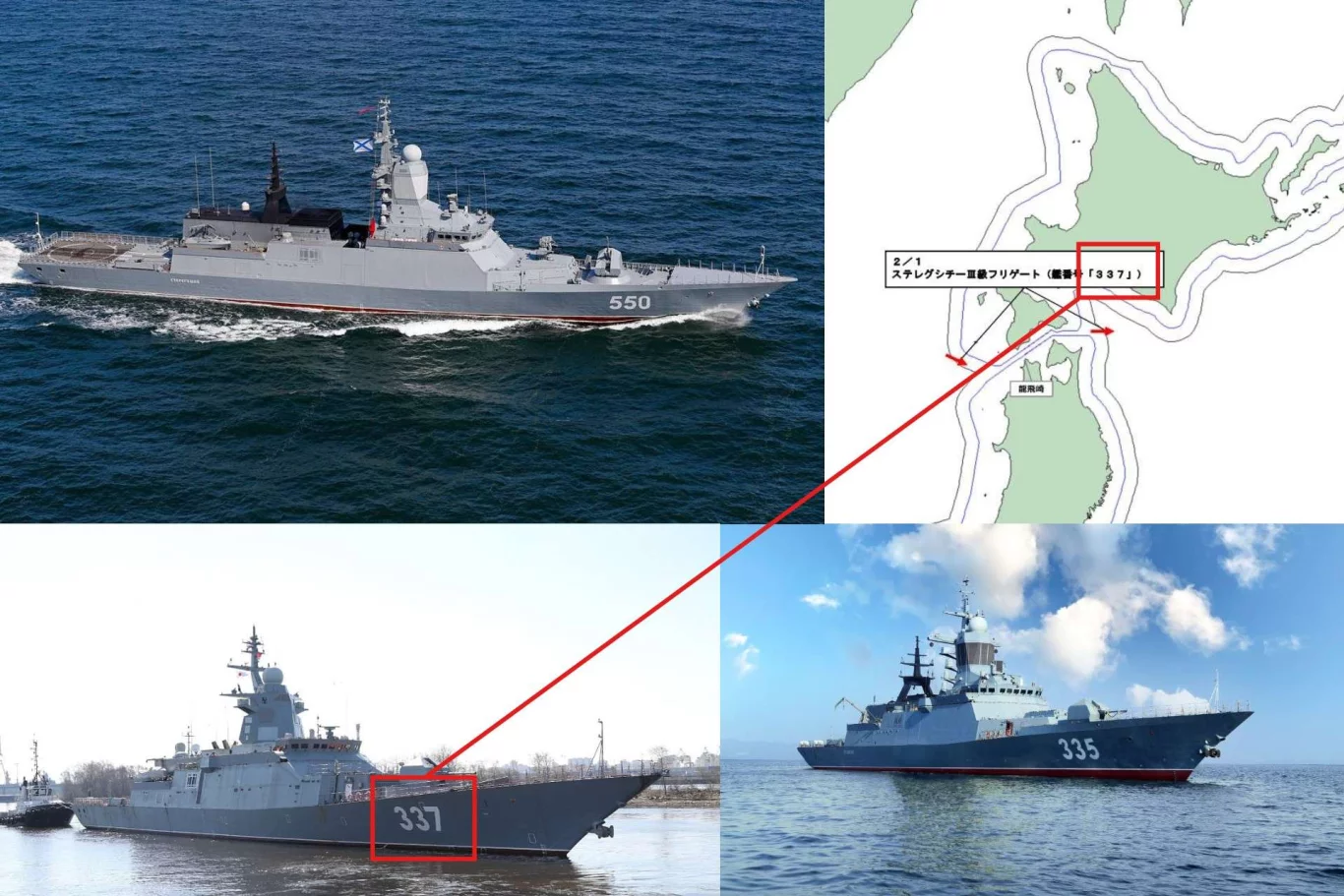
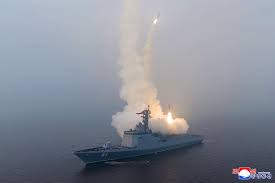
Russian warship transit and Kuril anti-submarine drills highlight ongoing naval activity north of Japan. (Source: Russian Navy / TASS / Amur Shipyard / Japanese MoD)
Japan’s statement was characteristically brief, factual, and operational. According to the Japan Maritime Self-Defense Force (JMSDF), the Russian vessel was first detected at around 08:00 local time approximately 130 kilometers west of Cape Tappi in Aomori Prefecture. The ship was observed moving southeast before transiting eastward through the Tsugaru Strait into the Pacific Ocean. As part of standard maritime monitoring procedures, JMSDF deployed the escort vessel Chikuma from the 15th Escort Division, based at Ominato, along with a P-3C maritime patrol aircraft from the 2nd Aviation Group at Hachinohe. Their mission was to maintain surveillance and collect intelligence throughout the Russian ship’s passage.
This type of public reporting aligns with Japan’s long-standing approach to maritime transparency. Tokyo routinely documents foreign naval movements near its waters to reinforce maritime domain awareness and assure both domestic and international observers that such activities are being closely monitored under established protocols rather than treated as immediate security crises.
Russia’s announcement, in contrast, focused on operational training. The Pacific Fleet stated that its corvettes Gromkiy (Project 20380) and Gremyashchiy (Project 20385) conducted anti-submarine warfare drills in the strait zones of the Kuril Islands while underway. During the exercise, crews simulated the detection of an adversary submarine attempting to evade tracking. The ships practiced coordinated tracking tactics and issued a simulated command ordering the submarine to surface. When the mock submarine failed to comply, the crew of Gromkiy executed an electronic training launch of a torpedo using the Paket-NK system, representing the neutralization of the target.
In addition to ASW operations, the corvettes carried out defensive drills against modern threats such as unmanned aerial vehicles (UAVs) and unmanned surface vessels (USVs). Simulated targets were engaged using AK-630M 30 mm close-in weapon systems and 12.7 mm heavy machine guns, emphasizing layered defensive readiness against emerging maritime threats. The scenario was clearly structured and scripted, with the “enemy” submarine described as notional and the torpedo firing purely electronic, underscoring its training nature.
From a defense analysis perspective, the platforms and systems involved are particularly noteworthy. Project 20380 and 20385 corvettes are designed as multi-role surface combatants optimized for coastal and near-sea operations, with a strong emphasis on anti-submarine warfare and self-defense. Their deployment near the Kuril straits reflects Russia’s strategic prioritization of these waters as critical access routes between the Pacific Ocean and the Sea of Okhotsk.
On the Japanese side, the JMSDF’s use of Chikuma and a P-3C maritime patrol aircraft illustrates a layered surveillance strategy. Surface and aerial assets work together to maintain continuous tracking of foreign naval movements through key maritime chokepoints. The P-3C, in particular, remains a capable platform for long-range sea surveillance and anti-submarine detection, reinforcing Japan’s ability to monitor undersea threats in real time.
The Paket-NK system featured prominently in the Russian exercise. Designed for both defensive and offensive use, it combines short-range anti-submarine torpedoes with anti-torpedo interceptors, enabling ships to defend themselves against submarine threats and incoming torpedoes in confined waters. Training with this system in scenarios involving rapid detection, warning, and simulated engagement highlights Russia’s emphasis on quick decision-making in close-range maritime confrontations. In narrow straits such as those of the Kuril chain, where acoustic conditions are complex and maneuvering space is limited, such capabilities are especially valuable.
For Japan, the Tsugaru Strait holds both operational and political importance. It connects the Sea of Japan to the Pacific Ocean and includes an international transit corridor where foreign warships can legally pass without entering Japanese territorial waters. Monitoring these passages is routine, but it also reflects broader regional security dynamics, particularly amid ongoing tensions and increased military activity in the Asia-Pacific.
From Moscow’s perspective, exercises near the Kuril Islands align with a broader strategy of securing maritime approaches and safeguarding strategic submarine operations. The Sea of Okhotsk has long been considered a favorable operating area for Russia’s ballistic-missile and multi-role submarines. Regular training in anti-submarine warfare, close-range defensive systems, and counter-unmanned tactics helps ensure operational readiness in an environment characterized by complex underwater terrain, strong currents, and heavy maritime traffic.
The combination of Japan’s monitoring activities and Russia’s operational drills reflects a structured but increasingly sophisticated pattern of naval presence in northern waters. Both countries are operating within international norms—Japan through transparent reporting and surveillance, and Russia through clearly identified training exercises—but their proximity in strategically vital sea lanes underscores the importance of professional conduct and clear communication.
As naval forces continue to operate in constrained maritime spaces near northern Japan and the Kuril Islands, maintaining transparency and adherence to established maritime rules will remain essential. Such measures help prevent miscalculations while allowing both nations to pursue necessary defense training and monitoring in a region that is both operationally active and geopolitically sensitive.
About The Author