France has become the latest testing ground for Schiebel’s CAMCOPTER S-300 unmanned helicopter, as the company completes a new phase of flight trials aimed at expanding the aircraft’s operational envelope and advancing development of its next-generation rotary-wing UAV for military and government use.
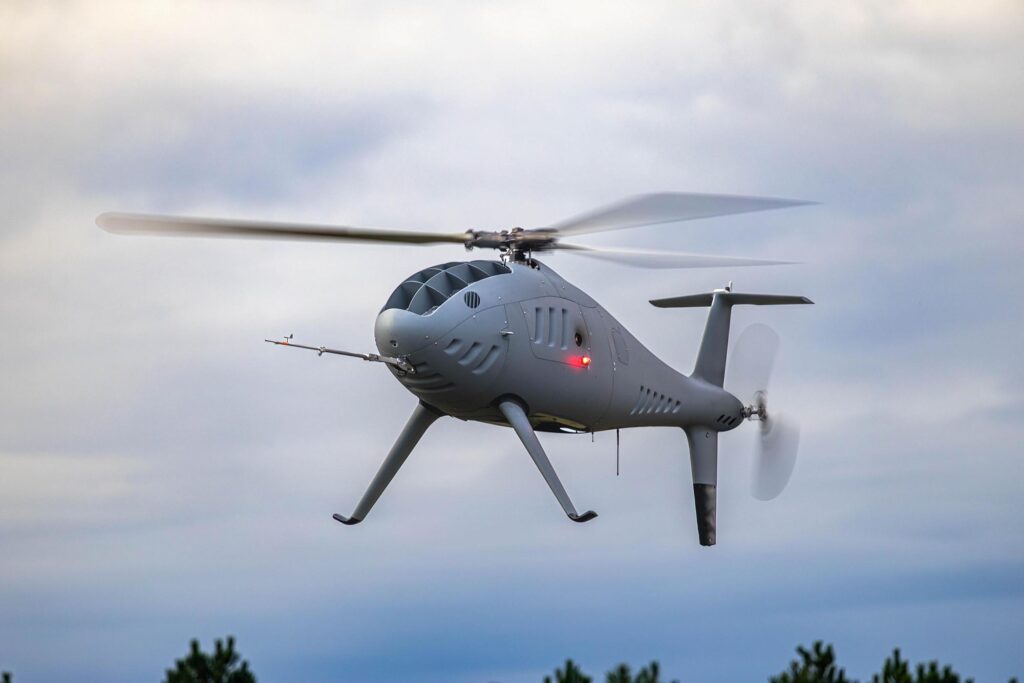
Schiebel has successfully completed the first flight test campaign of its CAMCOPTER S-300 unmanned helicopter in France, marking an important milestone in the development of its next-generation rotary-wing unmanned air system for military and government customers.
In a statement released on December 18, 2025, the company confirmed that the flight trials took place at the CESA Drones test facility in Sainte-Hélène, near Bordeaux. The campaign expanded the S-300’s operational flight envelope and increased the program’s cumulative flight time to 100 hours.
Building on earlier CAMCOPTER S-300 test activities, the flights in France were conducted in a military environment. According to Schiebel, the trials focused on validating key flight characteristics and overall system performance, which is a standard phase in the development of unmanned air systems.
Hans Georg Schiebel, Chairman of the Schiebel Group, stated that France was a natural choice for the next phase of testing due to the company’s long-standing cooperation with the country. He highlighted Schiebel’s established relationship with the French Navy and its local presence through Schiebel Aéronaval SAS, while emphasizing that the S-300 is being developed to meet the requirements of military and government users worldwide.
During the campaign, the CAMCOPTER S-300 demonstrated stable and controlled flight behavior while undergoing a range of evaluations. These included tests of handling qualities, flight control responsiveness, and overall aircraft performance, confirming the platform’s ability to operate safely across a broader range of conditions as development progresses.
The CAMCOPTER S-300 is designed as the successor to the CAMCOPTER S-100, which has accumulated several hundred thousand flight hours globally in both maritime and land-based roles. The S-100 is widely used by armed forces and government agencies for missions such as naval surveillance, intelligence collection, and reconnaissance.
Building on the proven operational experience of the S-100, Schiebel says the S-300 will offer higher payload capacity, longer endurance, and improved mission flexibility. The new unmanned helicopter is intended for demanding military and government missions, including operations from naval vessels and austere environments, where vertical takeoff and landing capability is essential.
About The Author