Turkey has begun building its first fully indigenous submarine under the MILDEN program at Gölcük Naval Shipyard, alongside the initial blocks of the TF-2000 air defense destroyer at Istanbul Naval Shipyard. Coupled with new Steel Dome air and missile defense contracts and the first export of a Hisar-class corvette to Romania, these developments reinforce Turkey’s push for a more self-reliant naval presence in the Eastern Mediterranean, Black Sea, and Turkish Straits.
Speaking at a weekly press briefing in Ankara on December 4, officials from the Turkish Ministry of National Defense confirmed a major milestone in national naval independence: the start of the industrial phase for the MILDEN program. Steel cutting and the assembly of the first blocks for this indigenous diesel-electric attack submarine are now underway at the Gölcük Naval Shipyard. This development, coupled with the commencement of construction on the first TF 2000 air defense destroyer and the signing of $6.5 billion in contracts for the “Steel Dome” air defense project, underscores a deliberate strategic pivot. Türkiye is moving aggressively to anchor its future fleet growth in domestic shipyards, sensors, and weaponry, reducing reliance on imported naval architectures.
Technical Specifications and Propulsion
The MILDEN is designed as a diesel-electric attack submarine displacing approximately 2,700 tons with a length exceeding 80 meters. A core feature of the vessel is its locally developed Air-Independent Propulsion (AIP) system, which combines a methanol reforming system with Polymer Electrolyte Membrane (PEM) fuel cells, supported by lithium-ion batteries. This configuration allows for extended submerged endurance without the need for snorkeling, significantly reducing the vessel’s acoustic signature—a critical requirement for operations in the heavily monitored waters surrounding Türkiye.
Armament and Combat Systems
The submarine’s offensive capabilities center on eight 533 mm tubes capable of deploying the indigenous AKYA heavy torpedo and the Atmaca anti-ship missile. The Atmaca, already proven on surface platforms, offers a range of over 220 kilometers, utilizing sea-skimming flight paths and active radar for terminal acquisition. Officials also indicated the future integration of the Gezgin cruise missile, which would provide the navy with a deep land-attack capability.
To ensure technological sovereignty, the combat system, sonar suite (including towed arrays), and optronic masts are all developed domestically. This autonomy is designed to insulate Turkish naval programs from foreign export restrictions that have hampered procurement in previous decades.
Broader Defense Achievements
The Ministry highlighted that MILDEN is part of a wider consolidation of Türkiye’s defense industrial base.
- Surface Warfare: The TF 2000 destroyer, now in production, will provide area air defense using AESA radars and long-range interceptors. Additionally, ASFAT has signed a contract to export an Akhisar-class light corvette to Romania, marking the first sale of a Turkish combat ship to a NATO ally.
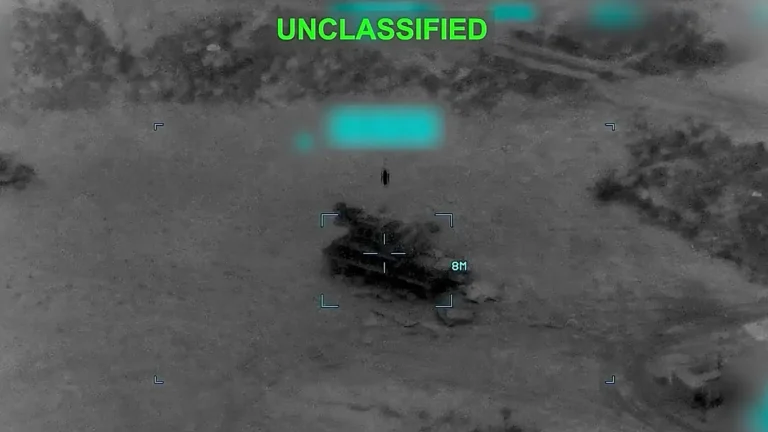
- Air Domain: The Kizilelma unmanned combat aircraft recently destroyed an aerial target using the Aselsan-produced Murad AESA radar and the TÜBİTAK SAGE Gökdoğan beyond-visual-range missile.
- Air Defense: The Presidency of Defense Industries (SSB) has committed $6.5 billion to the Steel Dome system to protect national airspace from ballistic and drone threats.
Strategic Implications
The MILDEN program signifies a shift in the balance of power in the Eastern Mediterranean and the Black Sea. By transitioning from German-origin submarines to a sovereign design, Türkiye aims to enhance its anti-access/area denial (A2/AD) capabilities. The combination of quiet AIP propulsion, heavy torpedoes, and long-range missiles provides the Turkish Navy with flexible options for deterrence and power projection. Ultimately, this program reinforces Ankara’s influence within NATO and establishes a self-reliant naval force capable of shaping regional security dynamics.
About The Author