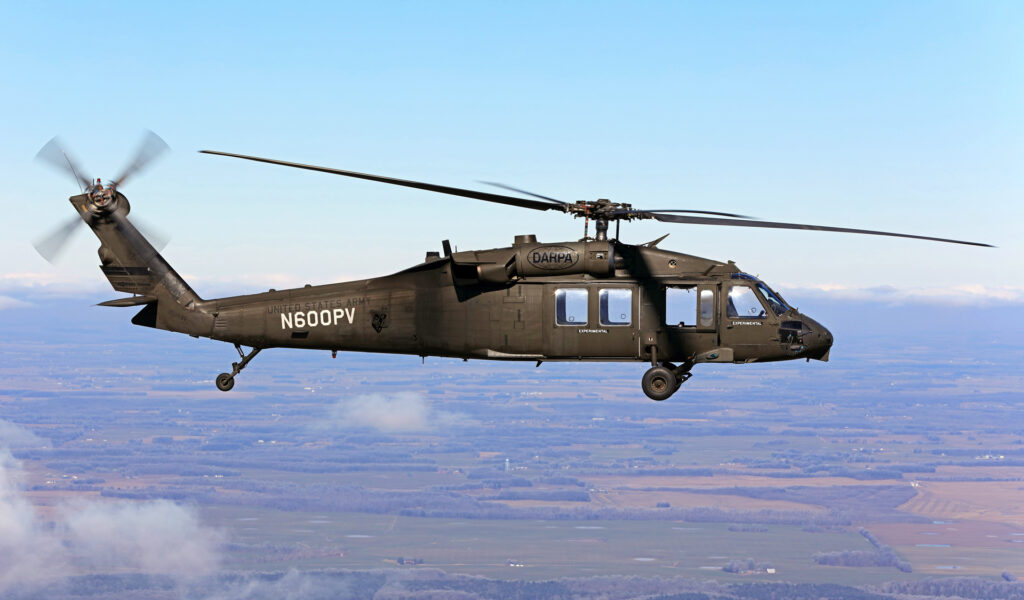
On December 19, 2025, the U.S. Army released a Request for Information calling on industry to propose long-term sustainment and modernization solutions to keep the UH-60M Black Hawk in frontline service well beyond 2050.
On December 19, 2025, the U.S. Army released a Request for Information (RFI) outlining plans to keep the UH-60M Black Hawk in frontline service well beyond 2050. The Army is asking U.S. industry to propose practical, long-term sustainment and modernization approaches capable of supporting the helicopter over several more decades. With the UH-60M having entered service in 2006, this plan would extend its operational life to more than 44 years, requiring a sustainment model that manages aging aircraft while preserving readiness, affordability, and steady return-to-unit timelines.
Rather than mandating a fixed solution, the Army is focused on outcomes. It wants industry partners to demonstrate how modernization and sustainment can be integrated in a repeatable, scalable manner, while controlling cost and schedule risks over many years. Companies are expected to show they can expand repair and overhaul capacity, maintain consistent quality, and support a large, heavily utilized fleet without creating industrial bottlenecks. The concept is designed to be expandable, with the potential to include other U.S. services, government agencies, and foreign UH-60 operators, further increasing demand and emphasizing the need for industrial resilience.
Modernization is described as a continuous process rather than a one-time upgrade. The Army highlights autonomy, artificial intelligence, and launched effects as priority areas for integration, but stresses that these capabilities must not compromise aircraft availability or maintainability. Industry responses must explain how new technologies can be introduced alongside core sustainment activities, while preserving predictable induction, repair, and return timelines critical for operational planning.
The RFI outlines detailed sustainment expectations, covering major systems such as engines, transmissions, rotor blades, swashplates, servo assemblies, hydraulic pumps, landing gear, propulsion shafts, and structural components. Airframe sustainment centers on disassembly and detailed inspections to detect fatigue, corrosion, and damage, followed by corrosion prevention, repainting, alignment checks, and structural repairs. The process concludes with reassembly, power-on checks, Maintenance Operational Checks, Acceptance Test Procedures, ground runs, and maintenance flight tests conducted under strict quality control oversight.
Introduced in 2006 to replace earlier UH-60A and UH-60L variants, the UH-60M Black Hawk remains the backbone of U.S. Army utility aviation. The broader Black Hawk family has accumulated more than 15 million flight hours, underscoring the importance of sustaining the platform for future decades. The UH-60M retains the four-blade main rotor and canted tail rotor configuration, with structural improvements aimed at managing fatigue and corrosion from intensive operations.
Powered by two General Electric T700-GE-701D turboshaft engines, each producing around 2,000 shaft horsepower, the UH-60M can carry up to 11 fully equipped troops, approximately 1,200 kg of internal cargo, or external sling loads of up to about 4,100 kg. Composite wide-chord rotor blades enhance performance and handling, while crashworthy seating, energy-absorbing landing gear, and redundant systems improve survivability. An integrated health and usage monitoring system supports condition-based maintenance and reduces unscheduled downtime.
The UH-60M can be armed with door-mounted 7.62 mm machine guns such as the M240 or M134 and can carry auxiliary fuel tanks or weapon systems including 70 mm rockets, missiles, gun pods, and the M136 Volcano mine-laying system. The helicopter is operated by numerous countries worldwide, including the United States, Japan, South Korea, Saudi Arabia, the UAE, Sweden, Greece, Taiwan, and others, making long-term sustainment a matter of global as well as U.S. interest.
About The Author