Venezuelan authorities have released images showing debris from an AGM-154C-1 Joint Stand-Off Weapon at the site of a January 3 strike, confirming U.S. use of the precision glide munition. Officials said the target was the Venezuelan Institute of Neurology and Brain Research, marking one of the first publicly verified uses of the AGM-154C-1 in Venezuela.
U.S. forces carried out a precision strike in Venezuela on January 3 using the AGM-154C-1 Joint Stand-Off Weapon, after Venezuelan authorities released images showing debris from the guided glide munition at the impact site. The photographs revealed identifiable fragments, including casing sections and internal components consistent with the C-1 variant, which is optimized for long-range attacks with enhanced terminal guidance.
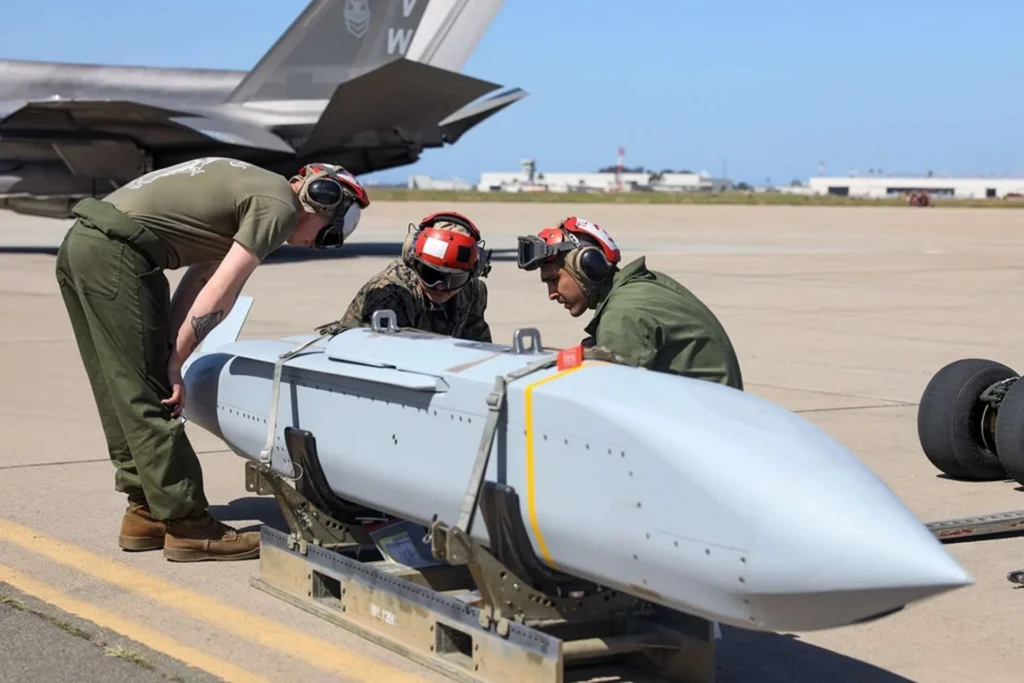
Venezuelan officials stated that the strike hit the Venezuelan Institute of Neurology and Brain Research (IVNIC). The recovered debris matched known characteristics of the AGM-154C-1, a weapon designed to engage fixed and hardened targets from significant distances, allowing launch aircraft to remain outside heavily defended airspace.
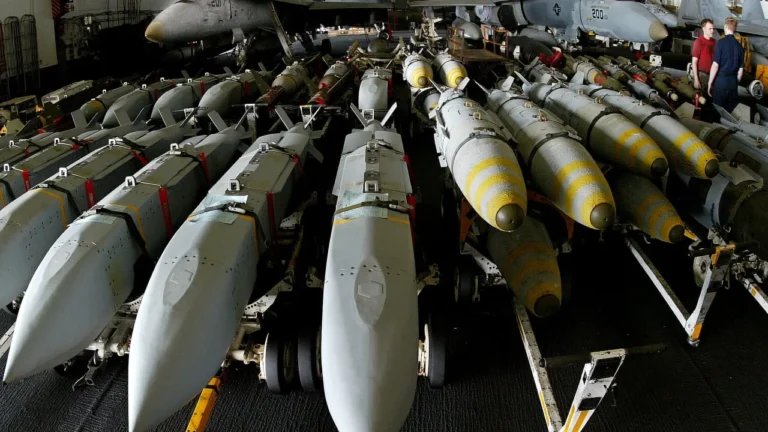
The AGM-154C-1 JSOW is deployed from U.S. platforms such as the F/A-18 and F-35. It combines GPS guidance for midcourse navigation with an infrared seeker for terminal accuracy and carries a penetrating blast-fragmentation warhead weighing about 225 kilograms. When released from high altitude, the weapon can strike targets at ranges exceeding 100 kilometers.
Local authorities reported that the wreckage collected at the scene confirmed the specific munition type used, marking one of the first publicly documented instances of AGM-154C-1 employment against a target inside Venezuela. The images align with the known structure and materials of the C-1 variant, including its distinctive guidance and control features.
While earlier JSOW versions have seen combat use in the Middle East and Asia, open-source confirmation of the C-1 variant’s operational use has been limited. The Venezuelan-released photographs therefore provide rare visual evidence of this advanced stand-off weapon being used in a real-world strike.
About The Author