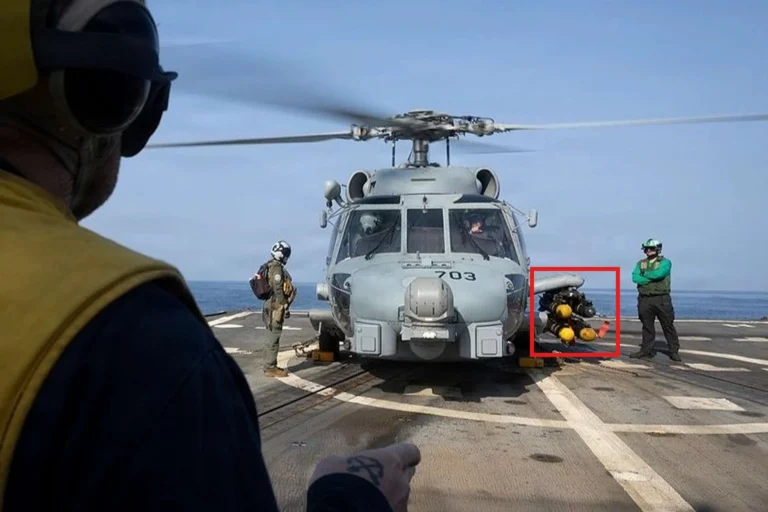
On November 15, 2025, the U.S. Marine Corps posted striking images on its official X account: Marines from the 22nd Marine Expeditionary Unit sliding down fast ropes from an MH-60S Sea Hawk onto the rolling flight deck of USS Iwo Jima (LHD 7) somewhere in the Caribbean Sea. The drills were part of a broader, high-intensity work-up that has kept the Iwo Jima Amphibious Ready Group and its embarked 2,200-strong MEU at sea and on edge for weeks.
The timing is hardly coincidental. The deployment is being executed under Operation Southern Spear, a named campaign in which U.S. Southern Command now treats the most sophisticated narco-trafficking fleets — armed go-fast boats, weaponized semi-submersibles, and drone-scouted convoys — as combatant forces rather than simple criminals. Senior officials, including the new Secretary of Defense Pete Hegseth, have begun describing the effort as a “warfighting campaign,” a rhetorical shift that carries real implications for rules of engagement still shielded from public view.
Aboard Iwo Jima, the 22nd MEU remains a complete, sea-based combined-arms team built around a reinforced infantry battalion, a composite aviation squadron flying MV-22B Ospreys, CH-53E heavy-lift helicopters, AH-1Z Vipers, UH-1Y Venoms, and the MH-60S Seahawks used in the fast-rope exercise. With an unrefueled Osprey radius exceeding 650 km, the unit can reach virtually any point along Venezuela’s coast or the Lesser Antilles chain in under two hours from over-the-horizon positions.
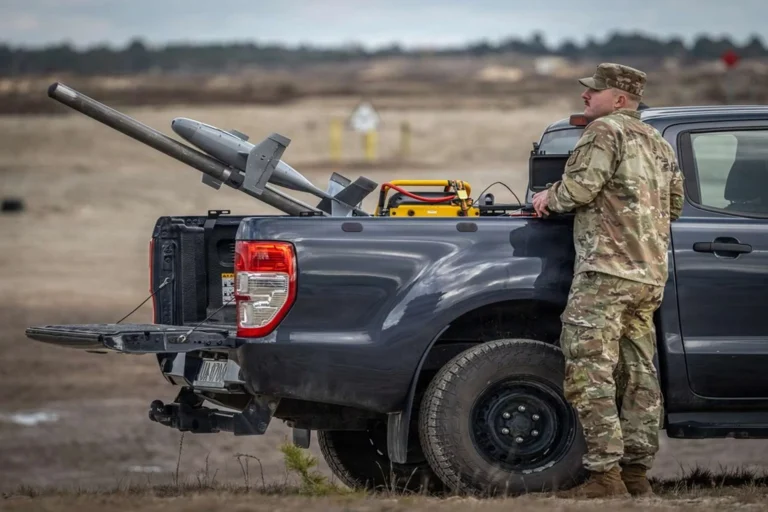
The fast-rope footage itself is a deliberate signal. The technique is reserved for scenarios where landing zones are denied or too hot for a conventional touchdown: hostile ship boardings, rooftop seizures, or raids on coastal transshipment sites guarded by cartel gunmen. Paired with recent training in small-drone swarms and real-time maritime ISR fusion, the exercise shows a force postured for rapid, violent interruption of trafficking networks that have grown increasingly militarized.
Venezuela looms in the background. The Maduro government’s deepening collusion with narco-proxy militias and its tolerance for armed irregulars along the coast have kept Washington on alert. While no public tasking yet points the 22nd MEU directly at Caracas, its presence offers SOUTHCOM immediate options — embassy reinforcement, mass non-combatant evacuation, or, if ordered, something far more forceful.
For now, the Iwo Jima ARG continues to prowl the southern maritime corridor, a self-contained strike group that can sustain itself for a month without pulling into port. The message embedded in every helicopter assault rehearsal and every live-fire evolution is unambiguous: the United States has positioned a scalable, sea-based expeditionary force within easy reach of both the cartel fleets and the unstable regimes that shelter them, and it is no longer content to treat America’s southern maritime flank as anything less than a contested battlespace.
About The Author