The United States is redeploying the USS Gerald R. Ford to the Middle East, creating two U.S. carrier strike groups in the U.S. Central Command area after the arrival of the USS Abraham Lincoln in January 2026.
The U.S. Navy will redeploy the aircraft carrier USS Gerald R. Ford to the Middle East, joining the USS Abraham Lincoln carrier strike group in the Persian Gulf and becoming the second U.S. carrier assigned to the region in nearly a year. The move replaces earlier expectations that USS George H.W. Bush would take the role and extends the Ford’s deployment, delaying its return to Norfolk until late April or early May 2026.
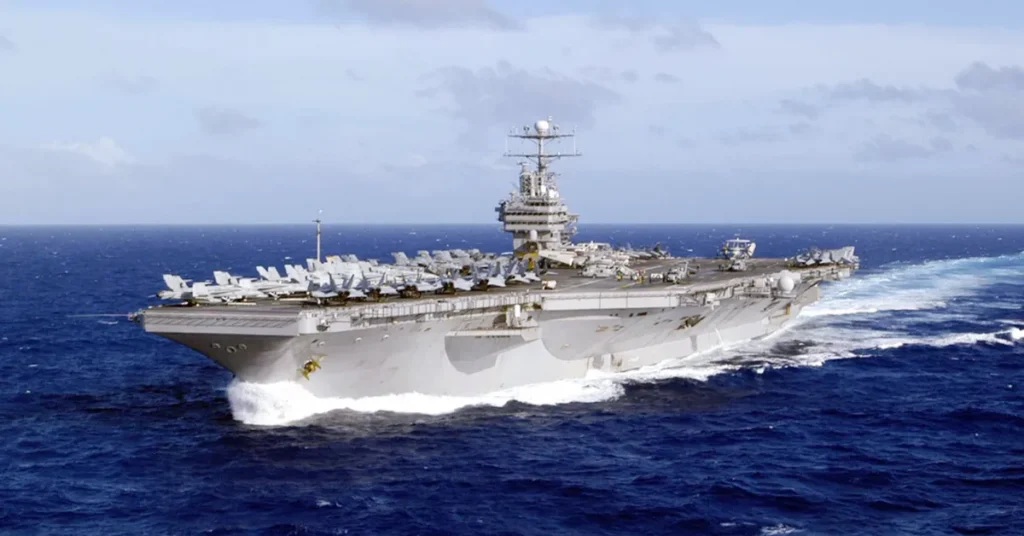
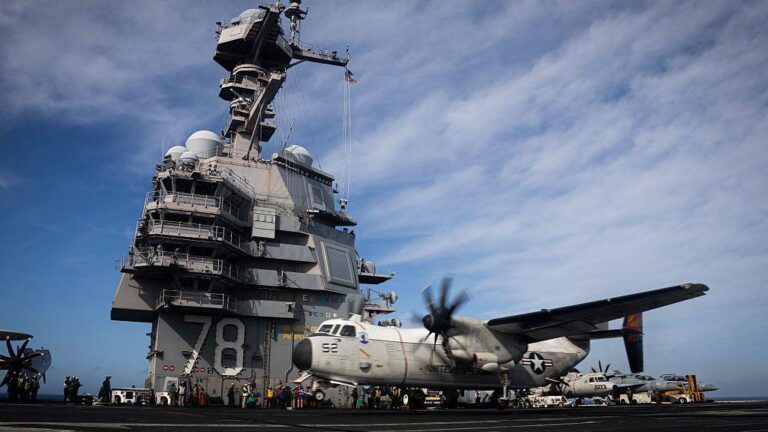
USS Gerald R. Ford extends its deployment to operate alongside USS Abraham Lincoln in the Middle East, forming a dual-carrier presence. (Picture source: US Navy)
The redeployment follows indications from Donald Trump that a second carrier would be sent as part of pressure on Iran. The decision results in two U.S. carrier strike groups operating simultaneously in the U.S. Central Command area of responsibility. The Abraham Lincoln strike group, operating in the region since January 2026, includes advanced aircraft such as F-35C, F/A-18 Super Hornets, EA-18G Growlers, and E-2D Hawkeyes, supported by Arleigh Burke-class destroyers capable of launching Tomahawk missiles and providing ballistic missile defense.
Operational tensions escalated earlier in February when a Marine Corps F-35C shot down an Iranian drone near the Abraham Lincoln in the Arabian Sea, while Iranian naval forces attempted to seize a U.S.-flagged tanker in the Strait of Hormuz before being deterred by U.S. naval and air assets. The developments followed U.S. strikes on Iranian nuclear facilities at Fordow, Natanz, and Isfahan, and subsequent Iranian missile launches toward Al Udeid Air Base in Qatar.
Additional U.S. naval forces are operating across the region, including destroyers in the Strait of Hormuz and Red Sea, ships in the Mediterranean, and littoral combat ships in the Persian Gulf. More than 30,000 U.S. personnel are deployed across multiple Middle Eastern countries, supported by Patriot and THAAD missile defense systems to counter Iranian missile and drone threats.
The USS Gerald R. Ford is the world’s largest aircraft carrier, displacing about 100,000 tonnes and capable of operating more than 75 aircraft. Powered by two nuclear reactors and equipped with advanced radar systems and defensive weapons, the carrier features the Electromagnetic Aircraft Launch System, increasing sortie rates and reducing crew requirements compared with older Nimitz-class carriers.
Since entering service, the Ford has conducted multiple deployments across the Atlantic, Europe, and the Mediterranean, including NATO exercises and operational missions. Its latest redeployment delays planned maintenance in Virginia and extends an already lengthy deployment cycle, placing additional strain on fleet readiness and scheduling.
The deployment comes amid ongoing diplomatic engagement between the United States and Iran, including indirect talks held in Muscat. Washington has demanded limits on Iran’s nuclear program and missile activities, while Tehran has insisted its missile program is non-negotiable and tied negotiations to sanctions relief. The presence of two U.S. carrier strike groups in the region underscores both deterrence and contingency planning as tensions continue.
About The Author