Poland’s General Staff has approved a U.S. proposal to transfer roughly 250 used Stryker armored vehicles for a nominal price of one dollar. The deal, sourcing vehicles from U.S. units in Europe, aims to fill urgent gaps in Poland’s fleet caused by deliveries to Ukraine and ongoing modernization efforts, while strengthening NATO’s eastern defenses.
Poland is moving toward a landmark agreement to acquire around 250 U.S. Stryker armored personnel carriers for a nominal price of one dollar, according to Deputy Prime Minister and Defense Minister Władysław Kosiniak-Kamysz and reporting from Polskie Radio. The vehicles, drawn from U.S. units already stationed in Europe as Washington reduces its Stryker presence there, would be transferred to the Polish Army after technical inspections and refurbishment plans are finalized. This allows Warsaw to rapidly reinforce its mechanized brigades without waiting for lengthy transatlantic deliveries.
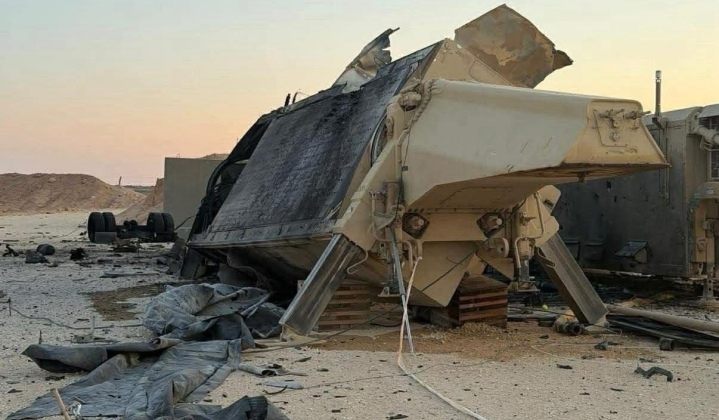
The Stryker M1126 Infantry Carrier Vehicle (ICV) is an 8×8 armored platform derived from the Canadian LAV III and Swiss Piranha III, selected by the U.S. Army for rapid deployment capabilities, allowing a brigade to be operational within 96 hours. The vehicle carries nine infantry soldiers plus two crew members, with a rear compartment designed for quick embarkation and disembarkation. Measuring 6.95 m in length and 2.72 m in width, it is compatible with major transport aircraft including the C-17, C-5, and, under certain weight conditions, the C-130, providing strategic mobility for coalition operations. Strykers have been exported widely over the last decade, including to Colombia and Thailand, and over 100 have been delivered to Ukraine since 2023.
The M1126 is equipped with the remotely operated M151 Protector station, capable of mounting a 12.7 mm or 7.62 mm machine gun, or a 40 mm automatic grenade launcher. Stabilized optics and a Detached Line of Sight mode allow target tracking while moving over uneven terrain. Recent configurations, such as CROWS-J, integrate a Javelin anti-tank missile launcher alongside the machine gun, enabling engagement of armored targets beyond direct line of sight. This modular setup supports diverse missions, from troop transport to close combat against legacy armored vehicles.
Protection comes from a high-hardness steel hull reinforced with ceramic add-on armor against 14.5 mm rounds and 152 mm artillery fragments. Afghanistan operations prompted the addition of a V-shaped hull to enhance mine and IED resistance. The vehicle also features a Chemical, Biological, Radiological, and Nuclear (CBRN) protection system and external fuel tanks for crew safety, along with the Force XXI Battle Command Brigade and Below (FBCB2) digital network for rapid tactical data sharing.
Kosiniak-Kamysz confirmed that each Stryker will undergo inspection to determine suitability for training, operations, or support roles. General Wiesław Kukuła noted that the armed forces have prepared recommendations for the Armaments Agency, with a decisive on-site assessment planned for the second half of 2026, unless security conditions accelerate the timeline. The transfer addresses Poland’s shortage of modern vehicles caused by the gradual withdrawal of Soviet-era BWP-1 platforms and extensive deliveries to Ukraine.
Poland’s domestic industry remains central to its defense strategy. The Rosomak family, derived from the Finnish Patria AMV, forms the backbone of the national fleet with over 900 units delivered. Latest Rosomak variants feature the ZSSW-30 remotely operated turret, armed with a 30 mm Mk44S cannon and Spike LR missiles with a 4 km range. Thirty-five vehicles are deployed within the 21st Podhale Rifles Brigade. Additionally, the first fifteen tracked Borsuk vehicles were delivered to the 15th Mechanized Brigade in Giżycko, as part of a 111-unit contract with ambitions to expand to 1,400 platforms, including specialized variants.
Together, Stryker, Rosomak, and Borsuk vehicles create a coherent tactical framework for long-distance maneuvers along NATO’s eastern flank. Strykers provide rapid mobility and infantry transport, while Rosomak and Borsuk supply anti-tank capabilities, direct fire support, and resilience on challenging terrain. Harmonized digital systems will allow full integration into NATO command networks for allied coordination and data sharing.
The transfer of 250 Strykers underscores the strategic alignment between Washington and Warsaw in securing NATO’s eastern front. Poland strengthens its role as a land pillar of the Alliance in Central Europe, while maintaining industrial autonomy and the capability to conduct sustained operations under continued Russian military pressure.
About The Author