The United Kingdom is sending four additional RAF Typhoon fighter jets to Qatar after a series of drone interception operations carried out by RAF Typhoon and F-35B aircraft over Qatar, Jordan, and Iraq, along with a drone strike targeting British facilities in Cyprus.
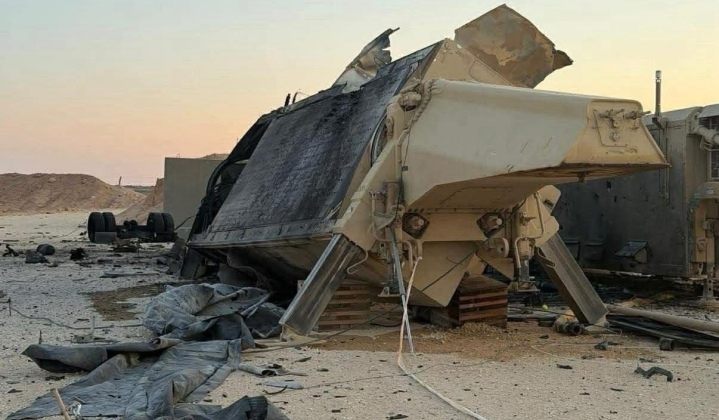
The United Kingdom has decided to deploy four additional Royal Air Force Typhoon fighter jets to Qatar after a drone attack targeted British facilities in Cyprus on March 2, 2026. The deployment is intended to strengthen regional air defense operations following recent interceptions of Iranian drones by RAF Typhoon and F-35B aircraft operating over Qatar and Jordan. Alongside the fighter deployment, additional British personnel were sent to Cyprus, while the Royal Navy destroyer HMS Dragon and counter-drone teams were tasked with supporting broader regional air defense efforts.
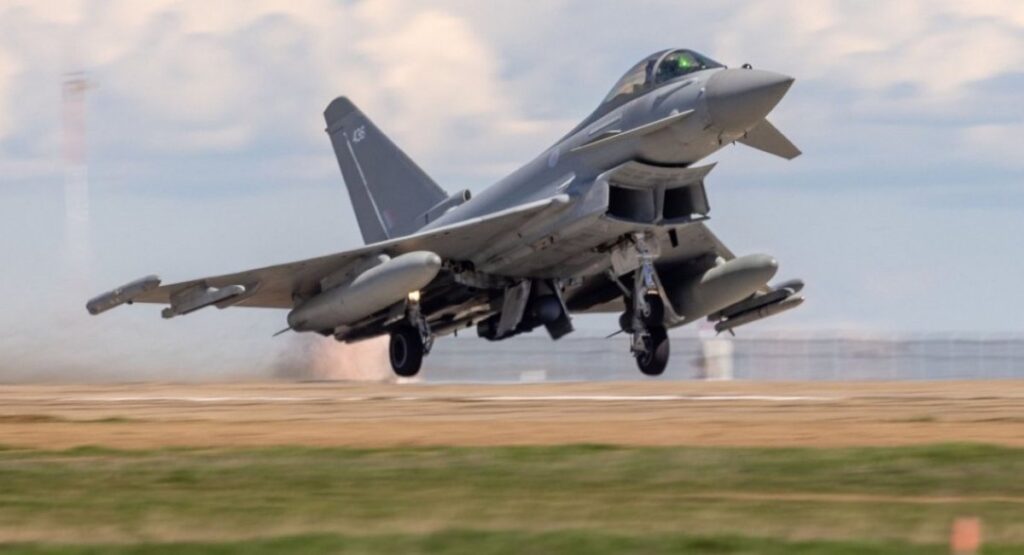
On March 5, 2026, UK Prime Minister Keir Starmer confirmed that four extra RAF Typhoon aircraft would be rapidly sent to Qatar to reinforce defensive air operations across the Middle East as aerial threats against coalition forces and partner nations continued. RAF Typhoon and F-35B jets had already flown defensive patrols overnight across the airspace of Qatar and Jordan, supported by A330 MRTT Voyager aerial refuelling aircraft, allowing extended operational coverage across several areas of the region. During the same timeframe, a British Counter-Uncrewed Aerial Systems unit intercepted additional drones in Iraqi airspace that were approaching coalition forces.
At British installations in Cyprus, roughly 400 extra personnel were deployed to assist with regional air defense coordination and operational support. Counter-drone specialists from the United Kingdom, including personnel who had previously collaborated with Ukrainian experts on drone warfare tactics, were also dispatched to help regional partners improve defensive capabilities. These deployments formed part of a broader British strategy combining air, naval, and support elements to reinforce defensive coverage across the Eastern Mediterranean and the Gulf. The reinforcement followed several operational engagements that had taken place across the region in recent days.
On March 3, 2026, an RAF Typhoon from the joint UK-Qatar 12 Squadron intercepted and destroyed an Iranian one-way attack drone heading toward Qatar using an air-to-air missile. The following day, March 4, a British F-35B fighter shot down drones over Jordan, marking the first time an RAF F-35 had destroyed a target during a live operational mission. Typhoon aircraft and a Voyager tanker supported the operation. Meanwhile, a British counter-drone unit successfully neutralized additional drones in Iraqi airspace that were flying toward coalition positions.
The increased military activity followed earlier drone attacks aimed at British facilities in Cyprus on March 2, 2026, prompting heightened security around UK bases on the island. These events occurred amid ongoing drone activity targeting coalition forces, military facilities, and regional infrastructure across the Middle East after joint US-Israeli strikes against Iran. Air defense patrols and interception missions were carried out in close coordination with coalition partners to counter further aerial threats.
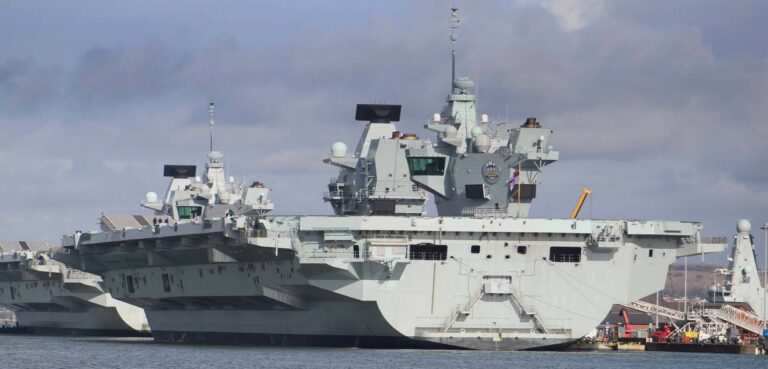
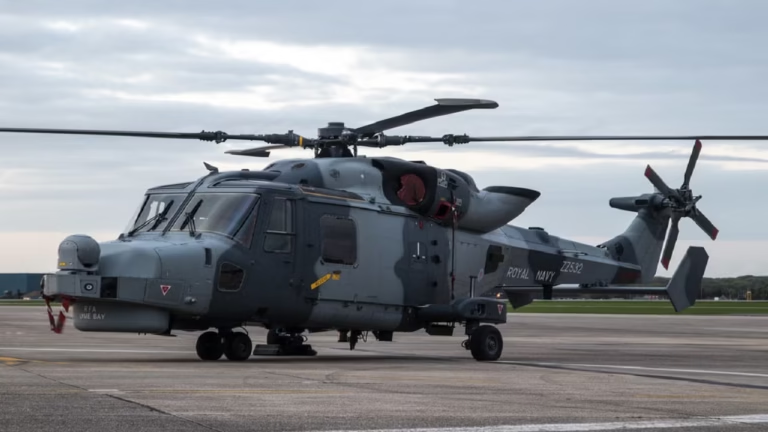
At the same time, the United Kingdom strengthened its naval presence in the Eastern Mediterranean by deploying the Royal Navy Type 45 destroyer HMS Dragon along with two Wildcat helicopters. HMS Dragon is equipped with the Sea Viper air defense system designed to detect, track, and destroy incoming aerial threats such as drones and missiles.
The Sea Viper system is capable of launching eight missiles in less than ten seconds while simultaneously guiding up to sixteen missiles toward separate targets. Type 45 destroyers have previously demonstrated their interception capability, including the destruction of a Houthi missile during operations in 2024. The Wildcat helicopters accompanying the destroyer carry Martlet missiles designed to engage drones and other aerial threats at short distances, adding another interception layer to the destroyer’s radar-guided missile defense system.
In addition to these deployments, the United Kingdom increased its regional coordination with several governments and defense organizations. The UK Defence Secretary met with Cyprus’ Defence Minister to discuss strengthening air defense arrangements in the Eastern Mediterranean, particularly after the attack sparked public concern on the island. British defense officials also held discussions with ambassadors from Gulf Cooperation Council states, while the UK Defence Senior Advisor for the Middle East engaged in consultations with regional partners regarding further defensive cooperation.
These diplomatic and military engagements took place alongside the deployment of additional personnel to Cyprus, where the presence of 400 extra troops expanded the capacity of British bases to support surveillance operations, command coordination, logistics, and air defense tasks.
These actions reflect the UK’s broader strategy of improving defensive cooperation between coalition forces and regional allies. The RAF Typhoon FGR4—where “FGR” stands for Fighter, Ground attack, and Reconnaissance—is the United Kingdom’s primary multi-role combat aircraft and can conduct both air-to-air and air-to-ground missions.
The aircraft is powered by two Eurojet EJ200 engines, each producing approximately 20,000 pounds of thrust. The Typhoon measures 15.96 meters in length, 5.29 meters in height, and has a wingspan of 11.09 meters with a wing area of 50 square meters. It can reach speeds up to Mach 1.6 and operate at altitudes of up to 55,000 feet. Air-to-air refuelling is conducted using a probe-and-drogue system, and the aircraft is operated by a single pilot.
For survivability, the Typhoon is equipped with electronic countermeasure systems, missile approach warning sensors, expendable decoys, and a towed radar decoy. Its sensors include the ECR-90 radar, the PIRATE infrared search-and-track system for air combat targeting, and the Litening V targeting pod used for ground attack missions and reconnaissance.
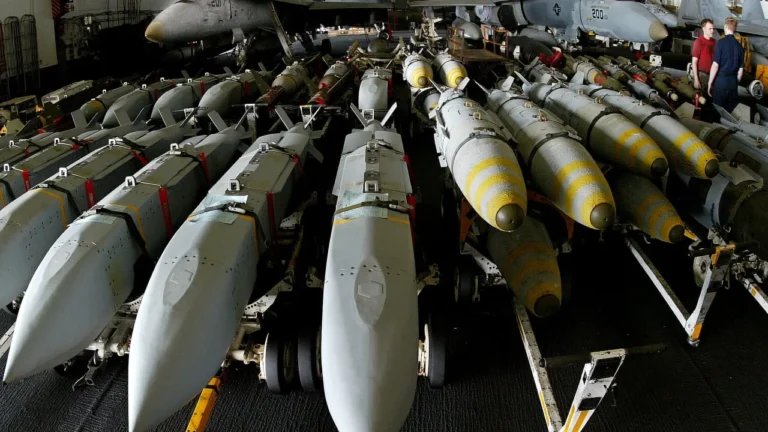
The Typhoon can carry a wide variety of weapons for both interception and strike roles. Air-to-air armament includes Meteor, AMRAAM, and ASRAAM missiles along with a 27-mm Mauser cannon. For ground attack missions, it can deploy Paveway IV precision bombs, Brimstone 2 missiles, and Storm Shadow cruise missiles. During armed reconnaissance or close air support missions, the aircraft can carry a Litening V targeting pod, multiple Paveway IV bombs, Brimstone missiles, and its internal cannon.
RAF Typhoons have been used in numerous operations, including Operation Ellamy in Libya, Operation Shader in Iraq and Syria, Operation Azotize for NATO Baltic Air Policing, and Operation Biloxi for Southern Air Policing in Romania. The aircraft also conducts Quick Reaction Alert missions protecting UK airspace and the Falkland Islands.
Within the RAF, Typhoons operate from RAF Lossiemouth and RAF Coningsby with several squadrons including 1(F), 3(F), 6 Squadron, 11(F), 12 Squadron, 29 Squadron, II(AC), IX(B), and the XLI Test and Evaluation Squadron.
The origins of the Typhoon date back to the European Combat Fighter study launched in 1979 by France, West Germany, and the United Kingdom. At the time, the RAF was seeking replacements for aircraft such as the Harrier and Jaguar and considering a future successor to the Phantom fighter.
Differences in national requirements eventually led to separate design proposals from BAe, Dassault, and MBB. Meanwhile, the Panavia partner nations pursued the Agile Combat Aircraft concept. In 1983, the UK ordered two Experimental Aircraft Programme demonstrators, although BAe ultimately built a single EAP prototype using Tornado RB.199 engines and aerodynamic concepts that later influenced the Eurofighter Typhoon design.
France later developed the Dassault ACX project, which evolved into the Rafale fighter, while the remaining European partners formally launched the European Fighter Aircraft program in 1987 and awarded development contracts in 1988. The first demonstrator flew in 1994. The aircraft received the name Typhoon in the United Kingdom in 1998, while Italy adopted the name Tifone and Spain referred to it as Tifón.
The fighter entered operational service during the 2000s and saw its first combat deployment during the 2011 intervention in Libya. It later became a key asset in Operation Shader against ISIS beginning in 2015 and has supported NATO air defense missions in the Baltic states, Romania, and Iceland.
Under Project Centurion, several capabilities from the retired Tornado GR4 were integrated into the Typhoon before the Tornado fleet was withdrawn in March 2019. These upgrades included the integration of Storm Shadow cruise missiles, Brimstone precision weapons, Meteor air-to-air missiles, and Paveway IV guided bombs.
Today, the RAF Typhoon force includes six frontline squadrons, an Operational Conversion Unit responsible for pilot training, the joint UK-Qatar 12 Squadron, and the 41 Test and Evaluation Squadron operating under the Air and Space Warfare Centre.
About The Author