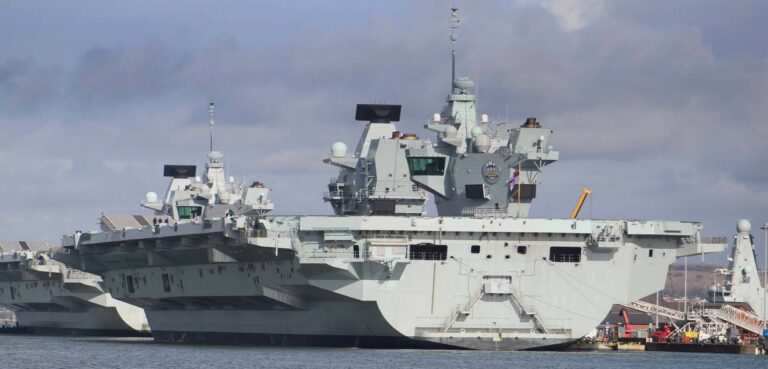
With tensions in the Middle East rising, the UK has cut the readiness time for HMS Prince of Wales from 10 days to just 5, boosting Britain’s ability to quickly support U.S. and allied military operations if the conflict involving Israel and Iran expands.
The United Kingdom has shortened the deployment notice for its aircraft carrier HMS Prince of Wales, reducing the readiness window from 10 days to 5 amid rising tensions in the Middle East, according to a Sky News report on March 7, 2026. British naval personnel have been alerted to the potential for rapid deployment, enabling the Royal Navy to respond quickly should the government choose to bolster its military presence in the region amid the ongoing conflict involving the United States, Israel, and Iran. This move reflects London’s preparation of contingency plans, and a rapid deployment would enhance allied naval presence in critical areas such as the Persian Gulf, Eastern Mediterranean, and Cyprus. The shorter readiness timeline demonstrates the UK’s emphasis on operational flexibility to counter threats to maritime security, coalition forces, or regional stability.
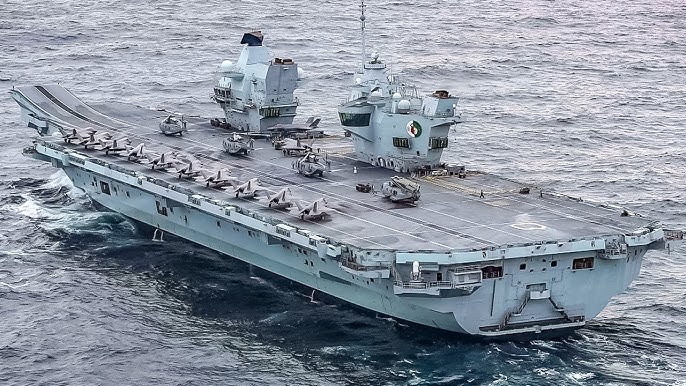
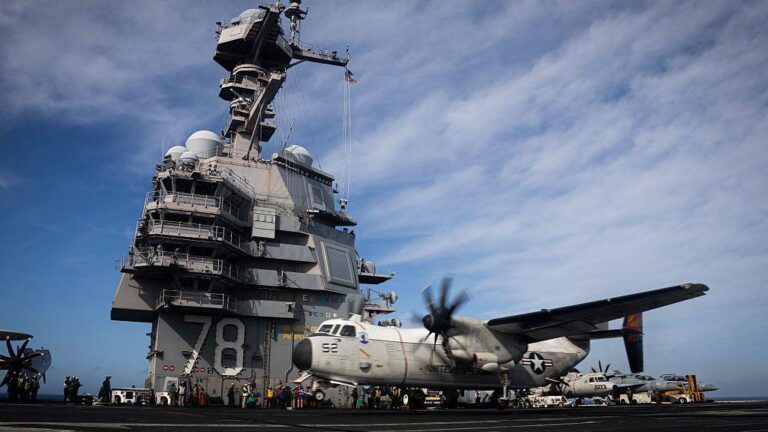
HMS Prince of Wales conducts operations as the UK cuts deployment readiness to five days amid Middle East tensions. (Source: UK MoD)
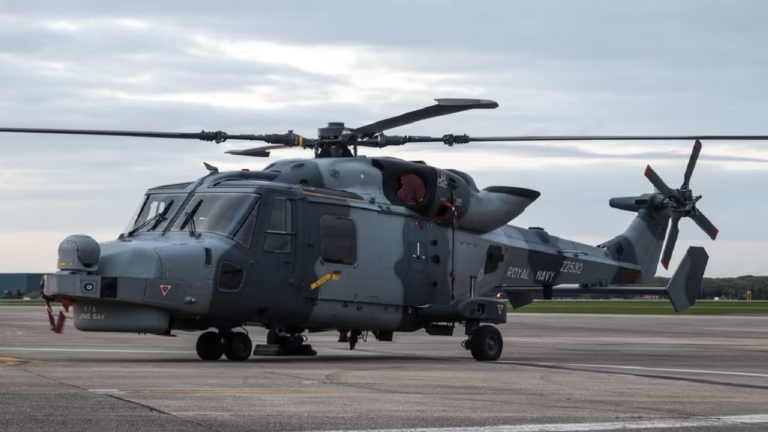
HMS Prince of Wales, one of the Royal Navy’s two Queen Elizabeth-class carriers, is the centerpiece of the UK’s carrier strike capability. Displacing roughly 65,000 tons, the carrier can operate up to 36 F-35B Lightning II stealth fighters alongside a variety of helicopters, including the Merlin HM2 for anti-submarine warfare and airborne early warning missions. The carrier can project air power far beyond British territory, supporting strike operations, air superiority, maritime patrols, and intelligence gathering.
A typical British carrier strike group includes an aircraft carrier, escorted by multiple surface vessels and a nuclear-powered attack submarine. Type 45 destroyers provide layered air defense with the Sea Viper missile system, which integrates the SAMPSON radar and Aster missiles capable of engaging aircraft and certain ballistic threats. Type 23 or Type 26 frigates contribute anti-submarine capabilities using sonar arrays, Merlin helicopters, and Sting Ray torpedoes. A Royal Fleet Auxiliary support ship sustains the group at sea with fuel, ammunition, and supplies for extended operations.
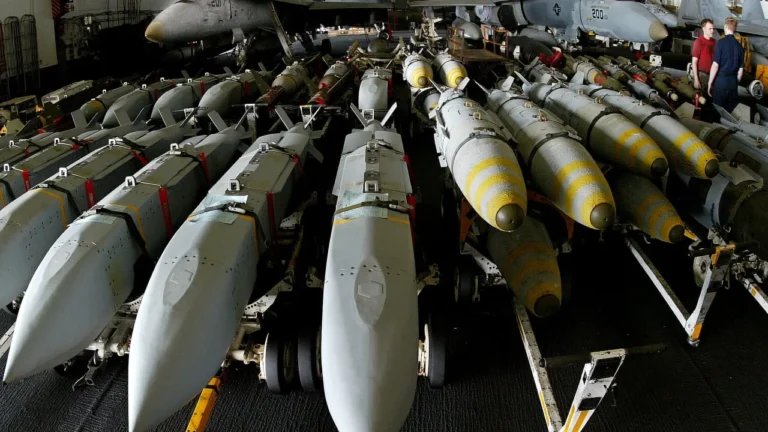
The F-35B Lightning II is a critical element of the carrier’s combat power. Its short-takeoff and vertical-landing (STOVL) capability allows it to operate from carriers without catapults. Equipped with advanced sensor fusion, the AN/APG-81 AESA radar, and low-observable design, the aircraft can perform precision strikes, air defense, and ISR missions, carrying weapons such as Paveway IV bombs, future Meteor missiles, and electronic warfare systems capable of penetrating advanced air defense networks.
If deployed to the Middle East, HMS Prince of Wales would likely operate alongside allied naval forces, including U.S. Navy carrier strike groups in the Arabian Sea and Eastern Mediterranean, and NATO forces patrolling critical shipping lanes. British participation would enhance coalition surveillance, strike capabilities, and deterrence against threats to commercial shipping and regional bases.
The Strait of Hormuz, a vital maritime chokepoint through which roughly 20% of the world’s oil passes, remains highly sensitive. Escalation involving Iran could disrupt shipping through missiles, mines, fast attack boats, or drones. A British carrier strike group with advanced sensors, fighter aircraft, and missile defense escorts would provide protection for shipping lanes and allied military infrastructure.
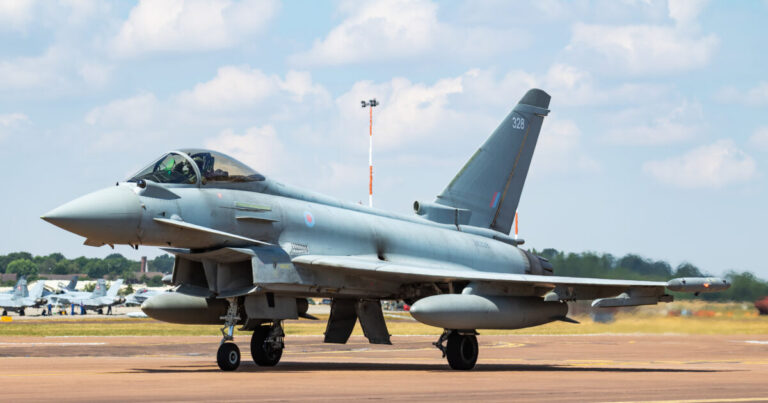
The UK also maintains key military assets in the region, including RAF Akrotiri in Cyprus, supporting surveillance aircraft, Typhoon fighters, and intelligence operations. Deploying HMS Prince of Wales would complement these bases by offering mobile air power and command capabilities across a wide geographic area without reliance on local basing permissions.
Since entering service, HMS Prince of Wales has undergone several operational developments, enhancing the Royal Navy’s ability to deploy a fully operational carrier strike group. Sharing its design with HMS Queen Elizabeth, which led the UK’s first operational carrier strike deployment in decades in 2021 across the Mediterranean, Indian Ocean, and Pacific, the carrier has proven its ability to integrate with U.S. and allied forces.
It is important to note that heightened readiness does not automatically indicate imminent deployment. However, shortening the activation timeline allows rapid assembly of escort ships, aircraft, and logistical support if the situation deteriorates. This decision also sends a strong signal of allied preparedness and maritime capability during a period of increasing regional tension.
Strategically, the readiness of HMS Prince of Wales highlights the enduring importance of carrier-based air power in modern naval operations. Aircraft carriers provide governments with flexible options to project force, support coalition operations, and protect crucial maritime routes without permanent forward bases. In a contested security environment, the rapid availability of a British carrier strike group could play a decisive role in strengthening allied presence and maintaining stability across one of the world’s most volatile regions.
About The Author