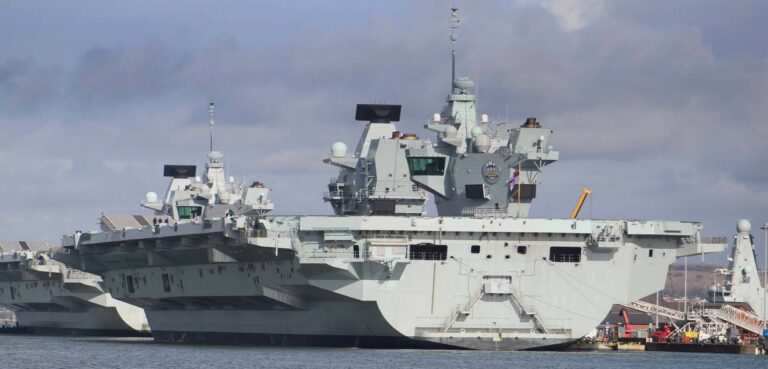
The U.S. may soon have three aircraft carriers positioned within striking distance of Iran as tensions across the Middle East continue to grow, a significant buildup that would boost American naval airpower and send a firm deterrent signal to Tehran.
The U.S. Navy may soon deploy three aircraft carriers within striking distance of Iran as tensions in the Middle East rise. The USS Gerald R. Ford is already operating in the Red Sea after passing through the Suez Canal, while the USS Abraham Lincoln carrier strike group is conducting missions linked to the escalating situation with Iran. A third carrier, the USS George H.W. Bush, has finished training along the U.S. East Coast and could be sent to the region in the coming weeks. If deployed, this would place three U.S. carrier strike groups within reach of Iranian territory, significantly expanding American naval airpower in the area
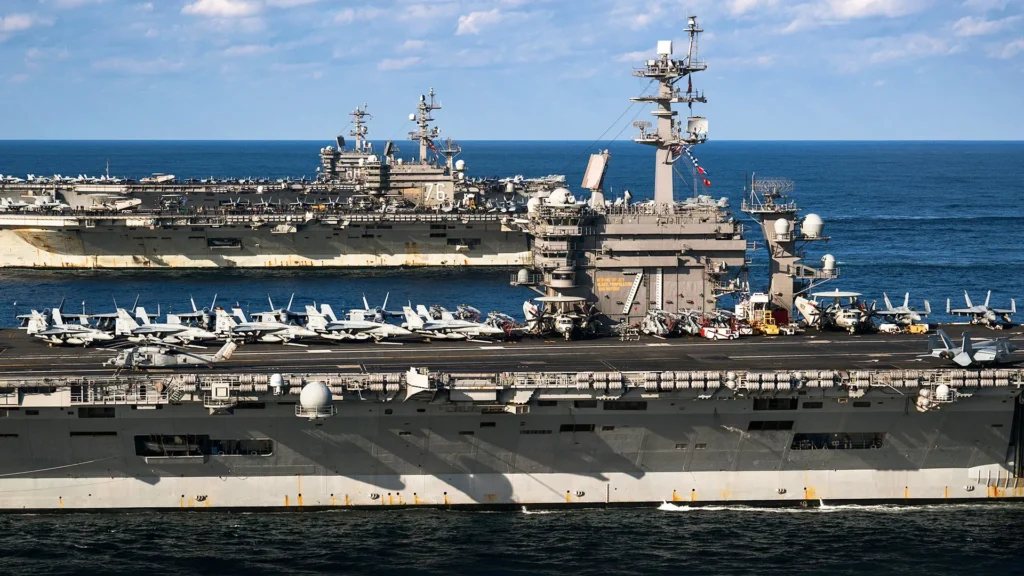
Such a concentration of forces would represent one of the most formidable sea-based airpower deployments in recent years. Each supercarrier typically carries 65–75 aircraft, including F/A-18E/F Super Hornets, EA-18G Growler electronic warfare planes, and E-2D Advanced Hawkeye early warning aircraft. Supported by cruisers, destroyers, and submarines armed with Tomahawk cruise missiles, these strike groups could sustain continuous attacks, suppress enemy air defenses, maintain strong air and missile coverage, and secure key maritime routes such as the Strait of Hormuz.
Beyond the aircraft themselves, the true strength of three carrier strike groups lies in their ability to generate persistent combat power at sea without relying on local airbases. Modern U.S. supercarriers, including the Nimitz and Ford classes, serve as mobile airbases capable of high-tempo flight operations for extended periods. With three carriers in the region, the U.S. Navy could field more than 200 aircraft, forming a floating air force able to conduct large-scale campaigns across the Middle East.
The Carrier Air Wings form the backbone of U.S. maritime strike power. F/A-18E/F Super Hornets deliver precision strikes against both land and sea targets. EA-18G Growlers are specialized in jamming and disrupting enemy radar and air defense networks, critical for attacking heavily defended locations. E-2D Advanced Hawkeyes provide airborne command and control, long-range surveillance, and threat detection, allowing strike groups to coordinate operations over vast areas while spotting incoming aircraft, missiles, or drones.
In high-tempo operations, a single U.S. carrier can generate over 100 sorties in 24 hours. With three carriers operating from the eastern Mediterranean, Red Sea, and potentially the Arabian Sea, the U.S. could conduct continuous strikes on multiple targets simultaneously. This capability would allow commanders to pressure Iranian military infrastructure, including missile launch sites, air defenses, naval facilities, command centers, and logistics hubs.
The strike potential extends beyond the carrier decks. Each strike group typically includes Arleigh Burke-class destroyers and sometimes a Ticonderoga-class cruiser, armed with the Aegis combat system and vertical launch systems capable of firing Tomahawk missiles. With ranges over 1,500 kilometers, these missiles can hit strategic targets deep inside hostile territory, enabling early-phase operations to disrupt air defense networks, radars, and command infrastructure before aircraft carry out deeper strikes.
Equally important is the layered defensive network around these formations. Destroyers and cruisers with Aegis systems provide air and missile defense against aircraft, drones, and cruise missiles, while select Standard Missiles can engage ballistic missile threats. Carrier-based fighters conducting combat air patrols further protect the strike groups by intercepting hostile aircraft or drones before they reach critical assets.
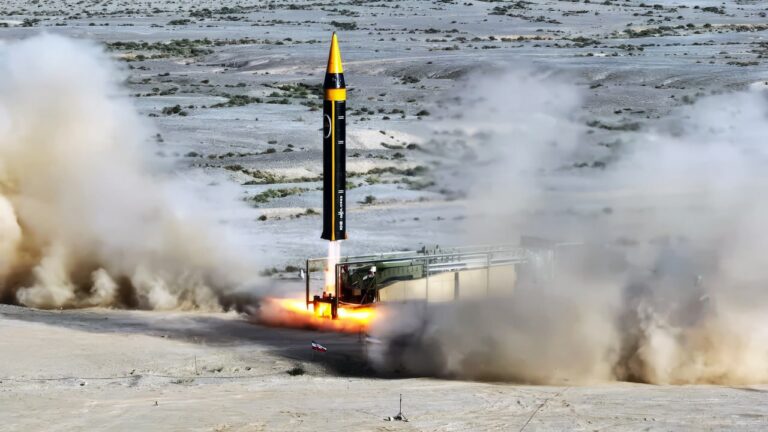
This defense is crucial in a conflict with Iran, which maintains a large arsenal of anti-ship missiles, ballistic missiles, drones, and fast attack boats aimed at challenging naval forces near the Persian Gulf. Iranian strategies rely on asymmetric tactics, including swarming small boats, coastal missile batteries, and naval mines intended to disrupt shipping and threaten warships. Multiple U.S. carriers in the region would counter these threats while projecting power from multiple axes. Carriers in the Mediterranean could target Syria or western Iran, while those in the Red Sea or Arabian Sea could strike Yemen or southern Iran, complicating Iranian defensive planning.
Protecting vital trade routes is another central mission. The Strait of Hormuz, through which roughly 20% of global oil passes, remains a critical chokepoint. Any disruption could have immediate consequences for global energy and trade. Iran has threatened to close the strait during heightened tensions using missiles, drones, mines, and fast boats. Multiple U.S. carrier strike groups provide the surveillance, air cover, and rapid-response strike power necessary to secure the shipping lanes and deter such attempts.
The presence of three carriers also sends a clear strategic signal. Aircraft carriers are among the most visible symbols of U.S. military strength, and concentrating several in one theater shows Washington’s ability to assemble overwhelming force quickly. For allies, this demonstrates the U.S. commitment to regional stability and maritime security, while for adversaries, it underlines that the U.S. can conduct sustained high-intensity operations even as long-range missiles and unmanned systems reshape naval warfare.
If deployed simultaneously, these three carrier strike groups would form a network of mobile airbases capable of continuous operations across the region, protecting key maritime corridors, deterring adversaries, and projecting unmatched sea-based airpower. Whether as deterrence or preparation for combat, such a concentration underscores the enduring role of carrier-based aviation in U.S. military strategy and global power projection.
About The Author