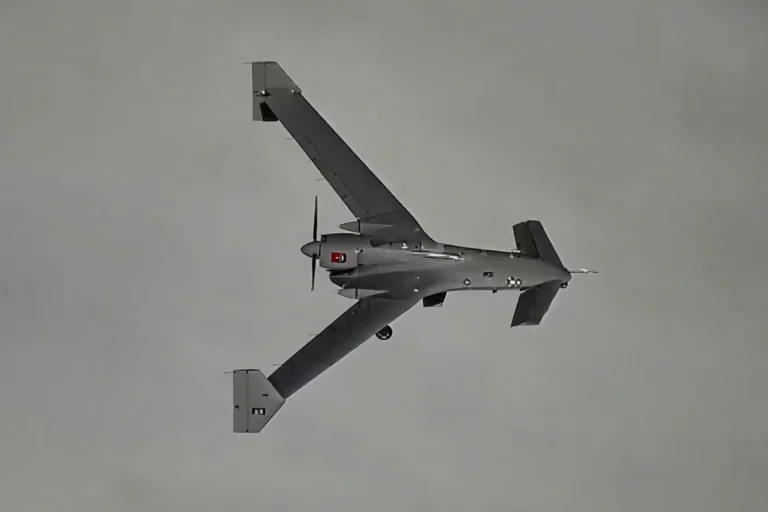
The geopolitical landscape has just shifted, and the ripple effect is already being felt across the globe. Russia has officially announced the development and imminent deployment of a groundbreaking new weapon system: the “Wave” nuclear-propelled cruise missile. This isn’t just another incremental upgrade; it represents a significant leap forward in military technology, potentially redefining strategic deterrence and global power dynamics. With claims of both nuclear propulsion and hypersonic capabilities, the “Wave” missile is poised to become a formidable, and perhaps unsettling, force in the 21st century arms race.
For decades, the concept of a nuclear-powered cruise missile has lingered on the fringes of military science fiction and advanced theoretical physics. The technical challenges involved in miniaturizing a nuclear reactor, ensuring its safety and reliability, and integrating it into a missile platform capable of sustained flight were considered immense, if not insurmountable. Yet, Russia’s announcement suggests they have overcome these hurdles, bringing a once-futuristic weapon into the realm of operational reality by 2025. This achievement alone speaks volumes about the nation’s scientific and engineering prowess, particularly in the face of international sanctions and economic pressures.
The implications of nuclear propulsion are profound. Unlike conventional cruise missiles that rely on chemical propellants, the “Wave” missile would theoretically possess an almost unlimited range. This means it could remain airborne for extended periods, potentially circumnavigating the globe multiple times, making its trajectory unpredictable and its interception incredibly difficult. Such a capability would introduce an unprecedented level of strategic flexibility, allowing Russia to hold virtually any target on Earth at risk, without the need for forward basing or complex aerial refueling operations. The psychological impact alone on potential adversaries would be immense, as the threat could originate from any direction, at any time.
Adding another layer of complexity and danger is the claim of hypersonic speeds. While the exact speeds have not been disclosed, “hypersonic” generally refers to speeds exceeding Mach 5. At these velocities, the “Wave” missile would present an extremely challenging target for existing missile defense systems. The sheer speed reduces the time available for detection, tracking, and interception, often by orders of magnitude compared to traditional ballistic or cruise missiles. Furthermore, hypersonic missiles are known for their maneuverability, even at extreme speeds, making their flight paths even harder to predict and counter. The combination of unlimited range and hypersonic speed creates a weapon that is not only difficult to detect but also incredibly hard to stop once launched.
This development inevitably raises questions about the future of international arms control treaties and strategic stability. The “Wave” missile could be perceived by other nuclear powers as a significant destabilizing factor, potentially triggering a new wave of arms development and deployment. Nations might feel compelled to invest heavily in advanced missile defense systems or even develop their own similar offensive capabilities, leading to an intensified arms race. The established doctrines of mutual assured destruction (MAD) could be challenged by a weapon that theoretically offers a “first-strike” advantage or significantly reduces the response time for an adversary.
Beyond the military implications, there are significant environmental and safety concerns associated with nuclear-propelled systems. While modern nuclear reactors are designed with multiple layers of safety, the idea of a nuclear-powered missile potentially crashing or malfunctioning, particularly over populated areas or international waters, is a sobering thought. The potential for radioactive contamination, however localized, would be a matter of serious international concern and scrutiny. The reliability and safety protocols surrounding the “Wave” missile will undoubtedly be a major point of discussion and debate in the coming years.
As 2025 approaches, the world will be watching closely as Russia moves towards the deployment of its “Wave” missile. This announcement is more than just a military upgrade; it’s a declaration of intent, a demonstration of advanced technological capability, and a potential harbinger of a new and more complex era of strategic competition. The “Wave” missile, with its promise of unlimited range and hypersonic speed, is set to send shockwaves through global defense strategies, forcing nations to re-evaluate their security postures and potentially reshape the very nature of modern warfare. The development of this weapon is a stark reminder that the quest for technological superiority in military applications continues unabated, with profound consequences for global peace and stability.
About The Author