In the ever-evolving world of global naval warfare, China’s latest achievement has sent ripples across the seas. The commissioning of the Fujian (Type 003) aircraft carrier marks a bold step forward for the People’s Liberation Army Navy (PLAN), positioning it as a direct rival to the United States Navy’s crown jewel, the Gerald R. Ford class. This isn’t just about ships; it’s a clash of technological prowess, strategic ambitions, and the shifting balance of power in the Indo-Pacific region. As tensions simmer in hotspots like the South China Sea and Taiwan Strait, understanding how these two behemoths stack up could offer insights into the future of maritime dominance.
The Dawn of a New Era: Fujian’s Entry into Service
China’s naval ambitions have been building for years, but the Fujian represents a quantum leap. As the first aircraft carrier outside the U.S. to incorporate an Electromagnetic Aircraft Launch System (EMALS), it’s a clear signal that Beijing is no longer content with playing catch-up. Launched into service recently, this massive vessel transitions the PLAN from ski-jump style carriers like the Liaoning and Shandong to full-fledged Catapult Assisted Take-Off Barrier Arrested Recovery (CATOBAR) operations. This upgrade allows for heavier, more capable aircraft to launch with full payloads, enhancing strike range and versatility.
Defense experts are buzzing about this development, often dubbing it the “Fujian-Ford face-off.” It’s not hyperbole—these carriers embody the cutting edge of naval aviation technology. While the U.S. has long dominated the oceans with its nuclear-powered fleets, China’s rapid advancements are closing the gap, forcing military planners worldwide to reassess strategies.
Design and Specifications: Size, Power, and Performance Compared
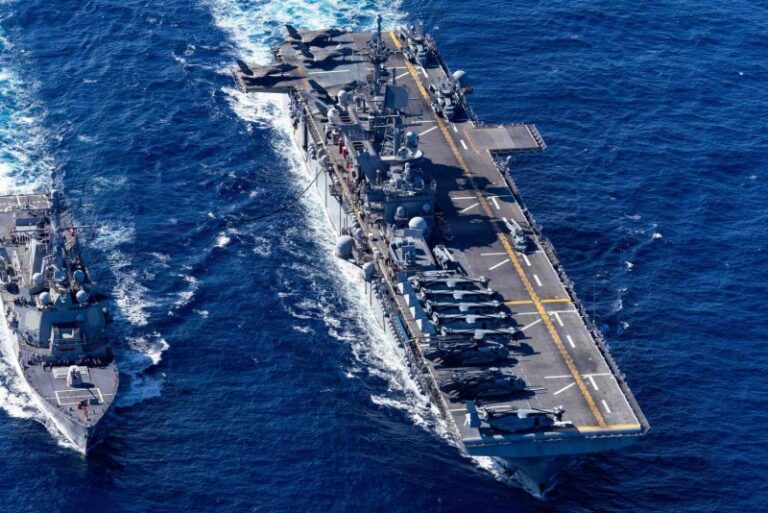
Let’s break down the nuts and bolts. The USS Gerald R. Ford (CVN-78), the lead ship of its class, is a true giant of the seas. Clocking in at around 100,000 tons fully loaded, it stretches 333 meters long with a beam of 78 meters. What sets it apart is its nuclear heart: two A1B reactors that deliver endless endurance, powering the ship at speeds over 30 knots without the need for frequent refueling. This means the Ford can stay on station indefinitely, limited only by crew fatigue and supply chains for aircraft and munitions.
On the flip side, the Fujian tips the scales at an estimated 80,000 to 85,000 tons, with a slightly shorter length of 316 meters and a 76-meter beam. It’s conventionally powered—likely by gas turbines or diesel-electric systems—which caps its range and requires more logistical support. However, it boasts three EMALS catapults, mirroring the Ford’s four, and an indigenous arresting gear for smooth recoveries. Early reports suggest China’s EMALS might not pack quite the same punch in terms of launch energy, but it’s a remarkable feat for a nation that’s only been building carriers for a couple of decades.
Both ships feature flat-deck designs optimized for high-tempo operations, but the Ford’s power setup is a game-changer. Its reactors generate over 600 megawatts—three times that of older Nimitz-class carriers—enabling future integrations like directed-energy weapons, advanced radars, and even more intensive flight ops. Fujian, while impressive, will need to rely on underway replenishment for extended missions, potentially limiting its blue-water capabilities.
Air Wings: The Heart of Carrier Strike Power
No aircraft carrier is complete without its flying arsenal, and here’s where the rubber meets the runway. The Ford’s air wing is a well-oiled machine, battle-tested through years of deployments. It can accommodate 75 to 90 aircraft, including a mix that’s the envy of navies worldwide:
- 40-44 F/A-18E/F Super Hornets for multirole combat duties, from air superiority to ground strikes.
- 5 EA-18G Growlers specializing in electronic warfare, jamming enemy radars and communications.
- 4 E-2D Advanced Hawkeyes for airborne early warning, acting as the eyes in the sky.
- 6 MH-60R helicopters for anti-submarine warfare, plus 4 MH-60S for utility roles.
- 10 F-35C Lightning II stealth fighters, with more on the way, bringing fifth-generation tech to the forefront.
- Upcoming MQ-25 Stingray drones for unmanned refueling, set to boost range without risking pilots.
This setup allows the Ford to generate up to 160 sorties per day in surge mode, covering everything from precision strikes to reconnaissance. It’s not just about numbers; it’s the seamless integration honed through real-world ops like those in the Middle East and Pacific exercises.
Fujian, still in its shakedown phase, is projected to carry 60-75 aircraft, a solid but smaller complement. Analysts predict:
- 24-30 J-15T Flying Sharks, upgraded for catapult launches and serving as the backbone for fighter ops.
- 12-18 J-35 stealth fighters, China’s answer to the F-35, though still in trials.
- 4-6 KJ-600 early warning planes, turboprop beasts for surveillance.
- 6-8 Z-18F or Z-20 helicopters for anti-sub and support roles.
- Possible drones like the GJ-11 for stealthy reconnaissance or strikes.
China’s air wing shows clear inspiration from U.S. models, aiming for a balanced force. Yet, many platforms are unproven at sea—the J-35 hasn’t qualified for carrier ops, and the KJ-600 is just starting tests. This puts Fujian at a developmental disadvantage, though China’s pace suggests rapid progress ahead.
Sensors, Defenses, and Operational Readiness
Beyond the flight deck, sensors and defenses tell another story. The Ford’s Dual Band Radar (DBR) merges X- and S-band arrays for top-tier tracking and fire control, integrated into the Navy’s Cooperative Engagement Capability for fleet-wide data sharing. Defenses include Evolved Sea Sparrow Missiles and Rolling Airframe Missiles, making it a fortress afloat.
Fujian’s setup includes dual Type 346A AESA radars, akin to those on China’s advanced destroyers, plus HQ-10 missiles and Type 1130 CIWS for close protection. It’s modern, but lacks the combat-proven networking of U.S. systems. Endurance is another U.S. edge: Ford can go 20-25 years without refueling, backed by a global logistics network. Fujian might manage 90-100 days at sea, tethered more to regional bases.
Operationally, the U.S. Navy’s experience is unmatched—decades of carrier ops, joint exercises with allies, and real combat. China is building this from scratch, with Fujian yet to deploy a full strike group.
Broader Strategic Implications: Numbers, Networks, and the Future
Zooming out, the U.S. fields 11 nuclear carriers plus amphibious ships for F-35B ops, creating a distributed force. China has three carriers, with Fujian the star, but plans for six by 2030—including nuclear ones—signal intent. However, raw hulls aren’t everything; U.S. advantages in C4ISR networking, training, and alliances like AUKUS and QUAD give it the upper hand.
China’s focus is regional power projection, defending claims in the South China Sea and beyond. The U.S. emphasizes global reach and interoperability. As Fujian matures and a nuclear carrier follows, this rivalry will intensify, reshaping naval strategies.
In summary, while Fujian challenges the status quo, the Ford remains the gold standard. China’s progress is undeniable, but closing the experience gap will take time. For naval enthusiasts and strategists, this matchup is the defining story of 21st-century sea power.
About The Author