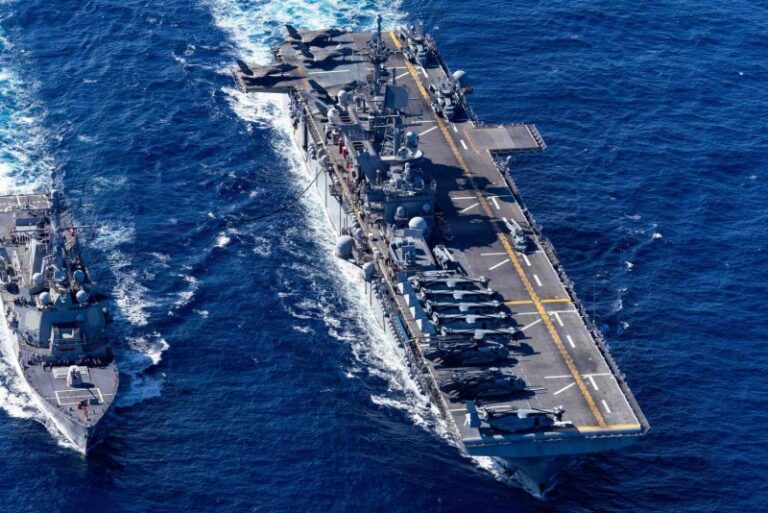
The most advanced warship on the planet just sailed through one of the world’s most famous gateways with a mission that’s sending shockwaves across the Western Hemisphere. On November 4, 2025, the USS Gerald R. Ford (CVN 78)—a 100,000-ton, nuclear-powered floating airbase—passed the Strait of Gibraltar in full daylight, flanked by destroyers and buzzing with fighter jets overhead. Photos from Spanish and Moroccan observers captured the moment: F/A-18 Super Hornets streaking across the sky, an E-2D Hawkeye radar plane orbiting high above, and the massive carrier cutting through calm waters like a city on the move. But this wasn’t a routine transit. By nightfall, the U.S. Department of War confirmed the real target: the Caribbean Sea, where the Ford Carrier Strike Group 12 (CSG-12) will now hunt narco-terrorist networks under U.S. Southern Command (SOUTHCOM).
This is no ordinary deployment. It’s the direct result of President Trump’s October 24, 2025, directive—an order that reclassified eight major drug cartels, including Sinaloa, CJNG, Gulf, and Los Zetas remnants, as Foreign Terrorist Organizations (FTOs). That single move flipped the entire U.S. approach to the drug war. No more arrests, no more extraditions, no more courtroom drama. A go-fast boat loaded with fentanyl off the coast of Venezuela? Now it’s a legitimate military target. And the USS Gerald R. Ford—with its 90+ aircraft, missile-armed escorts, and nuclear endurance—is the tool to make it happen.
Let’s break down what’s sailing into the Caribbean. The Ford itself is a technological marvel. Forget the old steam-powered carriers of the past. This ship uses EMALS (Electromagnetic Aircraft Launch System) to hurl jets into the sky 25% faster than any Nimitz-class vessel. It recovers planes with Advanced Arresting Gear, tracks threats with dual-band radar that can see submarines and ballistic missiles at the same time, and generates three times more electricity than older carriers—enough to power lasers, railguns, or drone swarms in the future. It carries ~4,500 crew (700 fewer than legacy ships) and can launch 160 combat sorties in a single day. That’s more airpower than most nations have in their entire air force.
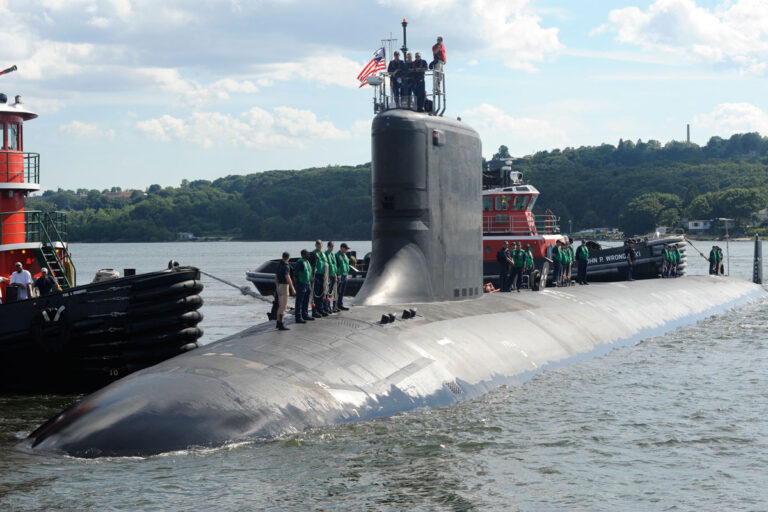
On deck: 44 F/A-18E/F Super Hornets for strike and air superiority, 5 EA-18G Growlers to jam enemy radar and communications, 5 E-2D Advanced Hawkeyes for long-range surveillance, 19 MH-60R/S Seahawks for anti-submarine warfare and boarding ops, and CMV-22B Ospreys for rapid resupply. Escorting the carrier are the Ticonderoga-class cruiser USS Normandy (CG 60) and Arleigh Burke-class destroyers USS Stout (DDG 55), Oscar Austin (DDG 79), and Jason Dunham (DDG 109)—each packing 96 vertical launch cells loaded with Tomahawk cruise missiles, SM-6 interceptors, and ESSM point-defense rockets. That’s over 300 missile tubes in total. And lurking beneath the waves? A Virginia-class fast-attack submarine, silent, stealthy, and armed with torpedoes and cruise missiles.
Together, this strike group forms a self-contained war machine capable of dominating air, surface, and subsurface domains across thousands of miles. It’s not here to patrol. It’s here to hunt.
The mission? Maritime Interdiction 2.0. Here’s how it works:
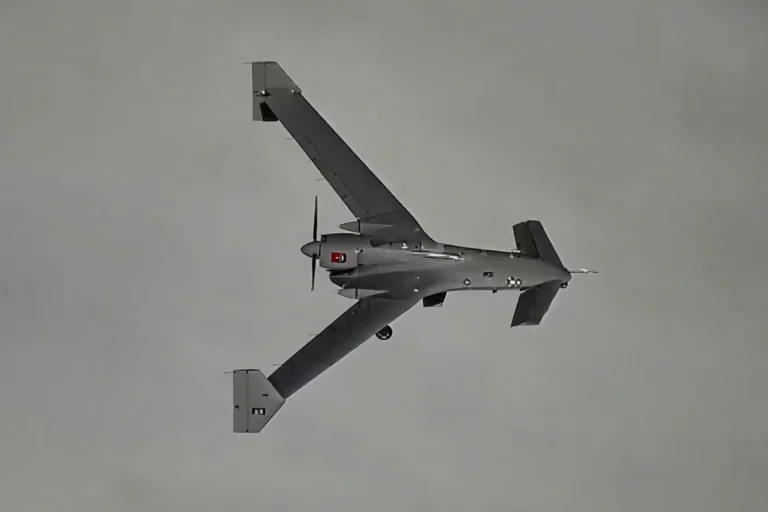
- Step 1: E-2D Hawkeyes and MQ-4C Triton drones fly racetrack patterns over the Windward Passage, Mona Passage, and Yucatán Channel, scanning for suspicious vessels 24/7.
- Step 2: Real-time data fusion via Link-16 and CEC (Cooperative Engagement Capability) combines radar tracks from destroyers, drone feeds, and satellite intel into a single battlespace picture.
- Step 3: Target confirmed—a semi-submersible loaded with cocaine or fentanyl precursors.
- Step 4: Kinetic response—Hellfire missiles from an MH-60, JDAMs from a Super Hornet, or a Mark 48 torpedo from the SSN. If it’s a mothership, a Growler-launched LRASM does the job.
- Step 5: Boarding teams fast-rope onto surviving vessels under Growler electronic cover, seize evidence, and scuttle the boat.
This is integrated deterrence in action—combining advanced tech, regional partnerships, and overwhelming firepower to make drug trafficking too costly to continue.
The Caribbean is the final gateway for 90% of cocaine and fentanyl entering the U.S. SOUTHCOM’s area of responsibility covers 31 countries, 16 million square miles, and five vital sea lanes. The Ford’s arrival turns that battlespace into a fortress. Expect the carrier to set up shop off Curaçao or Puerto Rico by mid-November, using deep-water ports as logistics hubs. From there:
- November–December: Shape the environment with persistent ISR and presence patrols.
- January–March: High-intensity interdictions—50+ vessels stopped, searched, or sunk per week.
- April onward: Possible dual-carrier operations with USS Abraham Lincoln if trafficking surges.
Regional allies are already mobilizing. Colombia and Panama have authorized joint air operations—Ford jets will fly alongside Colombian Kfirs over the Darién Gap. Jamaica, The Bahamas, and Trinidad are expanding port access for U.S. ships. Even Venezuela has quietly increased its coastal patrols, wary of “accidental” overflights or Tomahawk flybys.
For AUKUS partners, this is a live training ground. Australian and British officers embedded with CSG-12 are studying distributed maritime operations (DMO)—how to integrate P-8 Poseidon patrols, Type 26 frigates, and loyal wingman drones into a Ford-centered kill web. The data will feed directly into AUKUS Pillar 2 tech-sharing on autonomy, hypersonics, and undersea warfare.
The Pentagon is backing this up with $1.2 billion in supplemental funding—more MQ-9B SeaGuardians for persistent surveillance, NSM-armed Littoral Combat Ships, and Mark VI patrol boats for riverine ops in Colombia and Honduras.
This isn’t a temporary surge. It’s a strategic repositioning. The USS Gerald R. Ford isn’t here to make arrests. It’s here to destroy the business model of narco-terrorism. As one SOUTHCOM official put it: “We’re not playing whack-a-mole anymore. We’re burning the board.”
For the cartels, the Caribbean just became the most dangerous body of water on Earth.
About The Author