The Naval Air Warfare Center Aircraft Division (NAWCAD) issued a sources sought notice on November 10, 2025, for the PMA209 Air Combat Electronics Program Office. As part of the Tactical Aircraft Moving Map Capability (TAMMAC) program, the Navy seeks a software solution to integrate and redesign the Digital Map Computer (DMC)/Digital Video Map Computer (DVMC) and Flight Control Computer (FCC) for the F/A-18 E/F & EA-18/G AGCAS program.
The Navy states that “Avionics upgrades to Naval Aviation platforms are required to ensure compliance with current safety and airworthiness requirements.” In its fiscal year 2026 budget request, the Navy highlighted Auto GCAS as a “significant safety improvement that could have prevented multiple fatal F/A-18 mishaps over the past two decades.” The redesign will specifically integrate a new Automated Terrain Awareness Warning System (ATAWS) software module and Interface Design Document (IDD). The Super Hornet already possesses a Terrain Awareness Warning System (TAWS) in its DMC and DVMC, which alerts pilots to potential Controlled Flight Into Terrain (CFIT) risks.
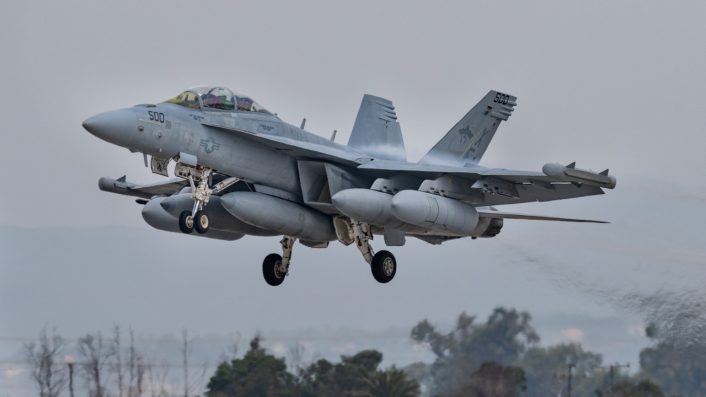
The current TAWS only provides alerts and guidance for CFIT avoidance. The upcoming upgrade will automate this process, allowing the aircraft to automatically recover from potential CFIT situations, which is particularly vital if the pilot is incapacitated. Aviation Week noted that both stakeholders and lawmakers have urged the Navy to install an Auto GCAS system. This initiative was also included in the House’s version of the fiscal 2026 defense policy bill, which mandated the Navy to present an acquisition plan by March 2026.
AGCAS proves crucial in situations beyond human errors like target fixation, specifically in cases of Spatial Disorientation and G-induced Loss Of Consciousness (GLOC), which endanger both aircraft and crew. Spatial Disorientation refers to the inability to determine one’s position, location, and motion relative to the environment. This can occur in any aircraft, military or civilian, often during flight in Instrument Meteorological Conditions (IMC) where poor visibility prevents the pilot from using external reference points, and their senses may conflict with the aircraft’s actual attitude. For instance, a pilot’s senses might falsely indicate level flight while the aircraft is in an inverted dive.
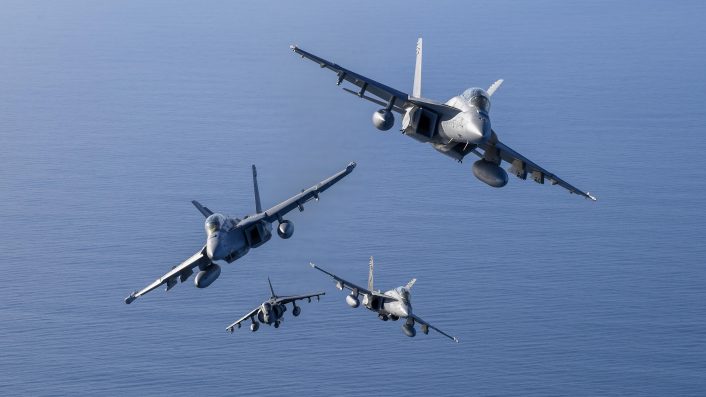
GLOC can happen during high G-load maneuvers, which cause blood to drain from the brain to the lower body. GLOC isn’t sudden; it’s preceded by tunnel vision, greyout, and blackout. While earlier phases result in temporary visual impairment, GLOC is a complete incapacitation, averaging 12 seconds, followed by 15 seconds of recovery. In such instances, AGCAS would take control, recovering the aircraft to prevent ground collision, typically by rolling to wings-level and pulling up, away from the terrain.
The system employs complex algorithms that utilize precise navigation, aircraft performance data, and on-board digital terrain data to identify imminent ground collisions. The AGCAS software operates in the background, ready to intervene instantly. In 2022, the U.S. Air Force credited AGCAS with saving 12 F-16s and three F-22s from crashes, with spatial disorientation being the most frequent cause for the dangerous attitudes that triggered automatic recovery. The service also notes that CFIT incidents account for 26 percent of aircraft losses, underscoring the importance of technologies like AGCAS in enhancing flight safety.
About The Author