In a striking display of its military capabilities, Venezuela has recently concluded significant aerial exercises, showcasing its fleet of F-16 and Su-30 fighter jets. These drills, while framed internally as routine defense maneuvers, carry a potent message of deterrence, particularly directed towards the United States. The exercises underscore not only Venezuela’s commitment to projecting its sovereignty but also its sophisticated approach to integrating diverse military platforms in a complex geopolitical landscape. This extensive show of force comes at a time of heightened regional tensions and international scrutiny, suggesting a carefully orchestrated strategy to solidify its defensive posture and assert its presence on the global stage.
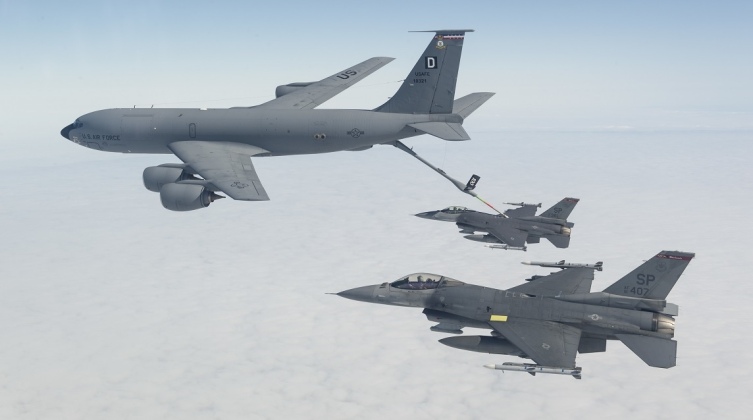
The sight of both U.S.-made F-16 Fighting Falcons and Russian-made Sukhoi Su-30MKVs operating in concert is a powerful visual testament to Venezuela’s unique military procurement strategy. Unlike many nations that predominantly rely on a single foreign supplier for their aerial assets, Venezuela has historically diversified its inventory, a move that offers both challenges and distinct advantages. The F-16s, acquired decades ago, represent a legacy capability that the Venezuelan Air Force (Aviación Militar Bolivariana – AMB) has painstakingly maintained, demonstrating remarkable ingenuity in keeping these advanced aircraft operational despite sanctions and supply chain complexities. Their continued participation in drills highlights a sustained investment in pilot training and technical expertise.
The Sukhoi Su-30MKVs, on the other hand, are the undisputed spearhead of Venezuela’s modern air defense. These multi-role, twin-engine supermaneuverable fighters are among the most capable aircraft in Latin America, equipped with advanced avionics, potent radar systems, and a formidable array of air-to-air and air-to-ground weaponry. Their acquisition marked a significant upgrade in Venezuela’s defensive and offensive capabilities, providing a robust deterrent against potential aggressors. The recent exercises likely focused on refining joint tactics, optimizing communication protocols between disparate platforms, and pushing the operational limits of both aircraft types in simulated combat scenarios. This intricate dance of different generations and origins of fighter jets speaks volumes about the AMB’s adaptability and determination to maximize its existing assets.
While Venezuela’s Ministry of Defense will undoubtedly characterize these drills as purely defensive, aimed at safeguarding national airspace and sovereignty, the implicit message directed at the United States is unmistakable. For years, the relationship between Washington and Caracas has been fraught with tension, marked by political disputes, economic sanctions, and accusations of interference. In this context, military exercises featuring frontline fighter jets serve as a robust demonstration of Venezuela’s capacity to defend itself against external threats.
The timing of these drills is also crucial. Amid ongoing geopolitical shifts and the U.S.’s continued emphasis on regional security, Venezuela’s display of airpower acts as a potent reminder that any intervention would not be without significant risk. It communicates a clear resolve to resist any perceived aggression or attempts to undermine its government. This projection of “deterrent power” is not merely about having advanced aircraft; it’s about showcasing the readiness, training, and strategic intent behind their deployment. It’s a calculated move to signal that Venezuela possesses the means and the will to respond to provocations, thereby complicating the calculus of any potential adversary.
Beyond the overt political messaging, these exercises are fundamentally about enhancing military readiness and refining operational doctrines. Fighter jet drills are complex undertakings that involve a multitude of objectives:
Pilot Proficiency: Maintaining peak performance for highly skilled fighter pilots requires constant training, including aerial combat maneuvers, interception techniques, ground attack simulations, and complex navigation.
Integrated Air Defense: The drills likely simulated scenarios involving the coordination of fighter jets with ground-based air defense systems, radar networks, and command-and-control centers, essential for a multi-layered defense strategy.
Logistics and Maintenance: Keeping such advanced aircraft airborne for prolonged periods during exercises tests the logistical backbone of the air force, including fuel supply, spare parts availability, and the efficiency of maintenance crews.
Interoperability: The ability of F-16s and Su-30s to operate effectively together, sharing airspace and potentially data (if compatible systems are in place), is a critical aspect of maximizing the overall strength of the air force.
Strategic Signaling: As discussed, these exercises are a powerful form of strategic communication, not just to external powers but also internally, bolstering national pride and confidence in the military’s capabilities.
The implications of these drills extend beyond immediate deterrence. They highlight Venezuela’s determination to maintain a credible military force capable of asserting its interests in a volatile region. As global powers vie for influence in Latin America, Venezuela’s ability to operate and showcase advanced military hardware from both Western and Eastern blocs positions it as a significant, albeit often controversial, actor.
Venezuela’s F-16 and Su-30 drills are more than just routine military exercises. They are a carefully crafted statement of intent, a demonstration of capacity, and a clear signal of deterrence. In an era of complex international relations, where geopolitical tensions are often communicated through military posturing, Venezuela has used its aerial assets to send a resounding message about its sovereignty and its readiness to defend it. As the region continues to navigate its intricate political landscape, the skies over Venezuela will remain a crucial stage for the projection of power and the communication of strategic resolve.
About The Author