Hey defense watchers, if you thought the North Sea was just about wind farms and container ships, think again. The U.S. State Department just dropped a bombshell approval that’s set to turn Germany’s upcoming F127 frigates into floating missile fortresses. We’re talking a whopping $1.2 billion package loaded with the Navy’s hottest surface-to-air firepower: 75 RIM-174 SM-6 Block I missiles, 100 RIM-66 SM-2 Block IIICAN active seekers, plus a full suite of canisters, telemetry kits, and training rounds. This isn’t just another arms sale—it’s Berlin finally stepping up to plug a gaping hole in NATO’s northern flank air defense, and it’s got everyone from the Pentagon to the Bundestag buzzing about what Germany’s “Aegis on the cheap” really means for European security in 2025 and beyond.
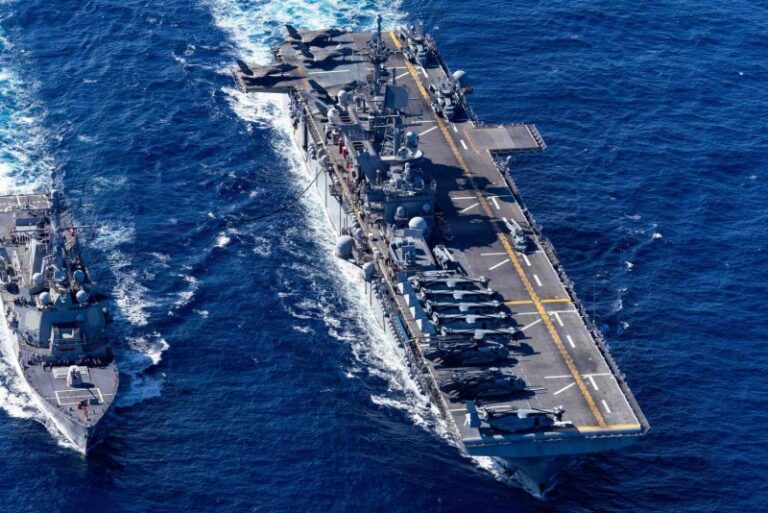
Let’s rewind a bit to set the stage. Germany’s navy, the Deutsche Marine, has been running on fumes when it comes to modern air defense for way too long. Their current workhorse, the Sachsen-class F124 frigates, rock the aging SM-2 Block IIIA and the European ESSM for close-in protection, but that combo is starting to look like a flip phone in the age of 5G. Enter the F127 project—six massive 10,000-ton multi-role frigates designed from the ground up to be Germany’s answer to ballistic missile threats, hypersonic gliders, and swarms of cruise missiles screaming in from the Arctic or the Baltic. These beasts are basically a German take on the U.S. Arleigh Burke’s little brother, built around the Lockheed Martin Aegis Combat System but tailored for European yards like Blohm+Voss and ThyssenKrupp Marine Systems. The catch? Berlin wanted the full U.S. missile menu to make it sing, and now they’ve got it.
So what exactly are they buying? Buckle up, because the SM-6 and SM-2 Block IIICAN aren’t your dad’s SAMs. The RIM-174 Standard Missile-6 is the Swiss Army knife of modern naval warfare. Clocking in at over 1,500 pounds and stretching 21.5 feet, this bad boy can reach out to 150 nautical miles in standard mode, but flip it to ballistic missile defense (BMD) and it’s climbing into the exo-atmosphere to swat ICBMs in their midcourse phase. That’s right—terminal-phase intercepts of Iranian Shahab-3s or future North Korean Hwasongs could be on the table from the North Sea. Powered by a dual-thrust rocket motor and guided by an active radar seeker cribbed from the AMRAAM, the SM-6 doesn’t even need the ship’s radar to lock on after launch. It can cue off third-party sensors—think Link 16 data from a U.S. destroyer 500 miles away or an AWACS orbiting over Poland—and still nail a maneuvering target doing Mach 3.5. Oh, and it doubles as an anti-ship missile with a 140-pound blast-frag warhead. One missile, four jobs: air defense, BMD, anti-ship, and land attack if you’re feeling spicy.
Then there’s the RIM-66 SM-2 Block IIICAN—the “CAN” stands for “Cooperative Engagement Capability Active Seeker,” and it’s a mouthful for a reason. This is the first SM-2 variant to ditch semi-active illumination entirely. Instead of the launching ship painting the target with radar the whole way in, the missile uses its own active radar to home in during the terminal phase. That means the frigate can ripple-fire a dozen of these at once without tying up its SPY-1D(V) radar on illumination duties. Range? About 90 nautical miles for air-breathing threats. Altitude ceiling? Over 100,000 feet. It’s the perfect mid-tier shield for saturating attacks—think Russian Kalibr salvos or Chinese YJ-18s skimming the wave tops. Pair it with the ESSM Block 2 for the inner layer, and you’ve got a defense-in-depth bubble that makes even the most trigger-happy admiral sleep easy.
The hardware breakdown is mouthwatering for gearheads. Germany’s getting 75 SM-6 Block I missiles (the current production standard), 100 SM-2 Block IIICAN, 10 MK 29 Mod 0 canisters for launch, 8 MK 89 Mod 0 guidance sections, and a laundry list of support gear: telemetry instrumentation, obsolescence kits, spare parts, and even 10 inert training rounds so German crews can practice without accidentally starting WWIII. The prime contractor? Raytheon Missiles & Defense, naturally, with BAE Systems chipping in on the active seekers. Total sticker price: $1.2 billion, give or take a few million for shipping and handling.
Why now? Timing is everything, and 2025 is shaping up to be a perfect storm. Russia’s been flexing in the Arctic with hypersonic Zircon missiles on their Yasen-M subs, and NATO’s eastern members are screaming for more BMD coverage. Germany’s F127s are slated to replace the aging Brandenburg-class F123 frigates by the early 2030s, but the threat clock is ticking faster than the build schedule. The first keel isn’t even laid yet—expected in 2027 at the earliest—but Berlin wants the missiles locked in early to de-risk integration and avoid the kind of delays that plagued the F125 Baden-Württemberg class. Plus, there’s the small matter of the U.S. Navy’s own SM-6 production lines running hot. With the Indo-Pacific eating up inventory faster than Raytheon can stamp them out, securing a slot now is like getting Taylor Swift tickets the minute they drop.
This sale also cements Germany’s pivot from “checkbook diplomacy” to actual hardware muscle. Chancellor Olaf Scholz’s Zeitenwende speech after Ukraine promised €100 billion for defense, and the F127 is the crown jewel. These frigates won’t just patrol the Baltic—they’ll escort carrier groups in the Med, plug into NATO’s Integrated Air and Missile Defence, and potentially rotate to the Indo-Pacific under the “pivot to Asia” framework Germany signed onto in 2023. Imagine an F127 sailing alongside JS Izumo in the South China Sea, its SPY-1D radar feeding targeting data to Japanese SM-3s. That’s the kind of interoperability that makes Chinese planners sweat.
Of course, no arms deal is drama-free. The Bundestag’s budget committee still needs to rubber-stamp the funding, and the Green Party’s pacifist wing is already grumbling about “escalation.” Export controls are another headache—SM-6 tech is ITAR-locked tighter than Fort Knox, so Germany’s getting a downgraded data package with no source code. That means software updates and threat library tweaks stay in U.S. hands, a sore point for a country that loves its industrial sovereignty. And let’s not forget the shipyards: TKMS is pushing for maximum local content, but Aegis integration is a U.S. black box. Expect years of wrangling over tech transfer before the first missile leaves the rail.
Still, the strategic math is undeniable. Six F127s with 96 vertical launch cells each means 576 potential shots—enough to blunt a major salvo and still have gas in the tank for round two. Add in the Sachsen-class upgrades and the Dutch De Zeven Provinciën frigates, and NATO’s got a layered shield from the GIUK gap to the Black Sea. For the U.S., it’s a win-win: more allies buying American, production lines humming, and a beefier deterrent on Russia’s doorstep without firing a shot.
So there you have it—the quiet North Sea is about to get a lot louder, and Germany’s finally trading its naval training wheels for the big leagues. Will the F127 live up to the hype, or will cost overruns and politics clip its wings? One thing’s for sure: when those first SM-6s ripple off the deck in 2032, the balance of power in Northern Europe will look a whole lot different.
About The Author