If you thought the South China Sea was already a powder keg, the U.S. Marine Corps just tossed in a match. In a move that’s got Beijing’s war planners scrambling and Manila quietly cheering, a full Marine MQ-9A Reaper unmanned aerial system (UAS) detachment—call sign “Red October”—touched down at Basa Air Base in the Philippines this week. This isn’t a fly-by photo op. We’re talking four MQ-9A Block 5 drones, 120 Marines from VMU-3 out of Kaneohe Bay, Hawaii, plus a mobile ground control station, satellite uplink vans, and enough spare Hellfire missiles to make any militia outpost think twice. The deployment, quietly green-lit under the Enhanced Defense Cooperation Agreement (EDCA), marks the first time a Marine Reaper squadron has forward-based inside the First Island Chain since the Vietnam era—and it’s a screaming signal that the Corps is done playing nice in the gray zone.
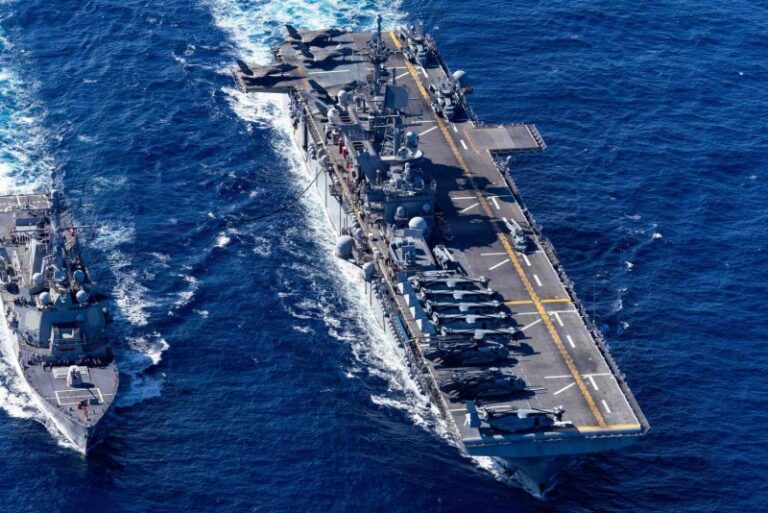
Let’s paint the picture. It’s 3 a.m. local time, November 12, and a gray C-17 Globemaster III out of Hickam AFB rolls to a stop on Basa’s cracked tarmac. Out come the Reapers—each 36-foot wingspan predator disassembled into shipping containers, then reassembled in under 48 hours by crews who’ve done this drill in the California desert a hundred times. By Friday, the first bird is airborne, loitering at 40,000 feet over the Spratly Islands with a live feed streaming to a joint ops cell in Camp Aguinaldo and, via secure SATCOM, straight to III MEF headquarters in Okinawa. The mission set? Everything from real-time ISR on Chinese “fishing militia” fleets to laser-designating targets for F-35Bs screaming off the Tripoli 300 miles east. And yes, those Hellfires are hot-loaded—Marines aren’t saying it out loud, but the rules of engagement now include “proportional response” to armed harassment of Philippine vessels.
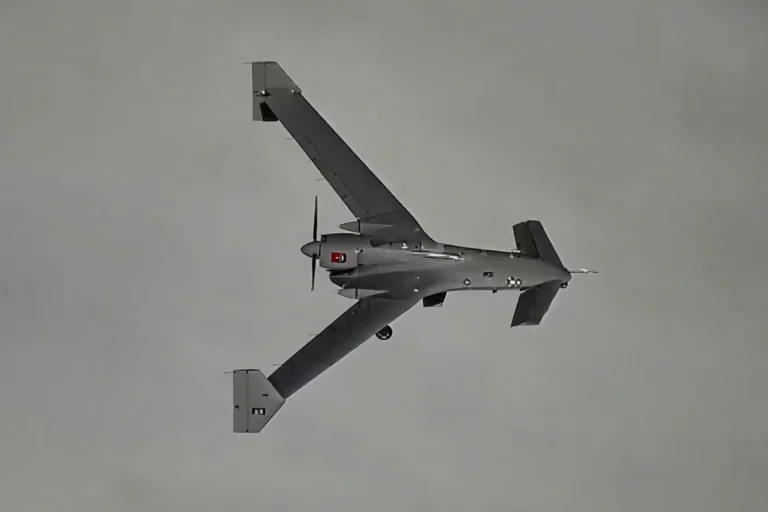
The Reaper itself needs no introduction, but the Marine version is a different beast. Unlike the Air Force’s MQ-9s that mostly hunt terrorists in the CENTCOM sandbox, VMU-3’s birds are marinized—literally. Corrosion-resistant coatings, reinforced landing gear for short coral airstrips, and a Lynx SAR/GMTI radar pod that can track a jetski at 60 nm through monsoon clouds. Each drone carries four AGM-114R Hellfire II missiles, a pair of GBU-49 Paveway bombs, and the new AGM-179 JAGM for when you need to thread a needle through mangrove cover. Endurance? 27 hours on station with a single air refuel from a Marine KC-130J orbiting over the Sulu Sea. That’s not a patrol—that’s persistent dominance.
Why Basa? Location, location, location. Smack in the middle of Luzon, 150 nm from Scarborough Shoal and 400 nm from Mischief Reef, the base gives the Reapers eyes on every PLA Navy task force transiting the Luzon Strait. Runway upgrades under EDCA—completed last month—include hardened shelters, a new taxiway, and a fiber-optic backbone that ties directly into the U.S. Indo-Pacific Command’s JADC2 mesh. Translation: a drone operator in a shipping container at Basa can hand off targeting data to a Japanese P-1 maritime patrol aircraft, which cues a Philippine FA-50 to drop a Spice bomb, all in under five minutes. It’s the kind of networked kill chain China’s been bragging about for years—except now it’s pointed the other way.
The deployment didn’t happen in a vacuum. Tensions have been simmering since October, when a PLA Coast Guard cutter rammed a Philippine supply boat near Second Thomas Shoal. Manila invoked the U.S.-Philippines Mutual Defense Treaty, and the Pentagon answered with more than words. First came the Typhon missile battery to northern Luzon in September. Then the HIMARS live-fire drills on Palawan. Now the Reapers—each a flying reminder that the U.S. can watch, strike, and vanish before a single PLAN frigate can get a radar lock. Marine Lt. Col. “Ripper” Sanchez, VMU-3’s CO, put it bluntly in a rare on-camera moment: “We’re not here to start fights. We’re here to finish them.”
Beijing’s response was predictable. The Foreign Ministry called it “provocative hegemonism” and vowed “countermeasures.” Within 24 hours, two Type 052D destroyers and a Type 054A frpgate sortied from Hainan, shadowing a U.S. Navy Arleigh Burke through the Taiwan Strait. PLA Y-20s ran racetrack patterns over the Paracels, dropping sonobuoys in what looked suspiciously like ASW training against U.S. subs. And state media rolled out the usual graphics of “carrier killer” DF-17s—because nothing says “we’re not rattled” like hypersonic propaganda.
But the Reapers are already paying dividends. On day three, an MQ-9A picked up a flotilla of 40 Chinese militia vessels massing near Thitu Island. High-res EO/IR footage showed deck-mounted 12.7 mm guns and what looked like water cannon rigs. The feed went live to Philippine President Marcos Jr.’s office, who promptly dispatched two BRP frigates with CNN crews embedded. The militia scattered before sunset—no shots fired, no headlines, just another gray-zone gambit defused by the simple threat of exposure. That’s the Reaper effect: sunlight as a weapon.
The Marines aren’t stopping at ISR. Next month, VMU-3 will run the first joint live-fire with Philippine Air Force S-211s—Hellfires on drone-spotted targets in the Spratly live-fire zone. Then comes integration with the America ARG’s F-35Bs for what the Corps is calling “distributed lethality on steroids.” Picture this: a Reaper at 50,000 feet paints a PLAN amphibious group with a laser spot. An F-35B 200 miles away pops up, ripple-fires four JSM anti-ship missiles, then ducks below the radar horizon. The Reaper confirms splash, updates the common operating picture, and the whole cycle repeats. It’s the kind of seamless air-maritime integration China’s still struggling to field outside of exercises.
Logistics are the quiet hero here. The Philippines agreed to pre-position 30 days of JP-8, 200 Hellfires, and a mobile maintenance hangar under EDCA expansion. U.S. Air Force C-130Js are running twice-weekly shuttles from Clark to Basa with spare engines and radar arrays. And in a nod to host-nation sensibilities, every sortie includes a Philippine liaison officer in the ground control station—Manila gets the raw feed, unfiltered. It’s a far cry from the “no boots on the ground” rhetoric of the Obama era.
The deployment’s open-ended—“until further notice,” per a III MEF spokesperson. Translation: as long as China keeps building island fortresses, the Reapers stay. VMU-3 rotated in fresh crews every 90 days, with plans to cycle through VMU-1 and VMU-2 by summer. That’s a sustainable tempo the Air Force never managed in Afghanistan. And unlike fixed-wing USAF Reapers, the Marines’ birds can operate from 5,000-foot dirt strips on Palawan or even the deck of an expeditionary sea base if things get spicy.
For the Corps, this is the culmination of a decade-long pivot. The 2018 Force Design 2030 dumped tanks and tube artillery for exactly this—long-range, low-signature systems that turn small islands into unsinkable sensor-shooter nodes. The MQ-9A is the tip of the spear, but the shaft is the entire archipelago: Typhon batteries on Luzon, HIMARS on Palawan, F-35Bs on Tripoli, and now Reapers overhead. It’s not a fortress—it’s a web, and China’s the fly.
So the next time a Chinese “research vessel” lingers too long near Recto Bank, don’t be surprised if a Hellfire answers the door. The Marines just turned the South China Sea into their backyard—and they brought the ultimate guard dog.
About The Author