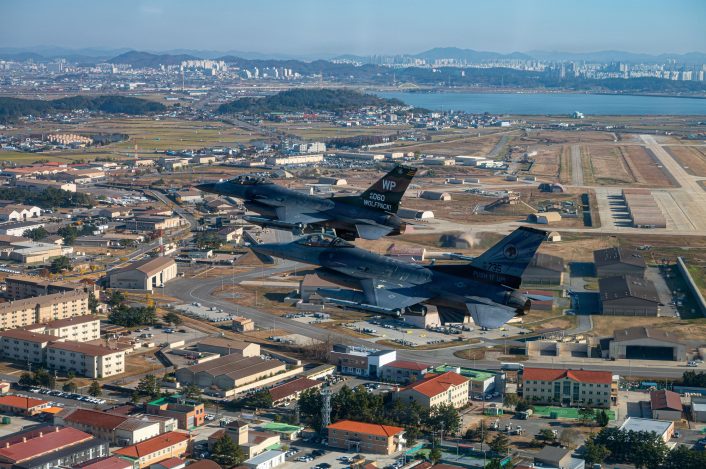
The skies over Gyeonggi-do roared with a distinct and thunderous intensity this week as the U.S. Air Force unleashed the next stage of its combat evolution on the Korean Peninsula. In a major power projection move, the 35th Fighter Squadron—known famously as the “Pantons”—has deployed from Kunsan Air Base to Osan Air Base, officially kicking off Phase II of the “Super Squadron” test.
The arrival of the F-16 Fighting Falcons on November 19 and 21 marks a pivotal moment for the 51st Fighter Wing “Mustangs” and their 8th Fighter Wing “Wolf Pack” brethren. This isn’t just a standard deployment; it is a high-stakes experiment designed to rewrite the playbook on how American airpower is generated in the Indo-Pacific.
The “Super Squadron” Concept: More Than Just Numbers
For decades, the standard U.S. fighter squadron has operated with a specific footprint of aircraft and personnel. However, the modern threat landscape demands more. The “Super Squadron” initiative seeks to answer a critical question: Can we generate more lethal combat power by consolidating forces into larger, more resilient units?
By shifting the 35th Fighter Squadron’s assets north to Osan, the Air Force is creating a behemoth unit. Instead of the traditional squadron size, this test swells the ranks to upwards of 31 aircraft. The goal is to maximize sortie generation—putting more jets in the air, faster—while streamlining the heavy logistics tail that usually drags down mobility.
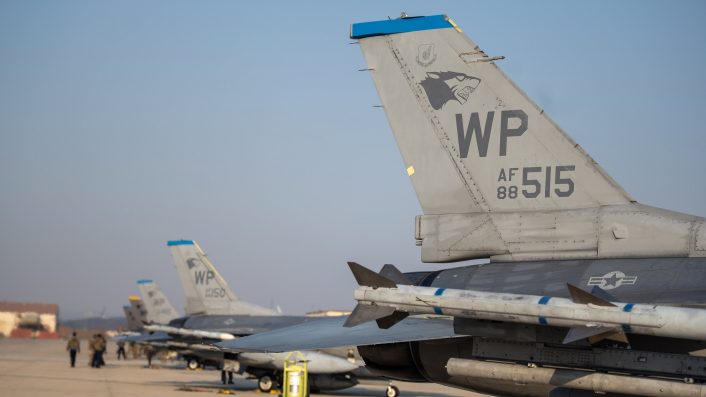
“This movement is about strengthening the way we fight,” said Lt. Col. Joseph Basala, commander of the 35th Fighter Squadron. For the Pantons, moving their operations to Osan allows them to integrate seamlessly with the 51st Fighter Wing’s infrastructure, effectively doubling the punch available at a single forward operating base.
Phase II: The Grind Begins
While Phase I, initiated in late 2024, tested the waters with a smaller detachment, Phase II is the full-throttle execution. The timing is critical. Osan Air Base is currently immersed in a simulated wartime environment, often characterized by the grueling “Phase II” exercise conditions.
For the airmen on the ground, this means 24-hour operations, often conducted in Mission Oriented Protective Posture (MOPP) gear to simulate chemical or biological threats. The flight line has become a hive of activity where the “Wolf Pack” maintainers of the 35th Fighter Generation Squadron (FGS) are turning wrenches alongside their “Mustang” counterparts in the 51st Maintenance Group.
“It’s been a good opportunity to get an idea of how they operate, what’s the difference, and how we can apply what they do here to what we do at Osan to get the best mix of both worlds,” noted Staff Sgt. Johnny Nieves, a dedicated crew chief with the 51st MXG.
This cross-pollination of maintenance teams is the unsung hero of the Super Squadron concept. In a high-intensity conflict, the ability to repair and relaunch jets without waiting for specific parts or personnel from a different base could be the difference between air superiority and defeat.
“Fight Tonight” Readiness
The strategic implication of parking a Super Squadron at Osan—closer to the Demilitarized Zone (DMZ) than Kunsan—cannot be overstated. It places a massive concentration of multi-role firepower on the doorstep of potential adversaries.
Col. Ryan Ley, commander of the 51st Fighter Wing, emphasized that this test is about real-world lethality. “The Super Squadron test gives us a real-world opportunity to explore how we can fight more efficiently with greater flexibility and resilience,” Ley stated. “Hosting the Pantons strengthens our combined readiness and enhances the airpower available to defend the Republic of Korea.”
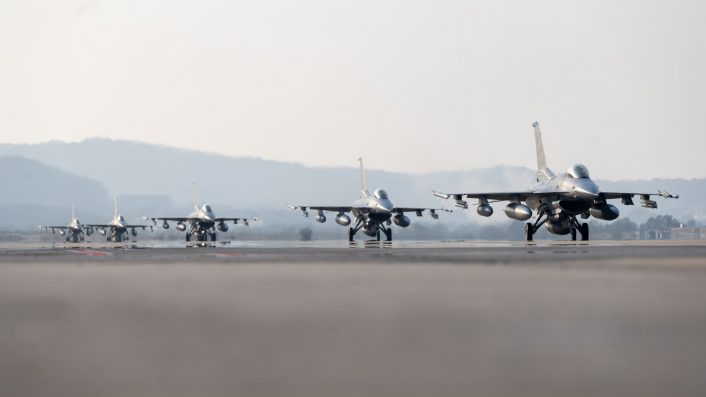
The F-16 Fighting Falcon remains the workhorse of this defense strategy. Capable of air-to-air dogfighting, suppression of enemy air defenses (SEAD), and close air support, the “Viper” is the perfect platform for this saturation strategy. By massing these airframes, the U.S. Air Force can overwhelm defensive grids that might be able to handle a standard squadron but would crumble under the weight of a Super Squadron’s sortie rate.
A United Front
As the exercise continues through early December, the skies above Osan will remain busy. The integration of the 35th FS into the 51st FW’s operations is more than a logistical trial; it is a visible signal of the ironclad U.S.-ROK alliance.
For the pilots and crews, the days are long and the pressure is high, but the mission is clear. As the Pantons settle into their temporary home, the “Super Squadron” is no longer just a theory on a whiteboard—it is a loaded weapon, ready to answer the call at a moment’s notice.
About The Author