High above the frozen expanse of the Arctic Ocean, where the horizon blurs between the white of the ice and the grey of the sky, the roar of four NK-32 turbofan engines shattered the silence on November 25, 2025. Russia’s Ministry of Defense confirmed that a Tu-160 strategic bomber, the crown jewel of its Long Range Aviation, had successfully completed a grueling mission over neutral waters. Staying airborne for more than eleven hours, the aircraft traced a path that, while technically routine, sent a message that resonated far beyond the desolate polar region. In the high-stakes theater of modern geopolitics, this was not merely a navigation exercise; it was a deliberate display of the air-delivered leg of Russia’s nuclear triad, executed at a time when friction between Moscow and the West has reached a fever pitch.
To understand the weight of this maneuver, one must look at the machine itself. Known to Russian pilots as the “White Swan” for its elegant, anti-flash white coating and sweeping lines, and to NATO by the reporting name “Blackjack,” the Tu-160 is a staggering feat of engineering. Born from the height of the Cold War arms race, it remains the largest and heaviest combat aircraft ever built. While modern aviation trends have drifted toward stealth and electronic warfare, the Tu-160 relies on brute force and blistering speed. It is one of the few bombers in existence capable of sustaining speeds exceeding Mach 2, allowing it to outrun many interceptors and position itself for strikes with terrifying rapidity. Its variable-sweep wings, which can spread wide for lift during takeoff or sweep back for supersonic flight, are a hallmark of an era where aerodynamics reigned supreme.
Inside its massive internal bays, the Tu-160 can carry a payload of up to 45 tonnes. This ordnance includes long-range cruise missiles equipped with either conventional or nuclear warheads. This capability defines the bomber’s modern role: it is a “missile truck” designed to fly fast to a launch point, release stand-off weapons like the Kh-101 or Kh-102 from thousands of kilometers away, and turn back before ever entering the lethal range of enemy air defenses. Unlike the American B-2 Spirit or the upcoming B-21 Raider, which rely on invisibility to penetrate airspace, the Tu-160 relies on the philosophy that speed and range are their own form of protection. Even compared to its closest American analog, the B-1B Lancer, the Russian bomber differs significantly; while the B-1B sacrificed top speed for low-altitude penetration capabilities, the Tu-160 retained its high-altitude, supersonic performance, making it a unique asset in the global strategic balance.
The timing of this specific Arctic sortie is critical. While the Kremlin frames these flights as standard adhere-to-protocol training missions over international waters, they occur against a backdrop of intense military competition. The Arctic is no longer just a climate frontier; it is a militarized zone where Russia has aggressively refurbished old Soviet airbases and installed sophisticated radar and missile defense systems. NATO, in turn, has ramped up its presence from Norway to Greenland. When a nuclear-capable giant like the Tu-160 spends half a day patrolling the roof of the world, it forces allied air forces into a reactionary posture. British Typhoons, Norwegian F-35s, and other NATO assets are frequently scrambled to shadow these bombers, creating a tense, high-altitude dance of cat-and-mouse that serves as a constant test of response times and resolve.
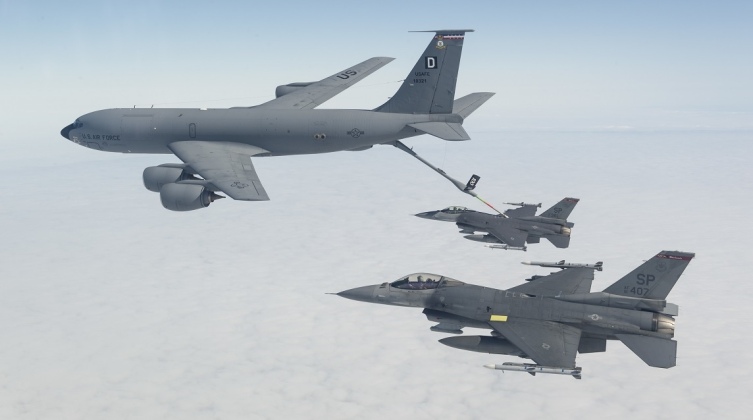
Furthermore, this mission highlights the resilience and evolution of the Tu-160 fleet. After suffering a period of dormancy following the collapse of the Soviet Union, the “White Swan” has seen a resurgence in the 21st century. It has transitioned from a Cold War deterrent to an active combat participant, launching cruise missiles against targets in Syria and, more recently, playing a role in the conflict in Ukraine. Moscow has not only kept these aging airframes flying but has also restarted production lines in Kazan to build the modernized Tu-160M and M2 variants. These updated birds feature new engines, digitized avionics, and improved weaponry, serving as a stopgap measure while Russia develops its next-generation PAK DA stealth bomber. The ability to keep a Tu-160 airborne for eleven hours—and in past instances, up to 25 hours with aerial refueling—demonstrates a level of crew endurance and mechanical reliability that commands respect from military planners worldwide.
Ultimately, the November 25 mission serves as a potent reminder of the strategic reality facing the West. By routinely flying these leviathans along the borders of NATO airspace, Russia normalizes the presence of nuclear-capable assets in contested regions. It signals that despite the heavy toll of ground wars and economic sanctions, its capacity for global power projection remains intact. The Tu-160 does not need to be invisible to be effective; it only needs to be credible. As it thundered through the Arctic sky, the “White Swan” reinforced a clear doctrine: that in any future crisis, from the Barents Sea to the North Atlantic, the long arm of Russia’s strategic aviation will be a factor that cannot be ignored.
About The Author