In early November, the UK Ministry of Defence (MoD) dropped a document that is usually destined for the dusty archives of bureaucracy: the 2024/2025 Annual Report and Accounts. It’s a massive, 256-page tome filled with financial tables and logistical data. But buried within the dense formatting was a single line item that set the British defense community on fire.
The report listed a table of “constructive losses”—essentially, money spent on projects or equipment that were written off. Among the tragic losses, like a Merlin HC4 helicopter crash that claimed a pilot’s life, and technical failures, like a Litening targeting pod falling off a Typhoon, was a curious entry valued at just over £300,000.
The item read: “Rolling Vertical Landing upgrade cancellation.”
To the casual observer, £300,000 is a drop in the ocean of defense spending. But to analysts, that line signaled a potential disaster. It implied that the Royal Navy was scrapping the Shipborne Rolling Vertical Landing (SRVL) capability—a critical technique designed to let F-35B jets land on aircraft carriers without dumping their expensive weapons into the sea.
Headlines immediately screamed that British pilots would be forced to jettison millions of pounds of ordnance before landing. However, as the dust settles and official clarifications emerge, the reality looks far more complex—and perhaps less catastrophic—than the initial panic suggested.
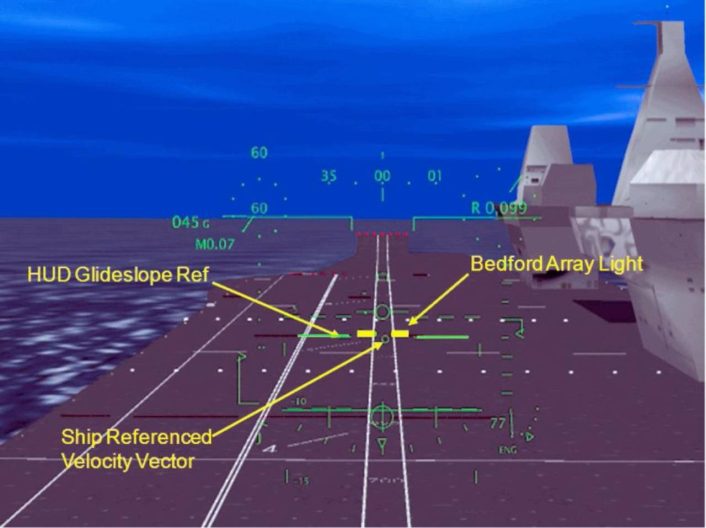
The Panic: What is SRVL and Why Does It Matter?
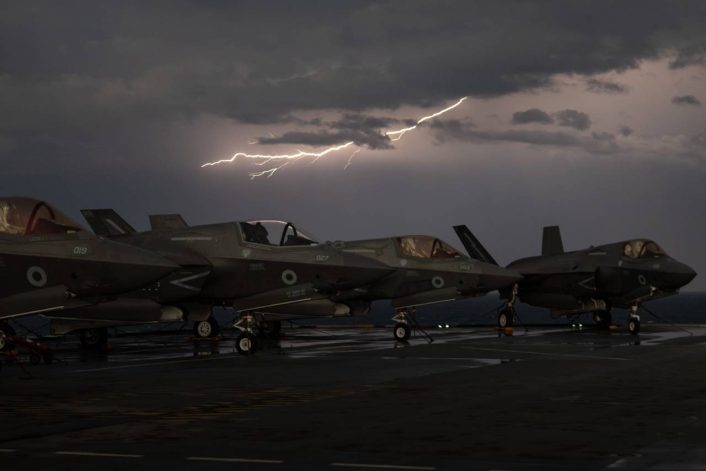
To understand the uproar, you have to understand how the F-35B operates. Unlike traditional carrier jets that snag a wire with a tailhook, the F-35B performs a vertical landing, hovering alongside the ship and dropping down to the deck.
The problem with vertical landings is gravity. To hover, the plane has to be relatively light. If a jet takes off with a full load of bombs and missiles but doesn’t fire them, it is often too heavy to land vertically. The standard procedure for decades has been to dump the fuel or, in worst-case scenarios, jettison the weapons into the ocean to get the weight down.
Enter Shipborne Rolling Vertical Landing (SRVL).
SRVL is a hybrid maneuver. The pilot approaches the ship fast enough to generate lift from the wings (like a normal plane) but slow enough to use the vertical lift fan. This allows the jet to land with significantly more weight—meaning it can bring those expensive, unused missiles back home.
The Royal Navy has been planning to install a system called the Bedford Array—a series of visual landing aids—on its two carriers to facilitate this. HMS Prince of Wales already has it. HMS Queen Elizabeth was supposed to get it during her current refit.
When the MoD report listed the “cancellation” of this upgrade, it looked like a major capability cut. With HMS Albion and Bulwark being mothballed and artillery systems depleted by aid to Ukraine, this seemed like just another nail in the coffin for British military power.
The Government Clarity: “Re-profiled,” Not Scrapped
The media frenzy was intense enough to prompt a formal inquiry. James Cartlidge MP, the Shadow Secretary of State for Defence, submitted a written question demanding answers.
On November 25, Defence Minister Luke Pollard responded, effectively putting out the fire. He stated clearly: “Shipborne Rolling Vertical Landing (SRVL) for the UK’s F-35B Lightning aircraft to Queen Elizabeth Class carriers has not been cancelled.”
So, what happened to the money?
Pollard explained that the program has been “re-profiled.” In government-speak, this means the project has been paused and pushed to the right. The £300,000 loss listed in the report likely accounts for preparatory work or contracts for the installation on HMS Queen Elizabeth that were terminated because the timeline changed.
The MoD’s logic is that the installation should align with the “introduction of a related complex weapons programme.” Translation: We don’t have the heavy new missiles ready yet, so there is no rush to install the landing gear that supports them.
Busting the Myths: Are We Dumping Weapons?
One of the most pervasive myths that spread after the report was that UK F-35s are currently defenseless or unable to land with any weapons.
Myth 1: F-35Bs must fly empty to land vertically.
This is false. Even without SRVL, the F-35B is a beast. The U.S. Marine Corps, which operates the same jet from ships that cannot perform SRVL, adheres to a “bring back” weight of roughly 5,000 lbs. That implies a significant amount of fuel and ordnance can still be carried during a standard vertical drop.
Myth 2: The UK F-35s lack air-to-air capability.
Social media posts suggested the jets were flying toothless. In reality, British F-35s carry the AIM-120 AMRAAM for beyond-visual-range engagements and the AIM-132 ASRAAM for close encounters. Both can be brought back to the ship vertically without issue.
Myth 3: We need SRVL right now.
Currently, the Royal Navy’s primary strike weapon is the Paveway IV laser-guided bomb (500 lbs). The F-35 can easily land vertically with these. The heavy hitters that SRVL was designed for—like the future SPEAR 3 or heavy anti-ship missiles—are not yet in operational service on British jets. Installing the Bedford Array now would be like buying a heavy-duty roof rack for a suitcase you haven’t bought yet.
The Future: Drones and a Changing Strategy
There is a deeper layer to this story that goes beyond budget sheets. The UK’s carrier strike philosophy is evolving rapidly.
The newly appointed First Sea Lord, General Sir Gwyn Jenkins, recently dropped a bombshell of his own: he wants unmanned Collaborative Combat Aircraft (CCAs)—essentially “loyal wingman” drones—launching from the carriers by 2029, with prototypes testing as early as 2026.
This shifts the calculus. If the future air wing consists of F-35s acting as quarterbacks for a team of heavy-lifting drones, the requirement for the manned jet to carry (and return with) massive payloads might decrease. The drones could carry the heavy ordinance, launch, and if they don’t fire, they might be recovered differently or be considered more expendable than a piloted fighter.
By delaying the Bedford Array installation, the MoD might actually be saving money. Installing a system now, only to rip it out in five years to accommodate drone infrastructure, would be a true waste of resources.
Conclusion
The “cancellation” that sparked panic turns out to be a bureaucratic delay rather than a capability cut. While it is frustrating to see delays in defense programs, the decision to pause the SRVL upgrade on HMS Queen Elizabeth appears to be a pragmatic move.
The Royal Navy is waiting for the heavy weapons to actually arrive before upgrading the ship to carry them. In the meantime, the F-35B remains a lethal, capable platform that doesn’t need to dump its current weapons into the Channel to land safely. As the carrier air wing evolves to include drones and next-gen tech, “re-profiling” might just be the smartest move on the board.
About The Author