November 27, 2025, will likely be remembered as a pivotal date in Turkish naval history, marking the moment when ambitious blueprints finally began to transform into cold, hard steel. At the Istanbul Naval Shipyard Command, sparks flew and heavy machinery roared to life as the formal construction of the first hull block for the TF-2000 air-defense warfare destroyer commenced. This wasn’t just a routine keel-laying ceremony; it was the physical realization of the “Steel Dome,” Türkiye’s colossal, integrated air and missile defense architecture. The Turkish Ministry of National Defence confirmed the milestone during a weekly briefing, signaling that the years of planning, designing, and refining are over. The shipyard is now busy building what will arguably be the most potent surface combatant in the region, a move that comes hot on the heels of a massive $6.5 billion contract injection into defense giants ASELSAN, Roketsan, and HAVELSAN to push the Steel Dome project into full-scale serial production.
To understand the gravity of this event, one has to look beyond the shipyard and look at the broader strategic picture. The TF-2000 is not designed to operate as a lone wolf; it is conceived as the floating fortress of the Steel Dome system. While land-based radar and missile batteries protect the soil, the TF-2000 extends that protective umbrella hundreds of miles out into the Mediterranean, Aegean, and Black Seas. Designed by the Naval Forces Design Project Office as the heavyweight champion of the MILGEM family—following the successful Ada-class corvettes and İstif-class frigates—this destroyer is a beast of a ship. Displacing approximately 8,300 tonnes and stretching 149 meters in length with a beam of over 21 meters, it is a significant step up in size and capability for the Turkish Navy. It is built to house a crew of roughly 180 to 210 sailors and is powered by a CODOG propulsion system, which combines the fuel efficiency of diesel engines for long patrols with the raw power of gas turbines to sprint at speeds exceeding 26 knots when the situation demands it.
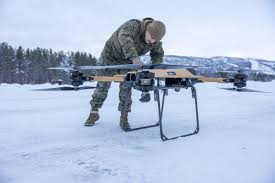
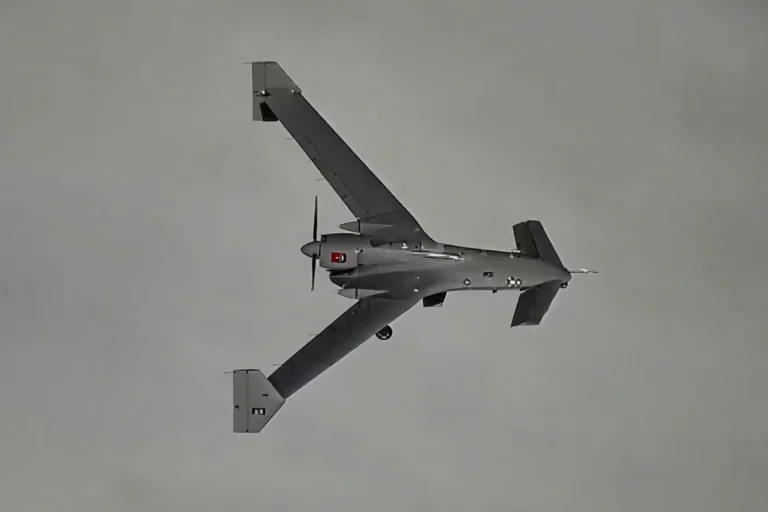
The weaponry and sensor suite packed into this hull are what truly set it apart as a modern “arsenal ship.” The design reflects the harsh lessons of modern warfare, particularly the need for versatility. The vessel features a two-bay hangar capable of housing 10-ton naval helicopters, but perhaps more importantly, the flight deck and internal spaces are optimized for the future of combat: unmanned systems. There are dedicated provisions for unmanned surface vessels, rotary-wing drones, and mini-UAV launchers, acknowledging that the next war will likely be fought as much by drones as by sailors. At the heart of its combat capability is a completely indigenous electronic ecosystem. The ship will see the world through the eyes of the ÇAFRAD phased-array radar suite and listen via domestic sonars. Its teeth are sharp, consisting of a national MİDLAS vertical launch system with up to 96 cells. These cells can be mixed and matched to carry SİPER missiles for high-altitude defense, HİSAR-D and SAPAN for medium ranges, and even the indigenous GEZGİN cruise missiles for striking land targets deep inside enemy territory. When you add the ATMACA anti-ship missiles and a 127mm main gun that has already been battle-tested on the frigate TCG Fatih, the TF-2000 emerges as a platform that can dominate all three domains: air, surface, and sub-surface.
Getting to this point has been a marathon, not a sprint. The vision for an indigenous air-defense destroyer was first greenlit by the Defence Industry Executive Committee way back in 2007, with the ultimate goal of commissioning eight of these leviathans. The detailed design phase didn’t kick off in earnest until 2019, allowing engineers to pour all the lessons learned from previous MILGEM projects into this flagship. Earlier this year, in January 2025, a ceremonial steel-cutting event placed the TF-2000 alongside the future MUGEM aircraft carrier and MILDEN submarine, highlighting a “triple threat” of naval modernization. Since then, the blueprints have undergone significant evolution. The designers have worked tirelessly to reduce the ship’s radar signature, burying missile cells within the structure, smoothing out the hull lines, and integrating a sleek mast to ensure the ship is as stealthy as it is deadly. The current construction strategy is methodical, split into a detailed design phase followed by a full prototype build, with the first vessel expected to hit the water around 2028 and enter active service by the close of the decade.
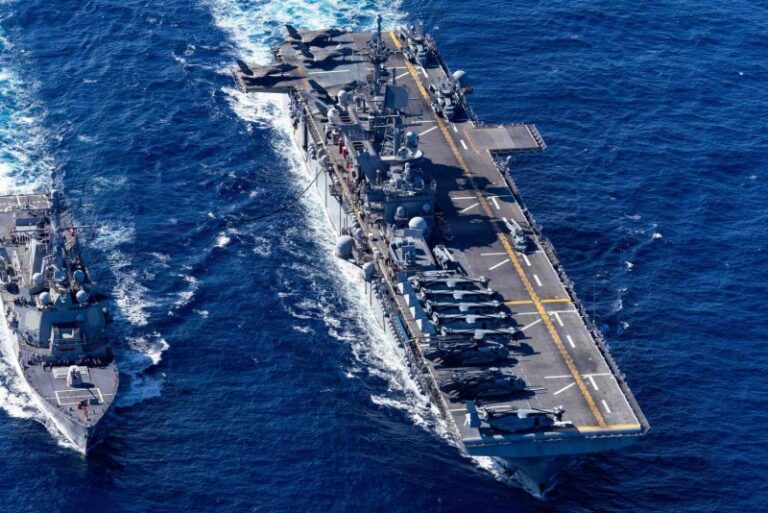
Tactically, the arrival of the TF-2000 fills a gaping hole in Türkiye’s naval doctrine. For years, the navy has lacked a dedicated platform capable of providing wide-area air defense. This destroyer changes that dynamic entirely. With its ability to carry a massive loadout of interceptors, it can act as a bodyguard for high-value assets like the TCG Anadolu amphibious assault ship or the future aircraft carrier. It allows Turkish task groups to operate safely under a high-altitude “bubble,” protected from enemy jets and ballistic missiles. Through the ADVENT combat management system, the ship will act as a floating command center, fusing data from allied ships, airborne early warning aircraft, and land-based radars to create a cohesive, real-time picture of the battlefield. It is the ultimate expression of network-centric warfare, using AI-driven aids to help commanders decide the best way to intercept a threat within seconds.
The integration into the Steel Dome is perhaps the most revolutionary aspect. This isn’t just about a ship; it’s about a national C4ISR framework. The TF-2000 is plugged directly into the HAKIM command-and-control network, linking it with ground-based ALP radars and electronic warfare assets. This means a radar operator on a mountain in Anatolia could theoretically detect a threat that the TF-2000 then engages, or vice versa. The ship is built to survive the punishment of such high-intensity conflict, featuring double-hull construction, shock-resistant mounting for equipment, and advanced damage control systems to keep fighting even after taking a hit.
Ultimately, the start of block construction signifies a massive shift in Türkiye’s maritime strategy. It represents the transition from a navy that buys foreign ships to one that designs and builds world-class combatants. This project strengthens NATO’s southeastern flank, as the Steel Dome is designed to be interoperable with allied systems, yet it ensures Ankara retains strategic autonomy. Türkiye is no longer waiting for permission or parts from abroad to defend its interests in the “Blue Homeland.” As the hull blocks of the first TF-2000 begin to come together in Istanbul, they are welding together a future where the Turkish Navy can project power and provide an unbreakable shield from the land to the open sea, reshaping the naval balance of power in the region for the next thirty years.
About The Author