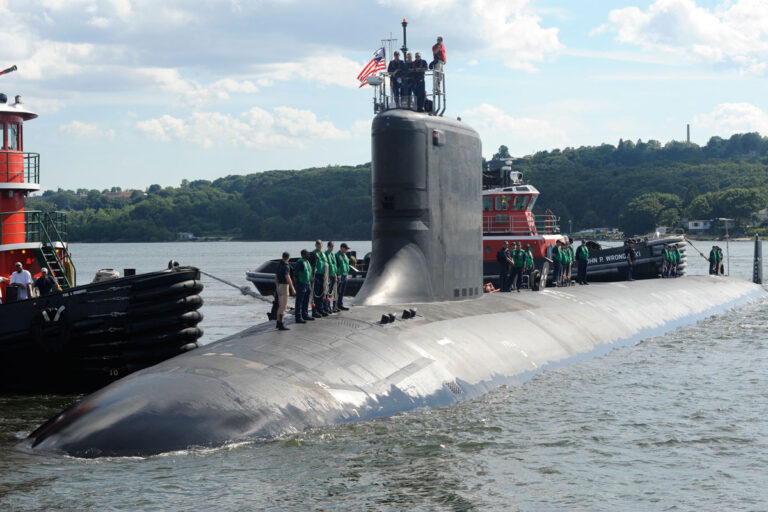
The depths of the South Atlantic have remained uncomfortably quiet for the Argentine Navy since the tragic loss of the ARA San Juan in 2017, a silence that President Javier Milei is desperate to break with the acquisition of new advanced capability. However, despite the high-profile political maneuvering and the urgent desire to restore a lost strategic capability, the reality of the situation is currently colliding with the cold, hard mathematics of international finance. In a revealing interview given in late November 2025, Laurent Mourre, the director of Sales for strategic countries at the French defense giant Naval Group, made it clear that the ambitious plan to supply Argentina with three state-of-the-art Scorpène-class submarines is currently in a holding pattern. The deal, which has captured headlines in Buenos Aires and Paris alike, is stalled not by a lack of political will or technical disagreement, but by the absence of a guaranteed financial framework. As Mourre candidly explained, until a loan structure backed by the French state or robust international lenders can be agreed upon, the blueprints will remain in the drawer and the shipyards will remain silent regarding Argentine hulls.
The saga of this procurement effort is a fascinating study in the friction between defense necessities and economic realities. In October 2024, a glimmer of hope appeared when Defense Minister Luis Petri and Admiral Carlos Allievi signed a non-binding Letter of Intent in France, signaling the formal launch of negotiations. This was followed by a directive from President Milei in November 2025, explicitly stating his administration’s intention to purchase the French vessels. This top-down political push was so sudden that it reportedly sent Ian Sielecki, Argentina’s ambassador in Paris, scrambling to coordinate with the Defense Ministry, as the acquisition hadn’t been on the immediate docket. Yet, as the excitement settles, the financial hurdles are becoming the primary focus. The proposed deal involves three submarines based on the Brazilian Riachuelo model—a stretched version of the Scorpène optimized for long endurance—but carrying the latest “Evolved” technology, including Lithium-ion batteries. The estimated price tag for such a package, including support, training, and infrastructure, hovers around $2.3 billion. While the Argentine government has optimistically included a request for this amount in its 2025 budget under the heading of “Submarine Capacity Recovery,” finding a lender willing to underwrite that risk for a country with Argentina’s volatile economic history is proving to be the true bottleneck.
Naval Group has been transparent about the limitations of their role. As a shipbuilder, they build vessels; they do not act as a sovereign bank. Mourre emphasized that in export deals of this magnitude, the standard procedure relies on a complex web of export finance mechanisms. Typically, commercial banks provide the loans, which are then underwritten or guaranteed by the exporting country’s government—in this case, France. However, these guarantees are far from automatic. They require a rigorous assessment of the buyer’s ability to repay, interest rate negotiations, and insurance premiums. Given Buenos Aires’ current austerity measures and its focus on controlling public spending, the initial down payment—usually around fifteen percent of the total contract value—is a significant hurdle in itself. Negotiators from Argentina are reportedly seeking unprecedented terms, hoping to spread payments over six or seven years to ease the immediate burden on the treasury. Until these terms are locked in and the risk is mitigated to the satisfaction of French financial institutions, Naval Group cannot cut a single piece of steel.
Beyond the money, there is a profound debate over the industrial soul of the project. The discussions have oscillated between two very different paths: building the submarines locally in Argentina or having them constructed entirely in France. The allure of local construction is strong for a nation proud of its industrial heritage; shipyards like Tandanor would theoretically handle the fabrication, creating jobs and technology transfer. However, Mourre pointed out the logistical and financial downsides of this approach. Replicating the Brazilian “PROSUB” model, where Brazil built an entire naval complex at Itaguaí to construct their Scorpène fleet, requires massive upfront investment and years of workforce training. It took Brazil nearly a decade from the launch of the program to the delivery of the first boat. For Argentina, which effectively has no operational submarines today, time is a luxury they may not have. The alternative proposal, and the one that seems more pragmatically aligned with a faster delivery schedule, is to build the three Scorpène Evolved units in France. Under this model, Argentine participation would be focused on the “smart” side of the equation: training crews on advanced simulators, managing integrated logistics, and preparing local shipyards to handle future mid-life overhauls rather than the initial construction.
The submarines themselves are formidable machines, designed to fundamentally alter the balance of power in the South Atlantic. Modeled after the Riachuelo-class, they would displace nearly 1,900 tonnes submerged and measure roughly 71 meters in length. However, Argentina is aiming for a technological leap by incorporating Lithium-ion batteries, a feature of the Scorpène Evolved capability. This upgrade would grant the submarines an underwater endurance exceeding 78 days and a range of nearly 8,000 nautical miles, allowing them to patrol the vast distances of the Argentine exclusive economic zone without frequent snorkeling to recharge. Armed with heavyweight F21 torpedoes and potentially SM 39 Exocet anti-ship missiles, these vessels would provide a serious deterrent against illegal fishing fleets and a credible defense posture regarding the disputed Falkland Islands (Malvinas) region. The capability to deploy for over 70 days at a time is critical for a navy that needs to project power far from the coastline, a mission profile that the older, smaller submarines simply cannot match.
The strategic context of this potential purchase cannot be overstated. Since the sinking of the ARA San Juan, Argentina has been arguably the only major economy in the region without a submarine force. The cancellation of the modernization of the ARA Santa Cruz and the relegation of the ARA Salta to a pier-side training platform have left a gaping hole in national defense. Currently, Argentine submariners are forced to travel to Peru to train on foreign vessels just to keep their certifications from lapsing and to prevent the total extinction of their institutional knowledge. Admiral Allievi has correctly identified this as an existential crisis for the Navy, but the solution remains tantalizingly out of reach. The global market is surging, with over fifty conventional submarines delivered worldwide between 2016 and 2023, as nations from Asia to Europe scramble to secure their maritime borders. In this crowded marketplace, where competitors like Germany’s TKMS and South Korea’s Hanwha are also vying for contracts, Naval Group holds the inside track with Argentina, but the final handshake depends less on the admirals and more on the presidents. The ultimate fate of the program now rests on a meeting of minds—and budgets—between Javier Milei and Emmanuel Macron, as they attempt to bridge the gap between strategic ambition and financial reality.
About The Author