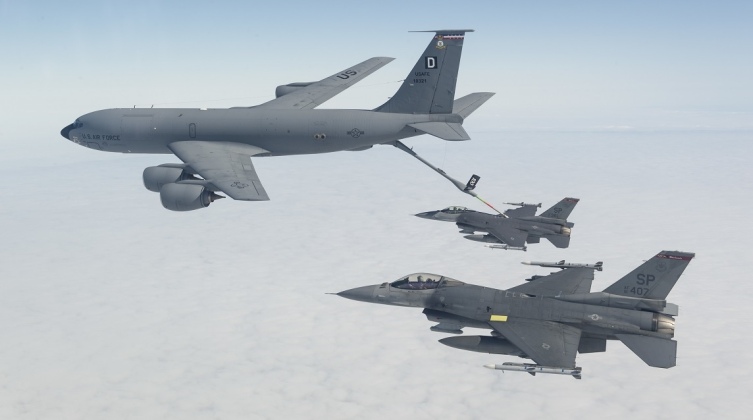
It is often said that old soldiers never die, they just fade away, but the F-16 Fighting Falcon seems determined to prove that maxim wrong. As of October 27, 2025, the legendary fourth-generation workhorse has just been given a new lease on life that might arguably make it the most capable non-stealth fighter in the skies. In a move that fundamentally changes the geometry of modern air combat, Northrop Grumman has officially announced the successful and full integration of the AN/ALQ-257 Integrated Viper Electronic Warfare Suite, known as IVEWS, with the AN/APG-83 SABR active electronically scanned array radar. While the alphabet soup of acronyms might sound like standard industry jargon, the reality of what this pairing achieves is nothing short of revolutionary for pilots who have to fly into contested airspace. For the first time, a Viper can hunt, jam, and target simultaneously within the same slice of the electromagnetic spectrum without blinding its own sensors, a capability that was once the stuff of engineering dreams.
To understand why this is such a massive leap forward, one has to appreciate the chaotic environment of modern aerial warfare. Traditionally, electronic warfare and radar detection have been somewhat adversarial, even when they are on the same aircraft. When a pilot needed to jam an enemy radar to avoid getting shot down, their own powerful jamming signals would often overwhelm their own radar, effectively blinding them for the duration of the electronic attack. It was a dangerous trade-off: you could hide, or you could hunt, but you rarely could do both at maximum capacity. The breakthrough announced by Northrop Grumman dismantles this dilemma. The IVEWS and the SABR radar are no longer fighting for dominance over the frequency bands; instead, they are engaging in a high-speed digital choreography. By coordinating on a pulse-to-pulse basis, the system knows exactly when the radar is listening and when the jammer is shouting, ensuring that the F-16 retains a crystal-clear picture of the battlespace while simultaneously flooding enemy sensors with noise.
The heart of this new capability is the IVEWS itself, a digital, ultra-wideband suite designed to fit into the surprisingly tight internal spaces of the F-16’s nose and wing roots. It is a marvel of miniaturization and power, featuring a new radar warning receiver and an electronic warfare-optimized processor that shares DNA with Northrop’s other top-tier programs. This common architecture is a subtle but critical advantage, allowing the software and threat libraries to be updated much faster than the bespoke, clunky podded systems of the past. The suite is capable of detecting, identifying, geolocating, and countering the most modern radio frequency threats, including the millimeter-wave engagement radars that guide the latest and most lethal surface-to-air missiles. When paired with the APG-83 SABR—which itself draws on the technology found in the F-22’s APG-77 and the F-35’s APG-81—the result is an aircraft that possesses fifth-generation situational awareness and electronic attack capabilities, even if it lacks the physical stealth of its younger siblings.
The operational implications of this are staggering. In practice, a Viper crew can now perform high-resolution synthetic aperture radar mapping to locate ground targets or maintain a solid track on multiple enemy aircraft, all while the IVEWS is actively denying enemy fire control radars. The “smearing” of the radar picture caused by self-interference is gone. This transforms the F-16 from a platform that relies on other aircraft for electronic protection into its own escort and penetration fighter. It creates a “mini-Growler” effect, where every Viper in a formation contributes to the electronic suppression of enemy air defenses. A four-ship flight of these upgraded F-16s can now enter a threat ring, rapidly sort through the clutter of agile, frequency-hopping emitters, and generate precise geolocation data. This allows them to time HARM shots, deploy decoys, and launch stand-off weapons with a level of confidence that was previously impossible without dedicated electronic warfare support aircraft.
This success didn’t happen overnight. The announcement follows a grueling development path that began when the Air Force selected IVEWS in 2019. Since then, the system has been pushed through the wringer, from lab integration at the J-PRIMES facility to the harsh reality of flight testing. During events like Northern Lightning 2021, paired F-16s equipped with the tech faced off against dense airborne and ground emitters, simulating the kind of “near-peer” threat environments that keep generals awake at night. The program culminated in a comprehensive Operational Assessment involving more than 70 sorties and hundreds of flight hours. The performance was convincing enough that Congress stepped in with additional funding to accelerate fielding, specifically citing an urgent operational need in the Middle East. It is a rare win for defense procurement—a complex system that not only works but is being rushed to the field because it is deemed essential for survival.
From an industry perspective, this integration secures the F-16’s place in the global defense architecture for decades to come. The APG-83 SABR is already the standard for the new Block 70 jets and the F-16V configuration, with hundreds of units delivered to customers across Europe, the Indo-Pacific, and the Middle East. With IVEWS now part of the package, Northrop Grumman has a compelling export story. Turkey has already signed on as the first major foreign customer, planning to equip over 150 of its new and legacy Vipers with the suite. Other air forces are currently in active discussions, eager to align themselves with this U.S. program of record. The logic is simple: if you are a nation facing advanced threats but cannot afford or access a fleet of F-35s, an F-16 with this specific radar-EW combination is the next best thing. It allows fourth-generation fleets to remain credible and lethal in engagement zones where they would otherwise be obsolete.
Furthermore, the technology developed here has legs beyond just the fighter market. The modular architecture of IVEWS is already migrating to other platforms, including the U.S. Army’s HADES intelligence, surveillance, and reconnaissance aircraft. It is adaptable enough for unmanned systems and heavy airlifters, suggesting that Northrop Grumman is building a universal electronic warfare ecosystem rather than a single product. However, for the fighter pilot strapping into a cockpit today, the “big picture” economics matter less than the immediate reality. The integration of IVEWS and SABR means they can see further, react faster, and fight harder without having to choose between their eyes and their shield. In the high-stakes poker game of aerial combat, the Viper just got a distinct advantage, proving once again that with the right technology, even a veteran airframe can learn some devastating new tricks.
About The Author