U.S. Navy and Marine Corps units conducted extensive amphibious and airborne exercises in Arroyo, Puerto Rico, with Reuters obtaining rare close-up images of landing craft, armored vehicles, and low-flying helicopters. The drills come as Washington boosts its Caribbean presence under Operation Southern Spear, demonstrating readiness for a range of military options amid Venezuela’s escalating crisis.
On December 5, 2025, U.S. Navy and Marine Corps units carried out rigorous landing and airborne exercises on the beaches of Arroyo, Puerto Rico, with Reuters photographer Ricardo Arduengo capturing detailed images. The drills showed landing craft approaching the shore, amphibious vehicles moving through surf, and attack helicopters flying low overhead, following months of large-scale exercises along Puerto Rico’s southern coast. These operations coincide with Washington reinforcing its Caribbean presence under Operation Southern Spear, officially aimed at countering narcotics trafficking but closely monitored amid Venezuela’s ongoing crisis. The Arroyo exercises provide a rare glimpse at how amphibious and aerial assets are integrated to maintain a full spectrum of response options for potential Venezuelan contingencies.
The imagery shows a full ship-to-shore logistics sequence in a confined stretch of coastline. The landing craft utility LCU-1662 ferried Humvees, ammunition-laden bulldozers, and Light Amphibious Resupply Cargo (LARC) vehicles from the offshore amphibious group to the beach, while service members managed traffic and secured the perimeter. Bell AH-1Z Viper attack helicopters provided armed overwatch, offering close air support and reconnaissance. These maneuvers demonstrate coordinated landings where naval, ground, and air forces rehearse rapid establishment of a temporary beachhead.
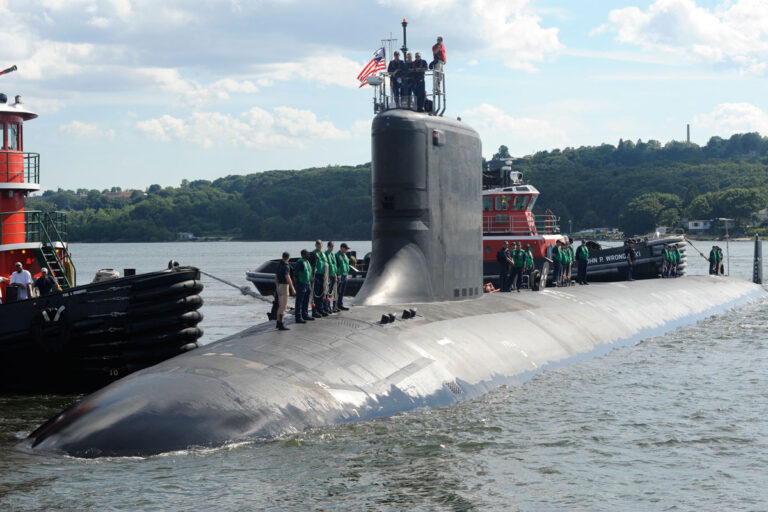
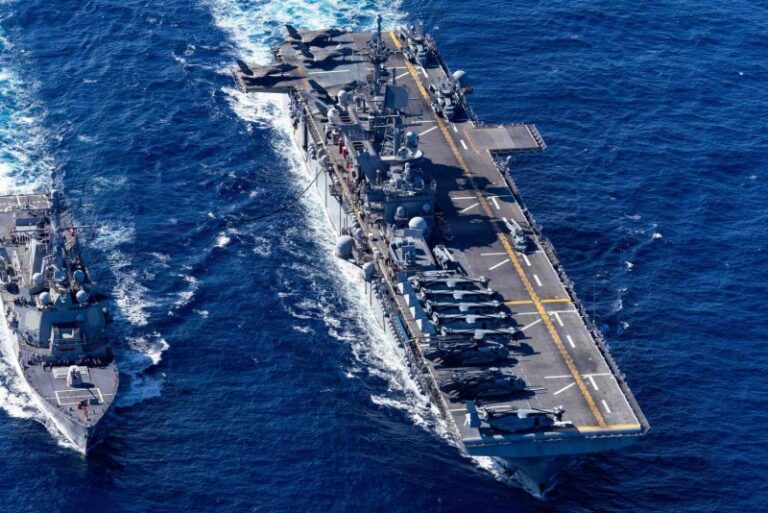
The platforms deployed correspond to standard Marine Expeditionary Unit capabilities adapted for littoral operations. USS Fort Lauderdale (LPD-28), a San Antonio-class amphibious transport dock, carries a reinforced Marine battalion with vehicles and supplies, projecting them ashore via landing craft and helicopters while acting as a mobile command hub. LCU-type craft like LCU-1662 transport heavy vehicles and equipment directly onto undeveloped beaches, while LARC vehicles shuttle supplies short distances inland. AH-1Z Vipers combine advanced sensors with precision munitions to provide escort, support, and real-time intelligence for beach operations. Together, these systems form an integrated package capable of inserting, protecting, and sustaining forces along contested or sensitive coastlines.
Repeated cycles of loading and offloading equipment indicate a focus on refining the ship-to-shore chain rather than a one-off demonstration. The operations reflect U.S. Marine Corps doctrinal emphasis on expeditionary advanced base operations and distributed maritime operations, where smaller, mobile forces operate from dispersed coastal positions instead of a single large beachhead.
Puerto Rico offers realistic training conditions with natural surf, limited beach infrastructure, and nearby airfields and ports, allowing integration of amphibious landings, airborne support, and rapid re-embarkation. The Arroyo exercises serve both as a practical training environment and a visible demonstration of U.S. amphibious readiness under U.S. Southern Command.
The drills occur amid heightened U.S.–Venezuela tensions and a significant naval buildup in the southern Caribbean. Since summer 2025, the United States has deployed an aircraft carrier strike group, multiple destroyers and cruisers, and several amphibious ready groups, bringing total personnel in the region to more than 10,000, with some estimates nearing 15,000 by November. While officially focused on countering drug trafficking, these forces also serve as a flexible tool amid regional instability, including in Venezuela.
Venezuela has responded by mobilizing its own forces along the coastline and denouncing the U.S. presence. Puerto Rico, historically a logistics hub for U.S. operations, has become a key platform for maritime patrols, surveillance, and amphibious exercises. Each new cycle of landings and air support operations enhances operational readiness while sending a strategic signal to regional observers.
The capabilities demonstrated at Arroyo support a range of missions rather than a full-scale invasion scenario. Amphibious transport docks, LCUs, LARCs, and AH-1Z Vipers can conduct maritime interdiction, secure coastal infrastructure, establish temporary support points in nearby Caribbean nations, or evacuate civilians and diplomatic personnel under protection. Limited raids against narcotics trafficking or hostile sites are also feasible under political authorization.
Additionally, U.S. amphibious forces remain vital for humanitarian assistance and disaster relief in hurricane-prone Caribbean nations, where rapid deployment of engineering equipment, medical teams, and supplies can be decisive. The Arroyo drills reinforce this operational flexibility, ensuring platforms can pivot between combat, contingency, and humanitarian roles.
In sum, the Arroyo exercises highlight the dual logic of U.S. Caribbean posture: demonstrating a sophisticated amphibious capability near Venezuela while emphasizing adaptable contingency planning. The combination of USS Fort Lauderdale, LCU-1662, LARC vehicles, and AH-1Z Vipers ensures U.S. forces can respond rapidly across the Caribbean littoral, with the ultimate use of force determined by civilian leadership.
About The Author