Advanced radar and sensor integration on the X-62 VISTA will expand the U.S. Air Force’s ability to test autonomous systems in complex operational environments.
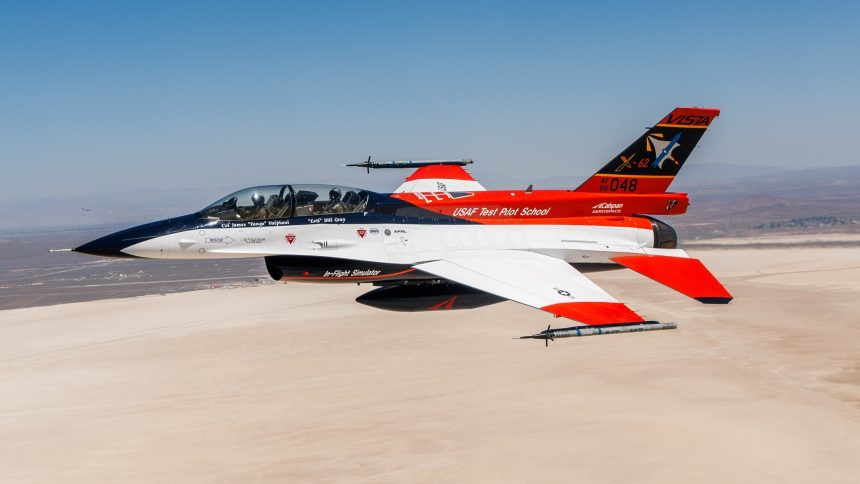
The U.S. Air Force has announced the launch of a Mission Systems Upgrade (MSU) program for the X-62 Variable Stability In-Flight Simulator Test Aircraft (VISTA), aimed at expanding the platform’s role in advanced autonomy and artificial intelligence testing. Funded through a strategic investment by the Test Resource Management Center (TRMC), the upgrade will enable the aircraft to operate in more complex and realistic combat scenarios.
SHARE
The
A central element of the MSU is the integration of advanced radar and sensor systems, allowing AI agents to process real-world sensor data and make autonomous decisions in flight. This enhancement will significantly expand the scope of autonomy testing, moving beyond basic flight control toward integrated mission systems, sensor fusion, and real-time tactical decision-making.
The X-62 VISTA is assigned to the U.S. Air Force Test Pilot School (TPS) under the 412th Test Wing at Edwards Air Force Base, California, where it serves as a primary flying testbed for artificial intelligence and autonomous combat aviation research. The aircraft has already supported multiple AI flight campaigns conducted by the Air Force Research Laboratory (AFRL) and DARPA.
The MSU builds directly on DARPA’s Air Combat Evolution (ACE) program, which culminated in the world’s first human-versus-AI aerial dogfight in 2023. The next phase will focus on integrating combat systems, advanced sensors, and cooperative autonomy, allowing AI agents to collaborate with other airborne platforms in increasingly contested environments.
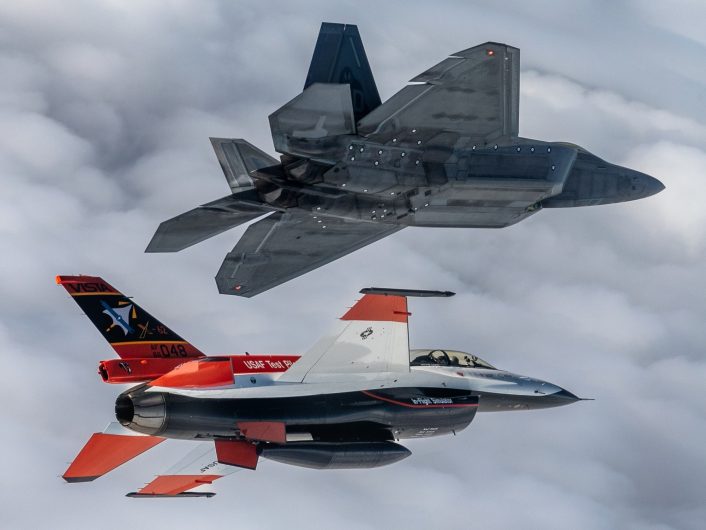
According to the U.S. Air Force, the addition of advanced radar and sensor integration will allow the X-62 to fly into complex operational scenarios while evaluating how autonomous systems perceive threats, coordinate actions, and execute tactical decisions in real time. Colonel Maryann Karlen, Commandant of the Air Force Test Pilot School, described the X-62 as a critical bridge between traditional human-centered aviation and future uncrewed combat operations, emphasizing that the MSU will drive breakthroughs in AI and autonomy.
Plans for a radar upgrade first emerged in August 2024, when the Air Force released a Request for Information (RFI) seeking modular radar solutions suitable for autonomy testing. The radar is intended to feed raw data directly into an autonomy enclave, where machine-learning algorithms can process sensor inputs and autonomously control radar modes, including experimental configurations not feasible for human operators.
Key requirements outlined in the RFI include AESA radar technology, air-to-air and air-to-ground modes, unclassified operation capability, air cooling, a weight below 200 pounds, and a startup time of less than two minutes. In May 2025, the Air Force hosted an industry day to further engage potential vendors on the MSU effort.
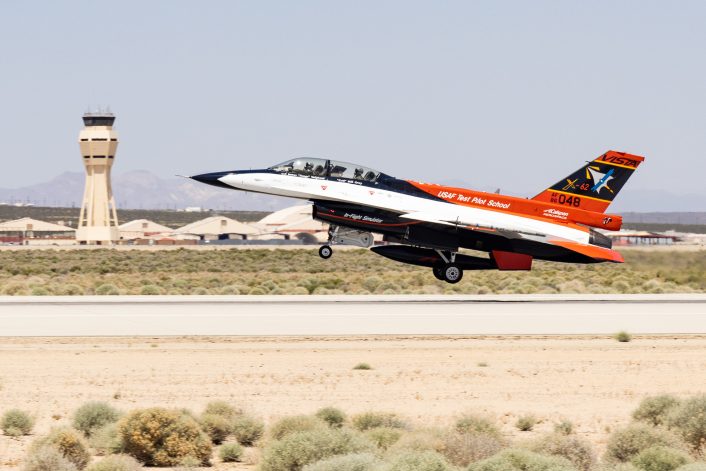
The X-62 traces its origins to an F-16D Block 30, first modified into the NF-16D VISTA in the early 1990s as a variable-stability test aircraft for pilot training. In 2021, it was redesignated as the X-62A ahead of its participation in the Air Force’s Skyborg autonomous flight testing program. Subsequent upgrades replaced the original VISTA simulation system with the System for Autonomous Control of Simulation (SACS), enabling direct AI control of the aircraft while retaining onboard safety pilots.
Artificial intelligence agents first successfully flew the X-62A autonomously during a series of test flights in December 2022. These trials included beyond-visual-range engagements and within-visual-range dogfighting against simulated adversaries. In 2023, the aircraft achieved another milestone when an AI agent flew a simulated dogfight against a human pilot in an F-16, executing high-speed, close-range maneuvers without requiring pilot intervention.
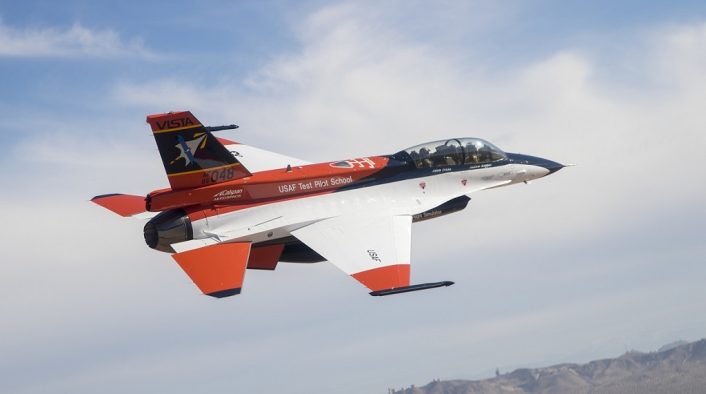
The X-62A continues to be flown with safety pilots onboard, who retain the ability to disengage the AI system if required. However, during reported test engagements, the Air Force noted that no safety overrides were necessary. Senior leadership has also taken a direct interest in the program, with then-Secretary of the Air Force Frank Kendall flying aboard the X-62A in 2024 to observe its autonomous capabilities firsthand.
With the Mission Systems Upgrade now underway, the X-62 VISTA is set to remain a cornerstone of U.S. Air Force efforts to integrate artificial intelligence, autonomy, and human-machine teaming into future air combat operations.
About The Author