Italy has officially launched the acquisition process for two next-generation air-defense destroyers, signaling a major investment in high-end naval capabilities to replace its top-tier surface combatants and maintain interoperability with NATO allies.
Italy has formally launched the acquisition process for two next-generation air-defense destroyers, marking a major step in renewing the backbone of its surface fleet. According to a prior information notice published in the Official Journal of the European Union on January 5, 2026, the Italian Ministry of Defense plans to begin a negotiated procurement procedure on February 18, 2026, supported by an estimated budget of approximately €2.7 billion, excluding VAT. Defense officials and industry sources describe the initiative as a critical milestone in replacing the Navy’s aging top-tier air-defense vessels with more capable, future-ready platforms.
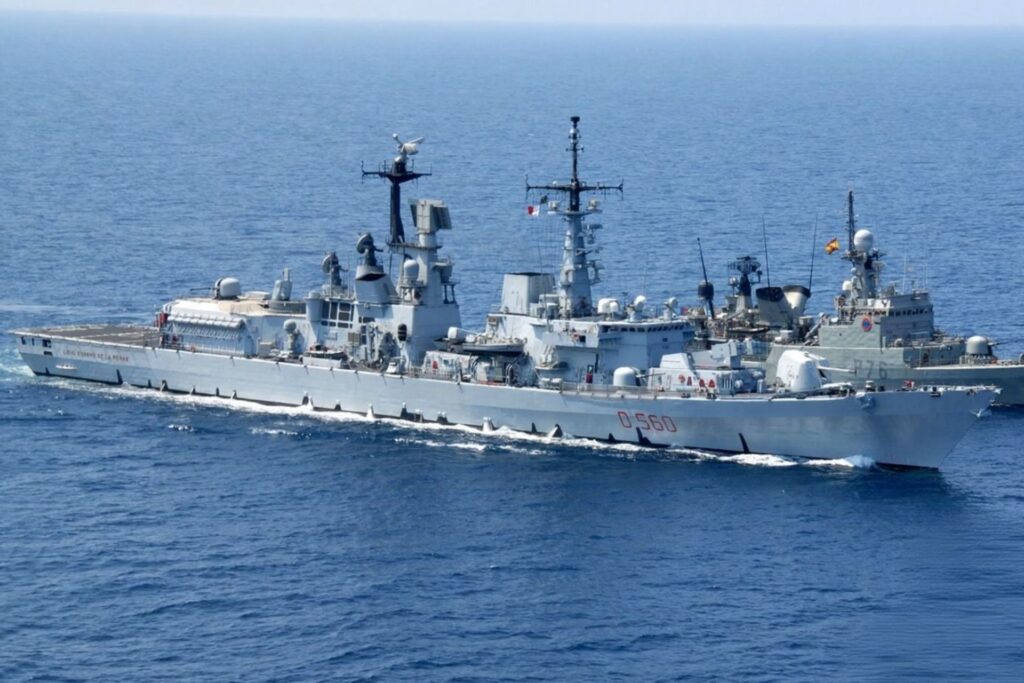
The new DDX-class destroyers are intended to succeed the Durand de la Penne-class ships, Durand de la Penne and Francesco Mimbelli, which entered service in the early 1990s and have provided Italy with credible area air-defense capabilities for over 30 years. While the older vessels have undergone multiple upgrades, Italian naval planners note that their sensor architecture, missile capacity, and growth margins are insufficient to address emerging threats or maintain Italy’s role as a framework nation in NATO maritime task groups.
The DDX program originated with a December 15, 2021, contract awarded to Orizzonte Sistemi Navali for risk-reduction activities and design definition of a new-generation destroyer. That contract included feasibility and project-definition phases to consolidate operational requirements and validate technical solutions. The recent notice is significant because it transforms that preparatory work into a concrete acquisition path that encompasses through-life support, system upgrades, and technology evolution across the ships’ entire service life—not just hull construction.
Industrial continuity is a core element of the program. Open-source documentation shows the DDX design is an evolution of the FREMM Evolution baseline, itself derived from the in-service FREMM multipurpose frigates. Orizzonte Sistemi Navali, a collaboration between Fincantieri and Leonardo, possesses the industrial expertise and intellectual property rights required for the program, enabling Italy to justify a negotiated procedure without traditional competitive bidding. This approach prioritizes schedule certainty and reduces integration risk, reflecting the complexity of modern air-defense destroyers and the urgency of replacing aging ships.
The DDX destroyers are expected to be among the largest surface combatants ever operated by the Italian Navy. Each vessel is projected to measure roughly 175 meters in length, with a 24-meter beam and a draught of around 9 meters, accommodating a crew of more than 300 personnel. Propulsion will use a CODOGAL system combining diesel engines, gas turbines, and electric propulsion, allowing high-speed performance above 30 knots while enabling efficient and quiet cruising for extended operations.
Firepower and sensors are central to the design. The destroyers are expected to carry six eight-cell vertical launch system modules, accommodating up to 48 Aster surface-to-air missiles. This setup will significantly enhance Italy’s area air-defense and fleet protection capabilities, especially against saturation attacks by cruise missiles and unmanned systems. Italian Navy officials have also indicated interest in integrating a land-attack capability, potentially through navalized SCALP cruise missiles or Teseo Mk2/Evolved missiles, providing both anti-ship and littoral strike functions and a sovereign maritime strike option.
The vessels will feature aviation facilities for sustained helicopter operations, including a rear flight deck and hangar capable of accommodating two EH101 or two SH90 naval helicopters. This underlines the destroyers’ multi-mission role, supporting anti-submarine warfare, maritime security, and command-and-control operations for carrier or amphibious groups. Leonardo is expected to supply advanced radar, combat management, and electronic warfare systems, though final configurations will be confirmed after the production contract is awarded.
Strategically, the DDX program reaffirms Italy’s commitment to maintaining a top-tier escort layer for national and NATO missions amid renewed maritime competition. Defense planning documents for 2025–2027 indicate that the first two units represent only the initial phase of a broader fleet renewal effort. Future vessels are expected to replace the Andrea Doria-class destroyers, ensuring continuity of Italy’s high-end surface combat capabilities into the 2030s and beyond.
If the February 18 launch proceeds as planned, the DDX tender will mark the official start of Italy’s next-generation destroyer era. For the Italian Navy, the program promises a generational leap in air defense and command capability. For the national defense industry, it secures a flagship program that combines industrial sovereignty with long-term technological relevance, reinforcing Italy’s position as a leading European naval power in an increasingly contested Mediterranean theater.
About The Author