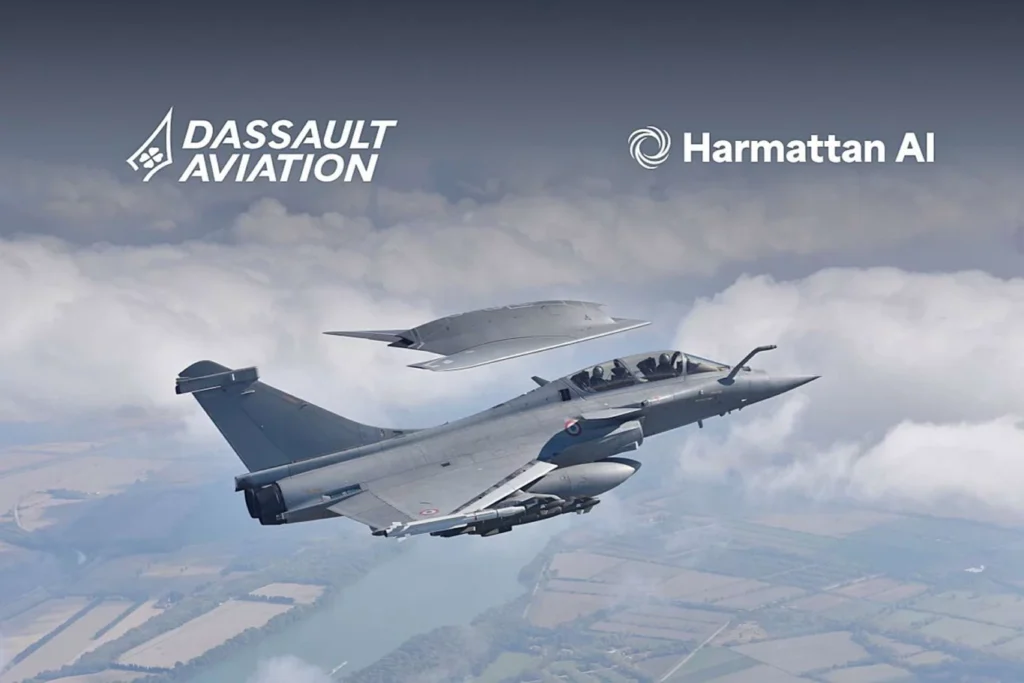
Dassault Aviation and Harmattan AI are joining forces to embed sovereign artificial intelligence into the Rafale F5 and France’s future UCAS, advancing manned-unmanned teaming and next-generation collaborative air combat.
On January 12, 2026, Dassault Aviation and Harmattan AI announced a major strategic partnership supported by a $200 million Series B investment led by Dassault. This deal is not just financial—it represents a long-term commitment to embedding sovereign, controlled artificial intelligence into France’s future air combat systems. Instead of treating AI as an external add-on, the partnership focuses on deeply integrating autonomy into aircraft such as the Rafale F5 and a future Unmanned Combat Aerial System (UCAS) designed to operate alongside manned fighters in high-threat environments.
Dassault’s vision places artificial intelligence at the core of combat aviation rather than as a separate layer. AI will be built directly into mission systems and aircraft architecture, operating under strict human supervision. This reflects France’s doctrine of full national control over algorithms, data and decision logic, especially where the use of lethal force is concerned. In this model, AI supports pilots by speeding up decisions, filtering information and managing complexity, while humans remain responsible for final actions.
Harmattan AI plays a key role in delivering this controlled autonomy. Founded in 2024, the company develops complete, defence-focused AI systems rather than just software. Its work covers air defence, coordinated drone operations, electronic warfare and command-and-control platforms. Harmattan says its systems are already in production and in service with several NATO and allied forces in France and the UK. The new funding will allow it to expand deployments, develop new capabilities and increase industrial-scale production for ISR, counter-drone and electronic warfare platforms.
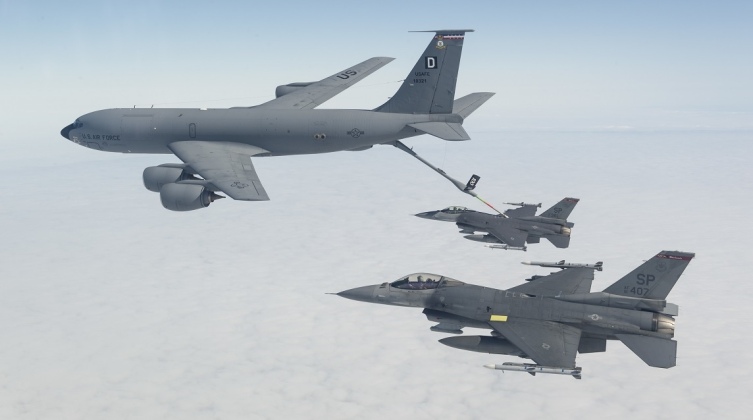
For Dassault, the partnership supports the future Rafale F5 standard, expected around the early 2030s. Rafale F5 is being designed as a collaborative combat platform able to work with multiple unmanned systems in a system-of-systems environment. AI will help pilots manage information overload, coordinate drones and operate effectively in electronic warfare and communication-denied conditions.
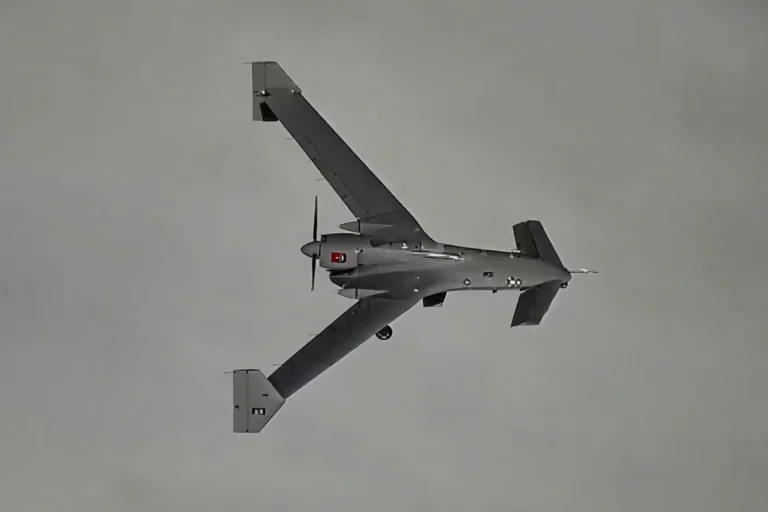
The partnership also fits directly into France’s UCAS programme, launched in late 2024. The future UCAS will not replace Rafale but will operate with it as part of a manned-unmanned team. It is expected to be a stealthy, internally armed aircraft using autonomous functions under human supervision. Harmattan AI’s technology will help ensure that these unmanned systems can be reliably controlled and integrated into complex combat formations.
In practical terms, manned-unmanned teaming will reduce pilot workload and speed up operations. AI can detect and classify threats, support mission planning, avoid conflicts between aircraft and coordinate sensing, strike and electronic warfare effects. While machines handle data and speed, humans stay in control of mission decisions and the use of force.
Dassault’s involvement also brings industrial strength to the partnership. Its experience in aircraft design, certification and long-term fleet support allows Harmattan’s AI to move from innovation to safe, secure and export-ready military systems. At the same time, Dassault gains access to a production-ready AI partner focused on real-world defence operations.
By investing heavily in 2026, Dassault is accelerating the development of its 2030s combat architecture. AI and autonomy are no longer future upgrades—they are shaping aircraft design today. The partnership moves beyond the idea of simple “loyal wingmen” toward a fully integrated manned-unmanned combat system. Rafale F5 and future UCAS platforms will share data, intent and tasks while keeping humans firmly in command, turning controlled autonomy into an operational reality.
About The Author