Destinus has unveiled upgraded versions of its Ruta Block2 cruise missile, Vector Vista Block2 navigation system, and Hornet Block2 interceptor, highlighting new design enhancements and operational capabilities. The updates emphasize lower detectability, reliable navigation in GNSS-denied environments, and greater flexibility for deployment across a wide range of platforms.
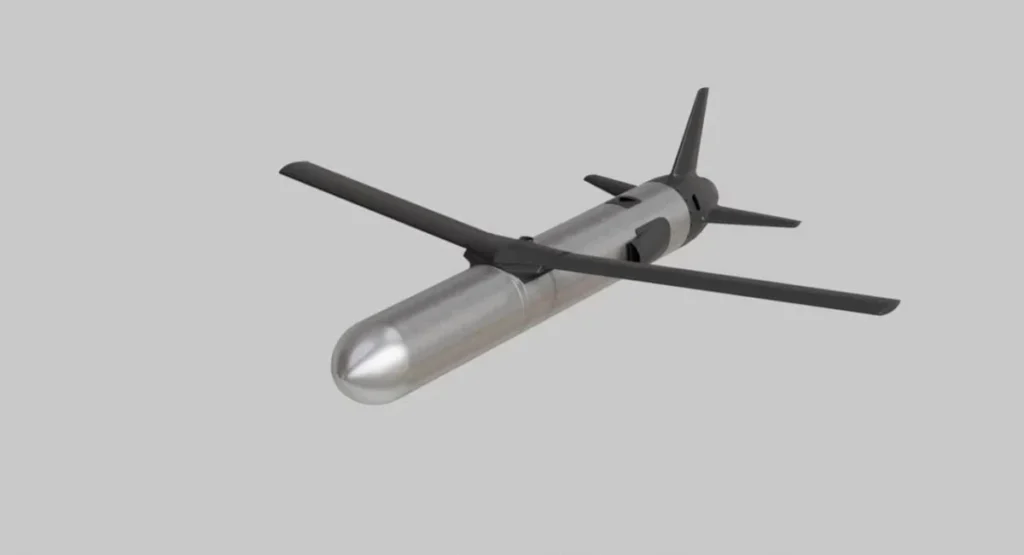
Destinus, a European aerospace and defense firm, has unveiled updated versions of its modular precision-strike weapons and interceptor systems, publishing new technical details about the Ruta Block2 cruise missile, the Vector Vista Block2 navigation system, and the Hornet Block2 quick-response interceptor. The company shared the specifications and design changes through official material on its website.
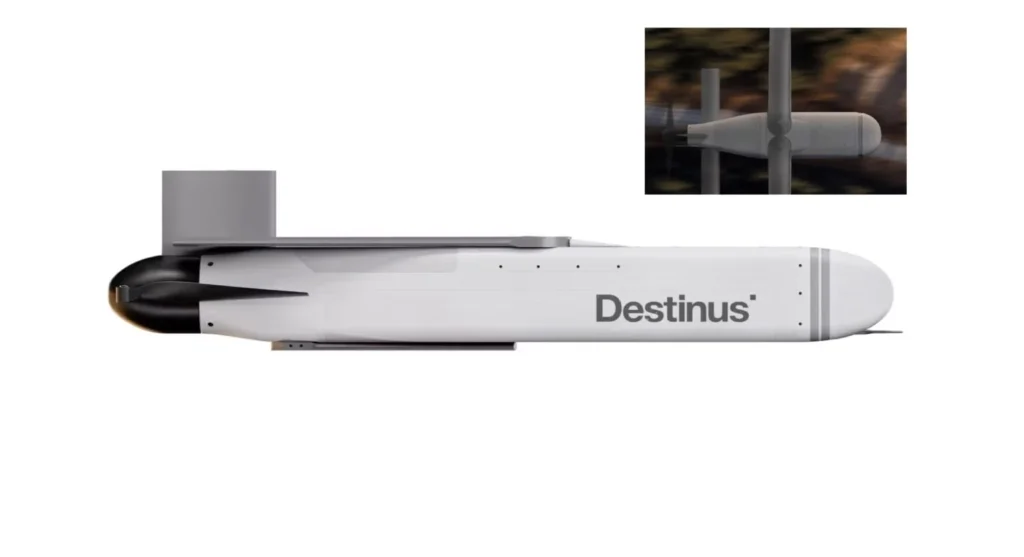
According to Destinus, the Ruta Block2 is an autonomous cruise missile optimized for precision strikes against fixed high-value targets. It uses a booster-assisted canister launch and flies at low altitude, supported by an AI-based multimode guidance system and a robust anti-jamming package. These features are intended to allow accurate strikes even within layered air-defense environments. The missile is designed for scalable mass production and compatibility with allied launch platforms, command-and-control systems, and AI-enabled swarm operations.
Compared to the earlier version, the Block2 introduces major design improvements. Destinus said the missile now features reduced radar and infrared signatures to improve survivability. Its wing system has been redesigned with concealed folding mechanisms that deploy after launch, enabling transport in sealed canisters or carriage under aircraft wings. These changes aim to simplify logistics, increase platform compatibility, and support high-volume manufacturing.
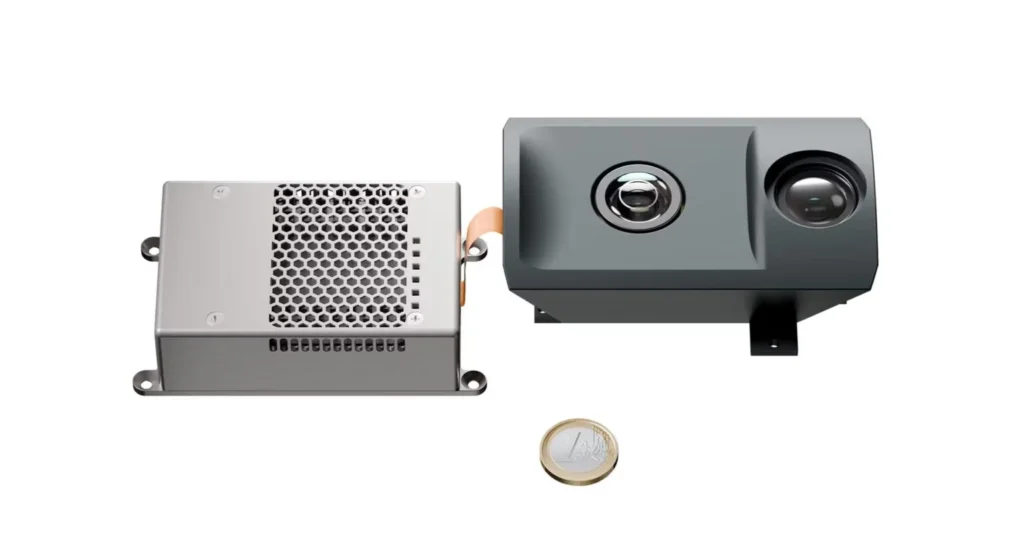
Destinus also presented the Vector Vista Block2, a navigation and targeting solution built for operations in GNSS-denied or heavily jammed environments. The system provides continuous position and orientation data using visual navigation during the day and infrared imagery at night. It supports high-speed, low-altitude flight with a very fast update rate and is designed for easy integration across unmanned and fixed-wing platforms.
The company stated that Vector Vista Block2 weighs less than 250 grams including its antenna and offers position accuracy within two meters. The main unit measures 90 × 60 × 30 millimeters, while the camera module measures 39 × 39 × 27 millimeters. Intended applications include multirotor drones, fixed-wing UAVs, and hybrid or VTOL platforms.
In addition, Destinus detailed the Hornet Block2, an electrically powered interceptor designed for rapid reaction against airborne threats. The interceptor is launched from sealed canisters with the help of a booster and uses foldable wings to allow dense launcher configurations on ground vehicles, fixed sites, and naval platforms. The system is designed to bridge the gap between very-short-range air defense and longer-range air-defense solutions.
According to Destinus, the Hornet Block2 is intended to counter kamikaze drones, ISR UAVs, loitering munitions, unguided rockets, and helicopters. It features AI-enabled guidance, networked engagement capability, and dynamic target allocation, allowing coordinated or swarm interceptions. The interceptor can integrate with existing air-defense sensors and command networks, while visual navigation and resilient datalinks ensure effectiveness under heavy electronic warfare conditions.
Together, the Ruta Block2, Vector Vista Block2, and Hornet Block2 highlight Destinus’s progress in autonomous weapons, precision strike systems, and rapid-response air defense. The company described these upgrades as part of its broader strategy to deliver modular, cost-effective systems that can be produced at scale and integrated across allied military platforms.
About The Author